Glass and crystal in the Northern Vosges: the sites to visit
Meisenthal, Saint-Louis-lès-Bitche and Wingen-sur-Moder: three glass and crystal sites less than 7 km apart. What you will see, how long to allow and how to combine them.

To see glass and crystal in the Northern Vosges, three sites are all you need: the Meisenthal glassworks and the Saint-Louis-lès-Bitche crystal works, in the Pays de Bitche in Moselle, and the Musée Lalique in Wingen-sur-Moder, in the Bas-Rhin. They are less than 7 km apart as the crow flies. You can watch glassblowers at work, see collections spanning several centuries and, in winter, buy Meisenthal’s Christmas baubles.
Glassmaking is an old trade here. According to the Musée Lalique, the glassmaking tradition of the Northern Vosges goes back to the late 15th century: the area offered master glassmakers silica and wood. The first glassworks were “itinerant”: the glassmakers stayed twenty-five to thirty years in one place, long enough to use up the forest they had been granted, then moved on. They settled permanently in the 18th century, and the great names of the industry date from that period.
Here are the places open to the public, plus the waymarked trails that link them.
Meisenthal glassworks (Meisenthal)
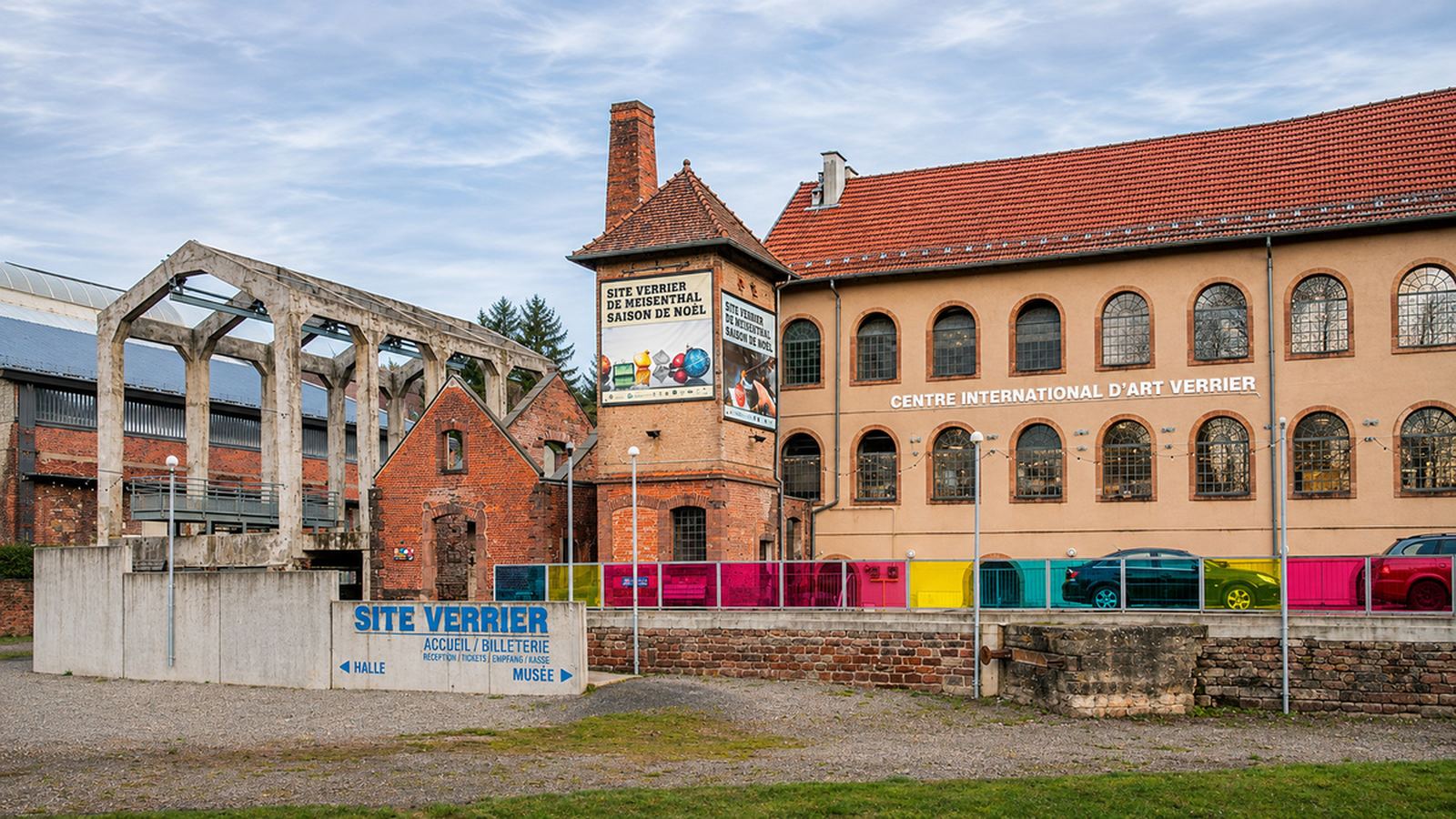
The former Meisenthal glassworks, in the heart of the village, brings together three venues on one site. The CIAV dates the founding of the glassworks to 1704. For more than two centuries it produced everyday glass and inexpensive drinking glasses, employed up to 650 people and closed on 31 December 1969.
The Musée du Verre (Glass Museum) tells three centuries of glassmaking history: a techniques room, regional glassworks and art glass. From 1867 to 1894, Émile Gallé used the glassworks as his laboratory: the CIAV presents Meisenthal as a cradle of Art Nouveau glass.
The Centre international d’art verrier (CIAV, International Centre for Glass Art), set up in 1992 in the former cutting workshop, is still in production. From a mezzanine, you watch the glassblowers shaping molten glass. The CIAV also keeps a mould library, a collection of nearly 2,000 old moulds.
The Halle verrière, a former production hall of more than 2,400 m², has become an exhibition and concert venue, officially recognised as a stage of national interest.
Restored between 2017 and 2022, the site receives around 100,000 visitors a year. Who it suits: families, who get to see the glassblowers at work, and Art Nouveau enthusiasts. Allow one to two hours for the full tour.
Meisenthal Christmas baubles (Meisenthal and Goetzenbruck)
Legend has it that in 1858, with no fruit after a drought, a glassmaker blew glass balls to decorate Christmas trees. The CIAV sets out the facts: from 1858, the glassworks in the neighbouring village of Goetzenbruck made reflective silvered baubles, up to 250,000 a year. It stopped making them in 1964.
In 1998, the CIAV brought together the last glassmakers who knew how to blow and silver them. A year later, it launched its own line of baubles. Since then, guest designers have created new models year after year alongside the traditional baubles, and each season has its “bauble of the year”. The site produces around 90,000 a year.
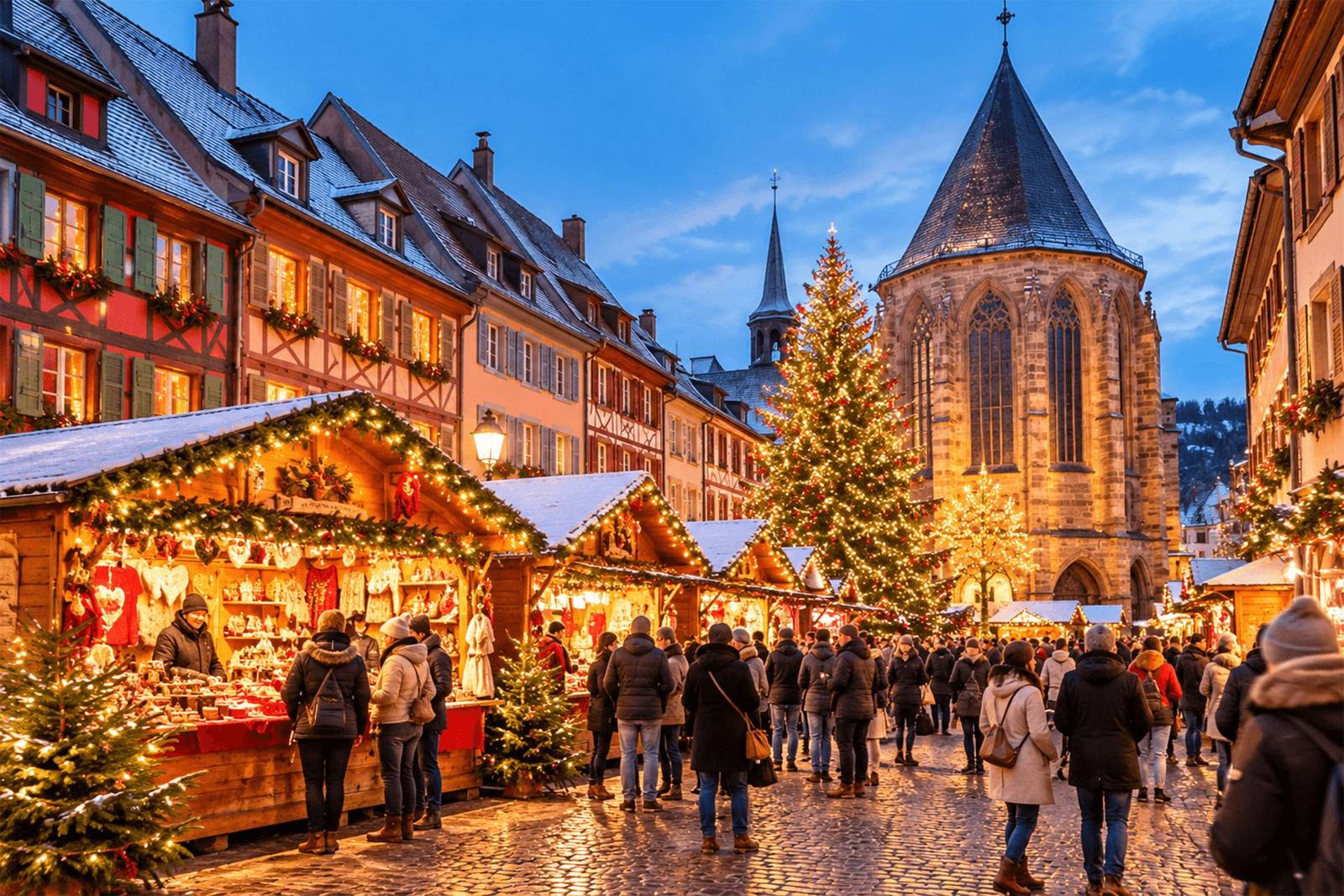
The baubles are sold on site during the Christmas season, from the second half of November to early January. The site then opens a visitor route with the museum, demonstrations and the Halle verrière. It gets very busy: access to the shop is through a digital queue, with a ticket or a text message to collect at the Welcome Pavilion.
To make more of the season, see our Christmas markets calendar.
La Grande Place, Saint-Louis crystal museum (Saint-Louis-lès-Bitche)
2.5 km north of Meisenthal as the crow flies, Saint-Louis-lès-Bitche is a village that grew up around its crystal works. The company dates its founding to 1586, when the glassworks bore the name of its locality, Müntzthal. In 1767, letters patent from Louis XV made it the “Verrerie royale de Saint-Louis” (Royal Glassworks of Saint-Louis). In 1781, its glassmakers discovered the secret of making crystal. The manufactory, which belongs to the Hermès group, still blows and cuts crystal on site.
The La Grande Place museum, opened in 2007, displays more than 2,000 pieces, from historic heritage to contemporary designs. The route winds around a central well and follows the history of the craft. A window looks onto the workshop where glassmakers shape molten crystal. The company suggests allowing about an hour and a half.
Also book the guided tour of the manufactory (an hour and a half, ages 6 and up). A walkway overlooks the Grande Halle, where the “hot” work is done; you then pass through the paperweight workshop and on to the cutters and engravers. From May to September, a guided tour of the village and its gardens is also available, by reservation.
Musée Lalique (Wingen-sur-Moder)
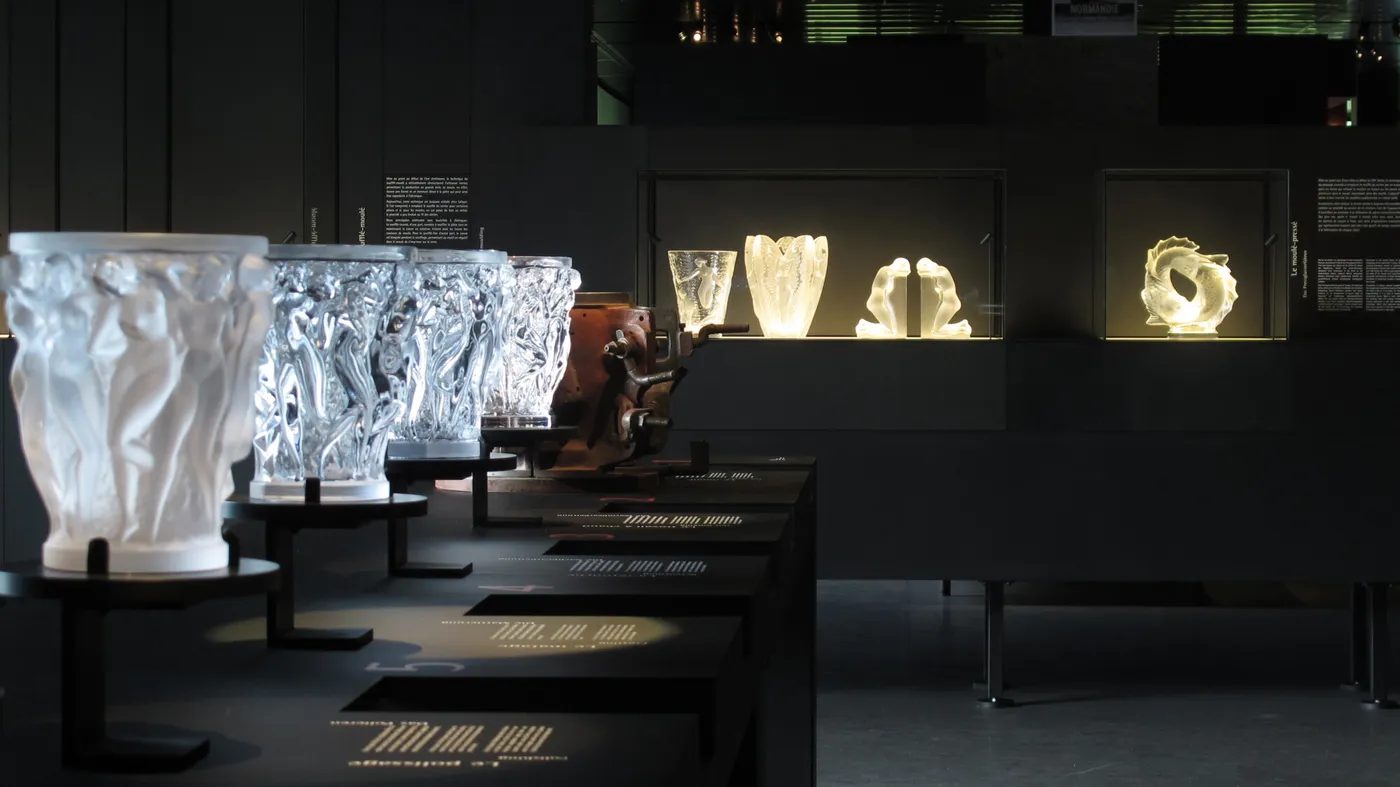
On the Bas-Rhin side, 4.4 km south of Meisenthal as the crow flies, Wingen-sur-Moder is the village of René Lalique, who founded his manufactory there in 1921. The factory still operates but is not open to visitors. The Musée Lalique, opened in 2011 on the site of the former Hochberg glassworks (1715–1868), displays more than 650 works: Art Nouveau jewellery, perfume bottles, tableware, then the crystal of René Lalique’s successors. Allow one to two hours.
Current status: closed after the burglary in July 2026, the museum has announced it will reopen on 28 November 2026 for the Christmas season. The jewellery will not be on display at that point. Check its website before you go.
For the story of the designer and his Alsace factory, read our article on René Lalique and the Verrerie d’Alsace.
The glass and crystal loop (Meisenthal, Saint-Louis-lès-Bitche, Goetzenbruck)
This waymarked Park trail links the glassmaking sites on foot. It starts from the car park on Place Émile-Gallé in Meisenthal, passes the glassmakers’ garden and the church of Saint-Louis, runs alongside La Grande Place, crosses Goetzenbruck, then returns via the Pierre des Douze Apôtres (Twelve Apostles Stone) and the glassworks. Allow 12.6 km, about 4 hours of walking and 336 m of ascent.
Goetzenbruck, a village that grew up with its glassworks in 1721 and long specialised in watch glasses, is best discovered this way, on foot. For a full day’s walk, the “Sur les traces des verriers” (In the footsteps of the glassmakers) trail links Wingen-sur-Moder station, the Musée Lalique and Meisenthal: 18.6 km, about 6 hours.
How to combine them
Together, the Park’s three sites make up the Étoiles terrestres network. Keep the discount voucher handed out at the first site you visit: it is valid at the other two.
In one day, by car: the Saint-Louis manufactory in late morning, by reservation, then the La Grande Place museum; in the afternoon, the Meisenthal glassworks, whose visitor route opens in the early afternoon. Save the Musée Lalique for a second day, or combine it with La Petite-Pierre, 8.5 km to the south as the crow flies.
Over two days, add the glass and crystal loop on foot and the Bitche citadel, about ten kilometres to the north. The citadel and the Moselle sites are covered in our Pays de Bitche area guide.
The great Lorraine houses of Baccarat and Daum are elsewhere, in Meurthe-et-Moselle, outside the Park.
Practical information
- Where: Meisenthal (57960) and Saint-Louis-lès-Bitche (57620) in Moselle, Wingen-sur-Moder (67290) in the Bas-Rhin.
- Train: only Wingen-sur-Moder has a TER station, on the Strasbourg–Sarreguemines line; the Musée Lalique is 2 km away. Meisenthal and Saint-Louis-lès-Bitche are reached by car or on foot.
- Parking: Place Émile-Gallé in Meisenthal, in front of La Grande Place in Saint-Louis-lès-Bitche, two car parks at the Musée Lalique.
- Accessibility: Saint-Louis states that its manufactory tour is accessible to people with reduced mobility; for the other sites, ask before you come.
- Opening times and prices: on each venue’s official website.
Good to know
- The Meisenthal glassworks is not open all year: there is a tourist season from April to autumn, a Christmas season, and closures in between.
- The Saint-Louis manufactory tour is by reservation only, Tuesday to Friday, excluding public holidays and the craftsmen’s holidays.
- The Musée Lalique closes every year in January.
My tip: at Christmas, come to Meisenthal on a weekday, as soon as the Pavilion opens, to take your place in the digital queue; visit the museum while you wait for your turn at the shop.
Good to know
Expected crowds this week: usual, busier at the weekend
In the Northern Vosges
- 25 December Christmas Day, public holiday in France (long weekend)
- 26 December St Stephen’s Day (Alsace-Moselle), public holiday in France
- 1 January New Year's Day, public holiday in France (long weekend)
- 20 December – 3 January French school holidays
Back home: the Netherlands
- 25 December Christmas Day
- 26 December St. Stephen's Day
- 19 December – 3 January Christmas Holidays
- 13 February – 21 March Spring Holidays (depending on region)
Getting here
- From Belgium and the Netherlands by car: via Luxembourg and Metz, or via Germany towards Karlsruhe and Wissembourg.
- By train: high-speed trains to Strasbourg (via Paris) or to Karlsruhe (via Germany), then regional trains.
- On site: a car is the easiest way to get around.
Holidays: Nager.Date and OpenHolidays.