Alsace gingerbread with honey and rye: the recipe
A soft Alsace gingerbread: rye flour, honey, cinnamon, ginger and star anise, baked for about an hour in a loaf tin, then left to rest for a day before slicing.

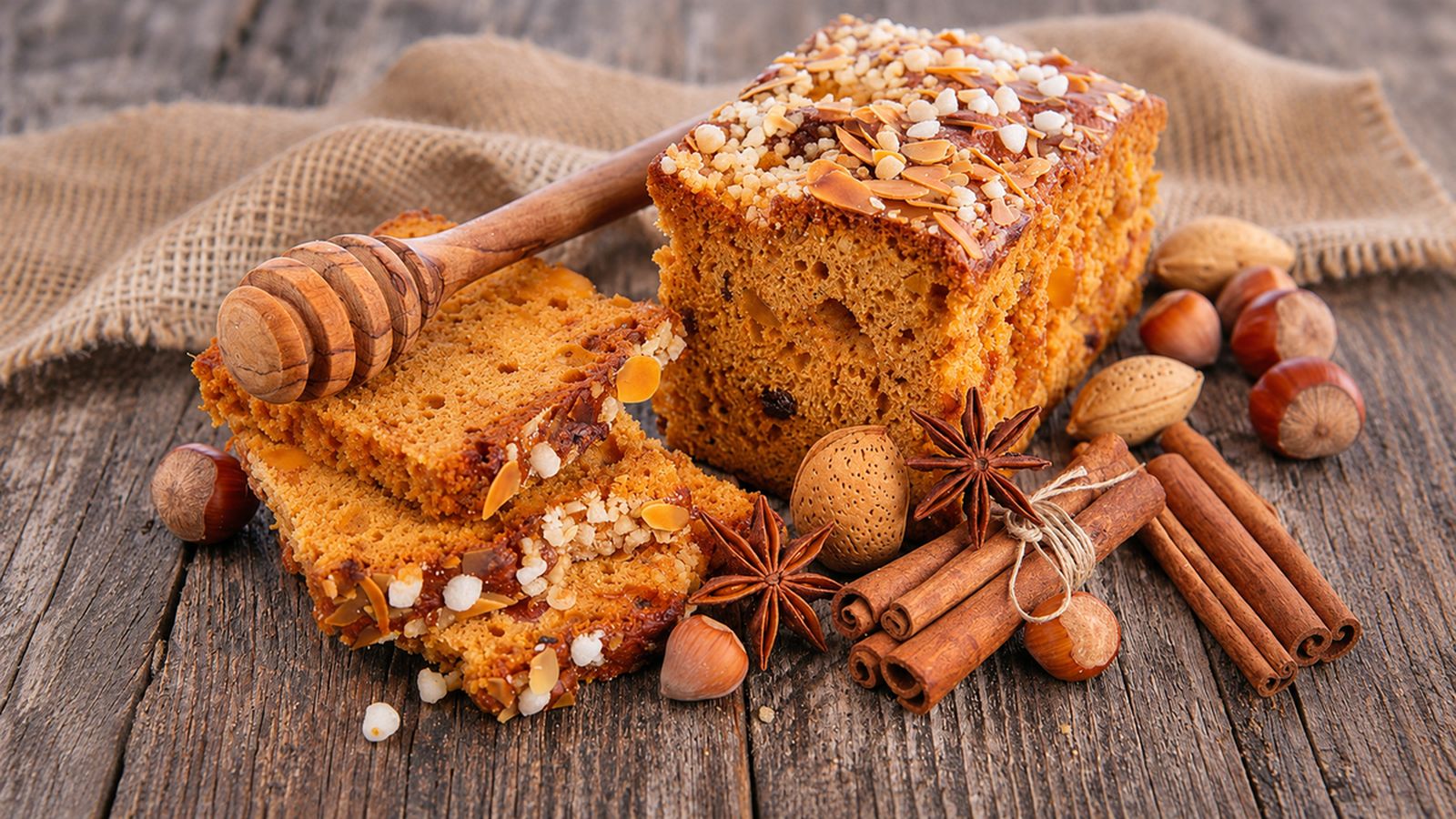
This Alsace gingerbread, or pain d’épices, is the soft kind, baked in a loaf tin: rye flour, honey melted into milk, brown sugar, eggs, cinnamon, ginger and star anise, with about an hour in the oven at 180 °C. It is best left to rest for a day, well wrapped, before you slice it. It is the taste of Advent, in Alsace as in neighbouring Moselle.
Baking time: 50 minutes to 1 hour
Resting time: ideally 24 hours before eating
Makes 1 loaf tin
Ingredients
- 250 g rye flour
- 250 g honey
- 100 g brown sugar
- 1 sachet baking powder
- 200 ml milk
- 2 eggs
- 2 teaspoons ground cinnamon
- 1 teaspoon ground ginger
- 1 teaspoon ground star anise
- 1 pinch of salt
- Butter and flour for the tin
Method
- Gently melt the honey, warm the milk, then stir the honey into the warm milk.
- Sift the rye flour with the baking powder, then add the brown sugar, salt and spices.
- Make a well, add the beaten eggs and then the honey and milk mixture, and stir until the batter is smooth, without overworking it.
- Preheat the oven to 180 °C (gas mark 4). Butter and flour a loaf tin.
- Pour the batter into the tin without filling it to the brim, and smooth the top.
- Bake for about 50 minutes to 1 hour, until a knife blade comes out dry.
- Turn out and leave to cool on a rack, then wrap the gingerbread and ideally wait 24 hours before eating it.
My tip: don’t skip the rest. Wrapped in cling film or foil, the gingerbread softens and its spices blend; it tastes better the next day than on the day it is baked, and it keeps for several days.
Which honey should you use?
Honey makes half the flavour. A wildflower honey stays in the background and lets the spices speak; a stronger forest or chestnut honey leaves a deeper mark. In Alsace, Miel d’Alsace is a protected geographical indication that comes in six varieties: acacia, lime blossom, wildflower, fir, chestnut and forest. Chestnut is in fact one of the pollens that identify the Alsatian origin of these honeys.
Variations
Rye gives a dense, dark crumb. You can replace part of it with wheat or spelt flour for a lighter gingerbread. A handful of candied orange peel or chopped almonds, stirred into the batter before baking, recalls the Christmas gingerbread sold in slices or as iced biscuits.
Origins
Gingerbread descends from honey bread, known since antiquity. In Europe the tradition took two paths: in France, Reims and later Dijon became its centres; in the German-speaking world, Lebkuchen appeared in Ulm in 1296. Alsace belongs to this second family. Gingerbread was first a Christmas treat made in monasteries, before ordinary people took it up. As early as 1476, bakers in the region formed the guild of the “Meisterlebzelter”, master gingerbread makers, which became the guild of the “Lebküchler” in 1643.
Elsewhere in Alsace, near Barr, the village of Gertwiller made gingerbread its speciality: it had nine gingerbread businesses in 1900. In the Northern Vosges, which straddle the Bas-Rhin and Moselle, gingerbread belongs to the same Advent heritage as bredele and Christstollen. No source gives it a history of its own in the Pays de Bitche or northern Alsace.
What to serve it with
At teatime, with tea, coffee or hot chocolate, plain or spread with butter. During Advent, a slice of gingerbread and a mulled wine are the classic Christmas market pairing.
With festive aperitifs, a thin toasted slice goes with mi-cuit goose foie gras. As for wine, a sweet Gewurztraminer suits both the spices and the foie gras. This grape is grown at the very north of Alsace, in the Cleebourg vineyards, near Wissembourg.
Where to try it
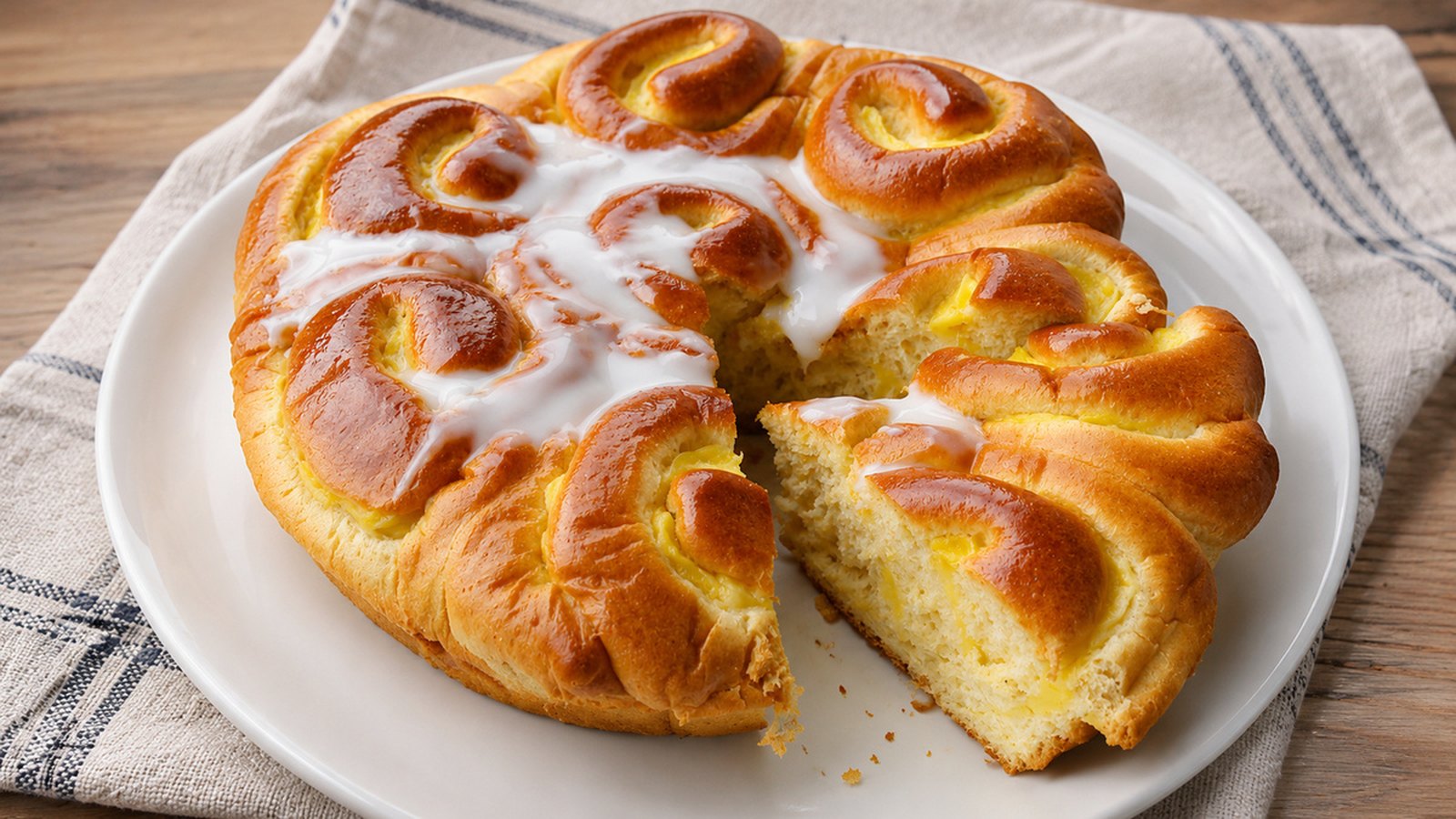
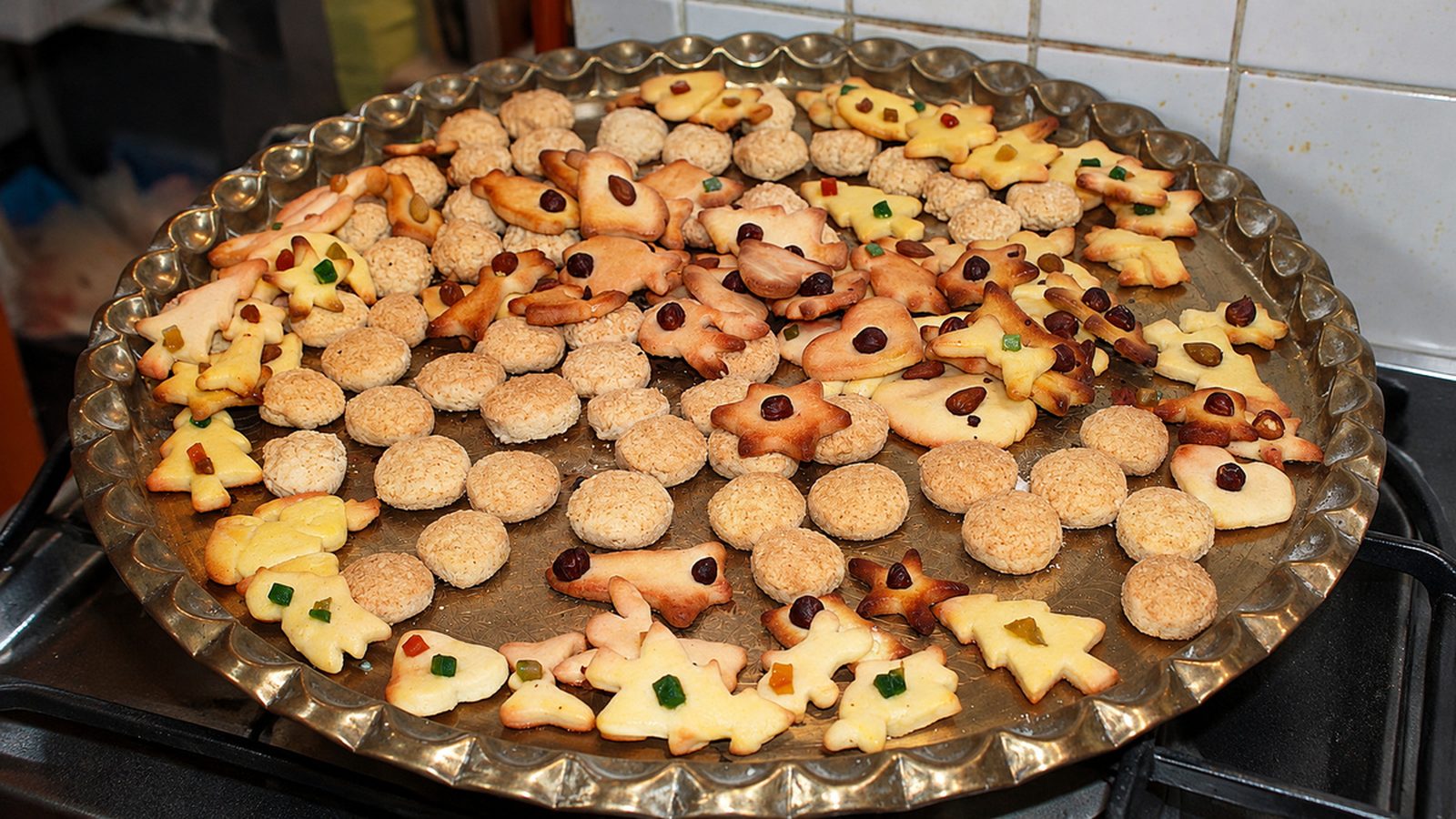
During Advent, gingerbread is sold in bakeries and patisseries and at Christmas markets, in slices, as hearts or as iced biscuits. In the Northern Vosges, Hunspach, La Petite-Pierre and Wissembourg hold Christmas markets, and Haguenau, on the edge of the Park, sets up its chalets in the town centre. Dates change every year: check the Christmas markets calendar or the tourist office before you set off.
Good to know
Expected crowds this week: usual, busier at the weekend
In the Northern Vosges
- 25 December Christmas Day, public holiday in France (long weekend)
- 26 December St Stephen’s Day (Alsace-Moselle), public holiday in France
- 1 January New Year's Day, public holiday in France (long weekend)
- 20 December – 3 January French school holidays
Back home: the Netherlands
- 25 December Christmas Day
- 26 December St. Stephen's Day
- 19 December – 3 January Christmas Holidays
- 13 February – 21 March Spring Holidays (depending on region)
Getting here
- From Belgium and the Netherlands by car: via Luxembourg and Metz, or via Germany towards Karlsruhe and Wissembourg.
- By train: high-speed trains to Strasbourg (via Paris) or to Karlsruhe (via Germany), then regional trains.
- On site: a car is the easiest way to get around.
Holidays: Nager.Date and OpenHolidays.