Semi-cooked goose foie gras terrine: the Alsatian recipe
Homemade semi-cooked goose foie gras: deveined, marinated overnight in Armagnac, cooked in a terrine in a bain-marie at 90 °C, then matured for 48 hours in the fridge. The festive starter in Alsace.

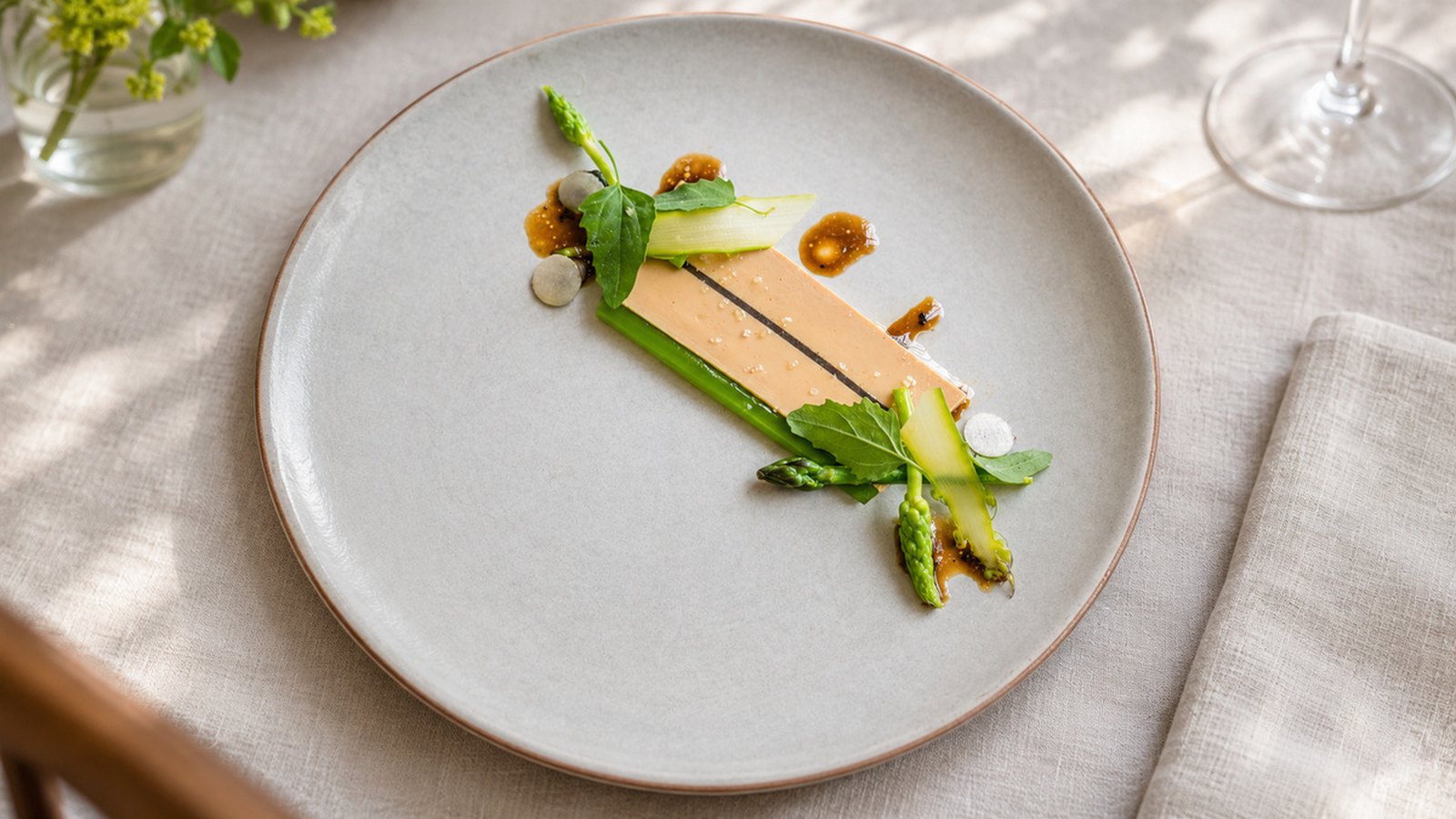
Semi-cooked goose foie gras is made in three stages: the raw liver is deveined and seasoned, left to marinate overnight in Armagnac, then gently cooked in a terrine in a bain-marie at 90 °C until it reaches 45 °C at the core. It then needs 48 hours’ rest in the fridge. In Alsace, goose foie gras, Ganslewer in Alsatian, is the great classic of the Christmas and New Year festivities.
Preparation: 30 minutes
Resting: 12 hours (marinating) and 48 hours (maturing)
Cooking: 45 minutes
Makes 1 terrine (500 g foie gras)
Ingredients
- 1 raw goose foie gras, about 500 g
- 6 to 7 g salt
- 2 g ground white pepper
- 1 g sugar
- 40 ml Armagnac or Cognac (optional)
- Spices to taste: Espelette pepper, quatre-épices (French four-spice mix)…
Method
- Separate the two lobes of the foie gras and carefully remove the veins with a small knife.
- Mix the salt, white pepper, sugar and spices, then spread the mixture over both sides of the lobes, massaging it in lightly.
- Place the lobes in a dish, sprinkle them with Armagnac or Cognac, cover with cling film and leave to marinate in the fridge for at least 12 hours.
- Take the foie gras out of the fridge 30 minutes before cooking and preheat the oven to 90 °C.
- Pack the lobes tightly into a terrine, pour over the marinade juices, cover and set the terrine in a bain-marie.
- Cook for about 45 minutes per 500 g: the core temperature should reach 45 °C.
- Leave to cool at room temperature, remove the excess fat, cover and leave to mature in the fridge for at least 48 hours.
- Take the terrine out 15 to 20 minutes before serving and slice with a thin knife dipped in hot water.
My tip: keep the fat you remove in step 7. Melted and poured over the cut foie gras, it protects it from the air between meals.
How do you devein foie gras successfully?
The liver needs to be supple: taken out of the fridge half an hour beforehand, it can be worked without breaking. Open each lobe by hand, follow the main vein with the tip of the knife and pull it out gently. If the liver falls apart a little, don’t worry: you will reshape it as you pack it into the terrine.
A cooking probe is the best tool for this recipe. At 45 °C at the core, the liver stays pink and meltingly soft. Cookery guides give higher targets, between 55 and 65 °C, for a firmer cook: the choice is yours, but do not go above these temperatures, or the liver will release its fat and turn grainy.
Variations
The same recipe works with duck foie gras, which has a stronger flavour and is easier to find. A quicker version skips the marinade: the seasoned liver, sprinkled with a spoonful of Cognac or port, is cooked for 45 to 50 minutes in a bain-marie in an oven at 120 °C, covered with foil, until it is still slightly wobbly in the centre. Leave it to cool a little, set a weight on top to get a nicely compact terrine, and wait at least 12 hours, ideally 24, before serving.
Origins
Force-feeding geese dates back to Antiquity. After the fall of the Roman Empire, the tradition was kept alive in central Europe by Jewish communities, who cooked with goose fat and spread goose farming from Alsace to the Urals. German books from the 16th century, including a Frankfurt cookbook published in 1581, already mention foie gras.
Strasbourg made its name with it at the end of the 18th century. Around 1780, Jean-Pierre Clause, cook to Marshal de Contades, is said to have created foie gras pâté in pastry. The story may be partly legend, but the recipe does date from that time. Today, most French foie gras comes from the South-West and from ducks; goose foie gras remains associated with Alsace and festive tables. It is also made in brioche: see our foie gras brioche.
What to serve it with
Serve the foie gras lightly chilled, in thick slices, with toasted country bread or brioche and a little fleur de sel. In Alsace it is often served with toasted pain d’épices (spiced honey bread); a fig or onion compote works well too.
For wine, stay in Alsace. Pinot gris is the grape variety the Alsace wine trade body recommends with foie gras; as late-harvest wines (vendanges tardives), it and gewurztraminer bring a sweetness that balances the richness of the liver. The Cleebourg vineyards, near Wissembourg at the northern tip of the Alsace Wine Route, grow both varieties.
Where to try it
Foie gras is a December dish: producers make most of their sales over the festive season. That is when it returns to Alsatian tables, as the starter of Christmas dinner, before the Christmas goose or another roast bird.
To find raw or ready-made foie gras during your stay, the Northern Vosges Christmas markets calendar lists the Advent events, where festive produce takes pride of place.
Good to know
Expected crowds this week: usual, busier at the weekend
In the Northern Vosges
- 25 December Christmas Day, public holiday in France (long weekend)
- 26 December St Stephen’s Day (Alsace-Moselle), public holiday in France
- 1 January New Year's Day, public holiday in France (long weekend)
- 20 December – 3 January French school holidays
Back home: the Netherlands
- 25 December Christmas Day
- 26 December St. Stephen's Day
- 19 December – 3 January Christmas Holidays
- 13 February – 21 March Spring Holidays (depending on region)
Getting here
- From Belgium and the Netherlands by car: via Luxembourg and Metz, or via Germany towards Karlsruhe and Wissembourg.
- By train: high-speed trains to Strasbourg (via Paris) or to Karlsruhe (via Germany), then regional trains.
- On site: a car is the easiest way to get around.
Holidays: Nager.Date and OpenHolidays.