Christmas goose stuffed with chestnuts: the Alsatian recipe
Stuffed Christmas goose: a 3 to 4 kg goose filled with sausage meat, chestnuts, liver and apple, roasted for 2 hours 30 minutes to 3 hours at 180 °C. Alsace’s great festive roast, serving 6 to 8.

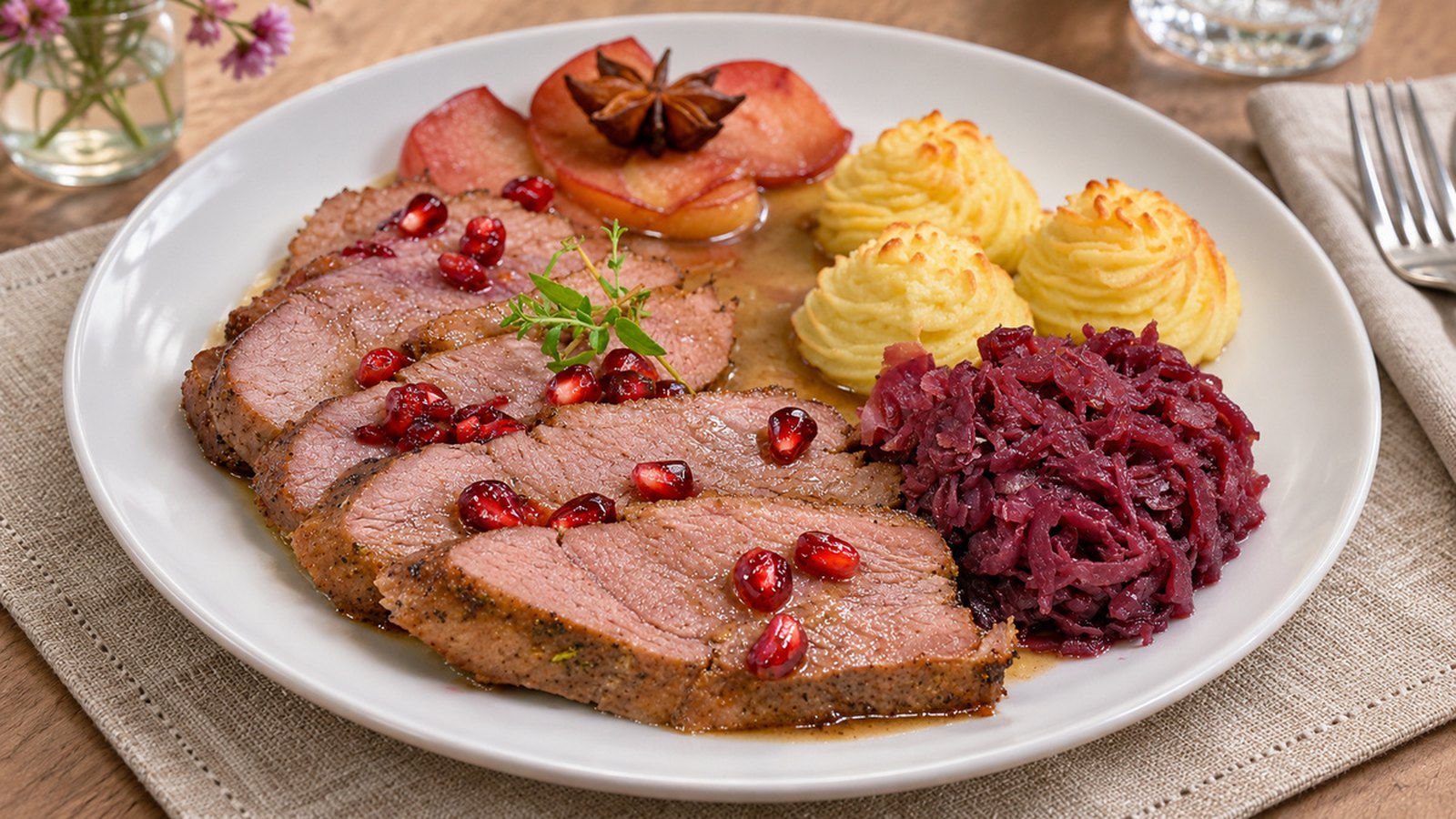
Christmas goose means a 3 to 4 kg goose stuffed with sausage meat, chestnuts, liver and apple, then roasted for 2 hours 30 minutes to 3 hours at 180 °C on a bed of vegetables. It feeds six to eight. In Alsace, it shares pride of place on the festive table with foie gras, from St Martin’s Day to Christmas.
Cooking time: 2 hours 30 minutes to 3 hours
Resting: 15 to 20 minutes
Serves 6 to 8
Ingredients
- 1 goose, 3 to 4 kg
- Salt, pepper, thyme and bay leaf
- Melted butter
- Olive oil
- 200 g sausage meat
- 200 g cooked chestnuts
- 100 g goose or duck liver
- 1 apple
- 1 onion
- 1 bunch parsley
- 1 egg
- Carrots, onions and celery sticks (for the roasting bed)
Method
- Pull out any remaining feathers with tweezers, then singe the goose over a flame. Pat it dry and season the cavity with salt, pepper, thyme and bay leaf.
- Brush the goose with a mixture of melted butter and olive oil.
- For the stuffing, finely chop the onion and parsley, crumble the chestnuts and dice the apple, then mix with the sausage meat, liver and beaten egg. Season.
- Stuff the goose and close the opening with skewers or kitchen string.
- Preheat the oven to 180 °C (gas mark 4). Arrange the carrots, onions and celery, cut into large chunks, in a large roasting tin and set the goose on top, breast side up.
- Roast for 2 hours 30 minutes to 3 hours depending on size, basting regularly, until the core temperature reaches 75 °C: the juices running from the pierced thigh should be clear.
- Cover the goose with foil and leave it to rest for 15 to 20 minutes before carving.
My tip: a goose gives off a lot of fat. Pour it off from the tin once or twice during cooking and keep it in a jar in the fridge: it makes the best sautéed potatoes of the festive season.
How to get stuffed goose right
Allow plenty: a 3 to 4 kg goose has a lot of bone and carcass, hence only six to eight portions. Order it in advance from a poulterer, especially in December.
A meat thermometer is your best ally: the stuffing at the centre must also reach 75 °C. If the skin browns too quickly, cover the breast with foil for the last hour.
To carve, first remove the legs at the joint, then the wings. Next, slice the breast thinly along the breastbone. Serve the stuffing separately, with a spoon.
Origins
Goose is the bird of the winter festivities in Germany and northern Europe, and Alsace shares this tradition. It begins on St Martin’s Day, 11 November: this day marked the end of the farming year, when rents were paid, often in kind, and the last great feast before the fast that preceded Christmas. Roast Martinmas goose is part of the Alsatian culinary repertoire, and it is still eaten on that day across the border, in the Palatinate Forest as throughout Germany.
At Christmas, goose roasted or stuffed with apples and chestnuts takes pride of place on the Alsatian table. The region is also goose country thanks to its foie gras, which Strasbourg made into a speciality: see our mi-cuit goose foie gras for the starter of the same meal. The same method works for Alsatian stuffed duck, which is smaller and quicker to roast.
What to serve with it
Red cabbage is the classic side for roast goose in Germany. Our recipe for red cabbage with apples and chestnuts echoes the fruit in the stuffing and can be made while the goose roasts. Potatoes roasted in goose fat and a chestnut purée round off the dish nicely.
For wine, the Guide Hachette recommends a dry, full-bodied white, including Alsace Pinot Gris, or a fine, elegant red. An Alsace Pinot Noir answers that second suggestion. Both grape varieties are grown at the very northern tip of Alsace, in the Cleebourg vineyards, near Wissembourg.
Where to try it
Christmas goose is first and foremost a family dish, prepared for Christmas Eve dinner or lunch on 25 December. To cook it yourself, order your goose in November and stock up on chestnuts, gingerbread and bredele (Alsatian Christmas biscuits) at the Christmas markets in and around the Park.
Around 11 November, St Martin’s Day is the other goose date, especially across the border in the Palatinate.
Good to know
Expected crowds this week: usual, busier at the weekend
In the Northern Vosges
- 25 December Christmas Day, public holiday in France (long weekend)
- 26 December St Stephen’s Day (Alsace-Moselle), public holiday in France
- 1 January New Year's Day, public holiday in France (long weekend)
- 20 December – 3 January French school holidays
Back home: the Netherlands
- 25 December Christmas Day
- 26 December St. Stephen's Day
- 19 December – 3 January Christmas Holidays
- 13 February – 21 March Spring Holidays (depending on region)
Getting here
- From Belgium and the Netherlands by car: via Luxembourg and Metz, or via Germany towards Karlsruhe and Wissembourg.
- By train: high-speed trains to Strasbourg (via Paris) or to Karlsruhe (via Germany), then regional trains.
- On site: a car is the easiest way to get around.
Holidays: Nager.Date and OpenHolidays.