Red cabbage with apples and chestnuts: the recipe
Red cabbage with apples and chestnuts: shredded cabbage softened with onion and apples, deglazed with cider vinegar and simmered in red wine. The winter side dish for game and goose.

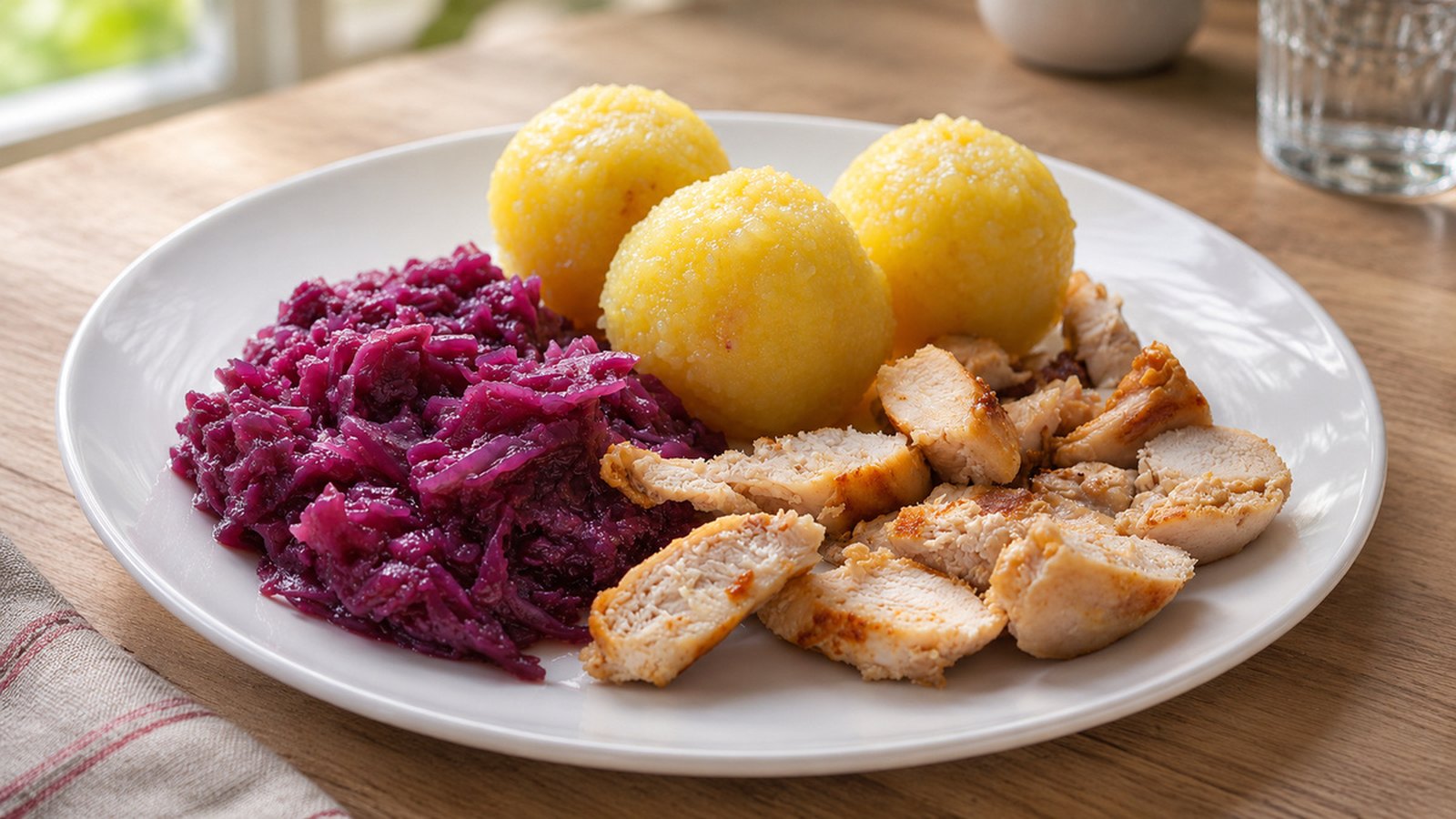
Red cabbage with apples and chestnuts is an autumn and winter side dish: shredded red cabbage softened with an onion and tart apples, lightly caramelised with sugar, deglazed with cider vinegar, then simmered for half an hour with chestnuts and a little red wine. It is served with game, duck, goose or roast pork on both sides of the Rhine.
Preparation: 20 minutes
Cooking: about 50 minutes
Serves 4 to 6 as a side dish
Ingredients
- 1 small red cabbage
- 2 apples, preferably tart
- 200 g cooked and peeled chestnuts
- 1 onion
- 2 tablespoons sugar
- 3 tablespoons cider vinegar
- 100 ml red wine
- 2 tablespoons olive oil
- Salt and pepper
Method
- Remove the outer leaves of the cabbage, cut it in half, cut out the core and slice it into thin strips. Peel and core the apples and cut them into pieces. Drain the chestnuts.
- In a large saucepan, soften the sliced onion in the oil over a medium heat for about 5 minutes, until translucent.
- Add the cabbage and cook for 10 minutes, stirring, then add the apples and cook for another 5 minutes.
- Sprinkle with the sugar and let it caramelise lightly for a few minutes, then deglaze with the cider vinegar, stirring.
- Add the chestnuts and red wine, cover and simmer over a low heat for about 30 minutes, until the cabbage is tender.
- Season with salt and pepper, adjust the sugar if needed and serve hot.
My tip: make it the day before. Gently reheated with the lid on, red cabbage tastes better the next day, and on the day of the meal you’ll only have the meat to keep an eye on.
Why put vinegar in red cabbage?
Red cabbage gets its colour from pigments called anthocyanins, which change shade depending on acidity. During cooking the cabbage tends to turn blue; an acidic environment keeps it red. The cider vinegar, tart apples and red wine in this recipe do just that, as well as balancing the sugar.
Slice it finely: even strips cook at the same rate and take on the flavour of the juices better. As for the chestnuts, the cooked and peeled ones sold in jars or vacuum packs save a lot of time. Fresh chestnuts need half an hour’s boiling followed by patient peeling.
For a raw, crunchy version served as a starter, try the red cabbage salad with cumin.
Origins
Red cabbage braised with apples belongs to the cooking of the Rhineland and German-speaking Europe. In Germany it is called Rotkohl, Rotkraut or Blaukraut depending on the region, and traditionally accompanies goose, duck, pork and game. Recipes from northern Germany and Baden sharpen it with vinegar and wine; those from the south often prefer sugar. In Alsace it plays the same role: the side dish for winter meals and festive dinners.
The chestnuts link the dish to the forests of the area. On the German side of the biosphere reserve, in the Palatinate Forest (Pfälzerwald), the sweet chestnut, known locally as Keschde, is an autumn speciality. A hiking trail, the Pfälzer Keschdeweg, links Hauenstein with Neustadt an der Weinstraße through the chestnut groves, and Palatinate restaurants like to serve chestnuts with game in autumn.
What to serve it with
Red cabbage with chestnuts goes with roast venison or wild boar, duck, Christmas goose or Alsatian-style stuffed duck. It also works with a simple roast pork. Add spätzle or sautéed potatoes for a complete meal.
For wine, an Alsace Pinot Noir served slightly chilled pairs well with game and the fruitiness of the cabbage. The Cleebourg vineyards, near Wissembourg, produce several, including one from the Huettgasse lieu-dit. With goose or duck, an Alsace Pinot Gris also works.
Where to try it
Red cabbage is back on the table from autumn to Christmas, with the hunting season and festive meals. On the Palatinate side, chestnut days are held every autumn from October to mid-November, and Annweiler am Trifels celebrates the Keschde in early October: check this year’s dates. In December, head to the Christmas markets of the Northern Vosges to stock up on seasonal produce.
FAQ
How long does red cabbage with apples and chestnuts take to make?
Allow 20 minutes’ preparation and about 50 minutes’ cooking for red cabbage with apples and chestnuts, including 30 minutes’ simmering over a low heat with the lid on, until the cabbage is tender.
Why put vinegar in red cabbage?
The pigments in red cabbage, anthocyanins, change colour depending on acidity: during cooking the cabbage tends to turn blue, and an acidic environment keeps it red. Cider vinegar, tart apples and red wine do this job and also balance the sugar.
Can red cabbage with chestnuts be made the day before?
Yes, it’s even recommended: gently reheated with the lid on, red cabbage with apples and chestnuts tastes better the next day.
Should you use fresh or jarred chestnuts?
Chestnuts sold cooked and peeled, in jars or vacuum packs, save a lot of time. Fresh chestnuts need half an hour’s boiling followed by patient peeling.
What goes with red cabbage with apples and chestnuts?
Red cabbage with apples and chestnuts goes with roast venison or wild boar, duck, Christmas goose or a simple roast pork. For wine, choose an Alsace Pinot Noir served slightly chilled, or a Pinot Gris with goose and duck.
Good to know
Expected crowds this week: usual, busier at the weekend
In the Northern Vosges
- 25 December Christmas Day, public holiday in France (long weekend)
- 26 December St Stephen’s Day (Alsace-Moselle), public holiday in France
- 1 January New Year's Day, public holiday in France (long weekend)
- 20 December – 3 January French school holidays
Back home: the Netherlands
- 25 December Christmas Day
- 26 December St. Stephen's Day
- 19 December – 3 January Christmas Holidays
- 13 February – 21 March Spring Holidays (depending on region)
Getting here
- From Belgium and the Netherlands by car: via Luxembourg and Metz, or via Germany towards Karlsruhe and Wissembourg.
- By train: high-speed trains to Strasbourg (via Paris) or to Karlsruhe (via Germany), then regional trains.
- On site: a car is the easiest way to get around.
Holidays: Nager.Date and OpenHolidays.