Alsace-style stuffed duck: the recipe
Alsace-style stuffed duck: a stuffing of sausage meat, stale bread, apples and parsley, roasted for two hours in the oven with Alsace white wine. A festive dish for 4 to 6 people.

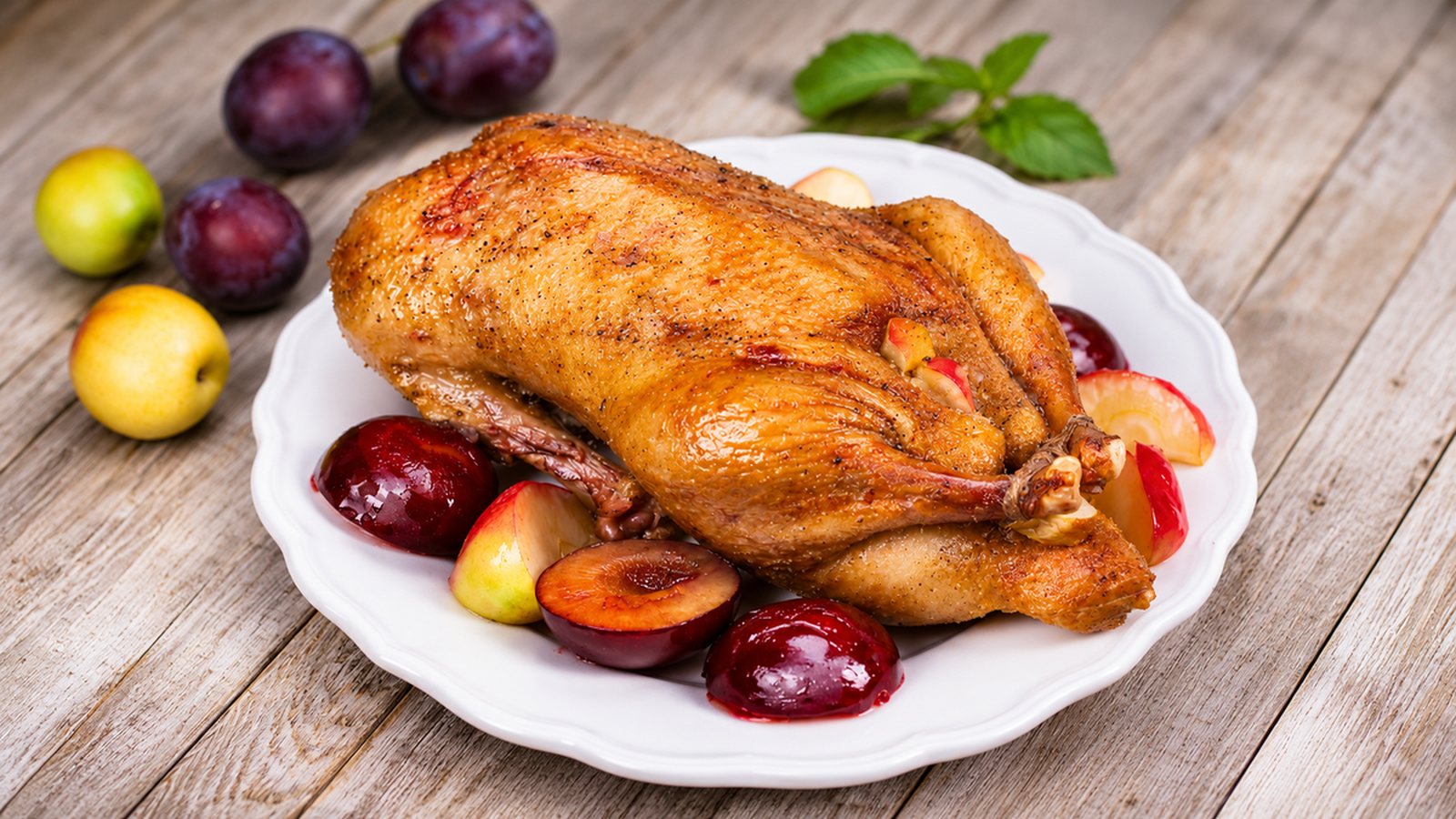
Alsace-style stuffed duck is a whole duck filled with a stuffing of sausage meat, stale bread soaked in milk, apples, onions and parsley, then roasted for about two hours at 180°C with a glass of Alsace white wine. It is a festive dish, the smaller cousin of the stuffed goose that takes pride of place on Alsatian tables at Christmas.
Preparation: 30 minutes
Cooking: about 2 hours
Serves 4 to 6
Ingredients
- 1 whole duck, about 2.5 kg
- 200 g sausage meat
- 150 g stale country bread
- 100 ml milk
- 2 onions
- 2 apples
- 1 bunch of parsley
- 2 garlic cloves
- 2 eggs
- Salt and pepper
- 2 tbsp olive oil
- 1 glass of Alsace white wine
Method
- Crumble the stale bread into a bowl and cover it with the milk to soften. Finely chop the onions and garlic, peel the apples and cut them into small dice, and chop the parsley.
- In a mixing bowl, combine the sausage meat, softened bread, onions, garlic, apples and parsley. Add the eggs, season with salt and pepper and mix until the stuffing is smooth and even.
- Preheat the oven to 180°C (350°F, gas mark 4). Pat the duck dry with kitchen paper, stuff it, then close the opening with cocktail sticks or kitchen string.
- Brush the duck with olive oil and season with salt and pepper. Place it breast side up in a roasting dish and pour the white wine into the bottom of the dish.
- Roast for about 2 hours, basting regularly with the cooking juices. Add a little water if the bottom of the dish starts to catch.
- Check that it is cooked: the core temperature should reach 75 to 80°C, or the juices should run clear when you pierce the thigh. If not, cook for a little longer.
My tip: taste the stuffing before you fill the duck. Fry a spoonful in a pan: it is the only way to adjust the salt and pepper in time.
How to get the roasting right
Duck releases a lot of fat as it cooks. Spoon some of it out of the dish halfway through: the skin browns better and the juices stay clearer. Keep the fat in the fridge, as it is perfect for sautéing potatoes.
Let the duck rest for a quarter of an hour under a sheet of foil before carving. Remove the string, take off the legs and wings, slice the breasts and serve each portion with a spoonful of stuffing.
Variations
In autumn, some of the apples can make way for crumbled chestnuts, as in the stuffing for the festive goose. Sautéed mushrooms also work well in the stuffing. If you are cooking for a crowd, the same stuffing can fill a goose: that is the Christmas goose, which is larger and takes longer to cook.
Origins
Stuffed duck has no written history specific to Alsace: it is a family recipe rather than a codified speciality. It belongs to the tradition of festive poultry. In Alsace, the goose has pride of place on the Christmas table, roasted or stuffed with apples and chestnuts. The stuffed Christmas goose recipe in the Guide Hachette des Vins even suggests a large duck if no goose is available.
What makes the recipe Alsatian is its ingredients: stale bread that is never thrown away, apples from the orchards, sausage meat and Alsace white wine in the bottom of the dish. In the Northern Vosges, on the Bas-Rhin side as well as the Moselle side, the traditional standard orchards surrounding the villages are part of the heritage that the Park protects together with local fruit-growers’ associations.
What to serve it with
Braised red cabbage is the most natural winter side dish: try the red cabbage with apples and chestnuts, which echoes the fruit in the stuffing. Spätzle or potatoes sautéed in duck fat soak up the juices nicely.
As for wine, the Alsace wine trade body recommends Pinot Gris with poultry and game, and Pinot Noir with red meat and game: both go well with roast duck. The Cleebourg vineyards, near Wissembourg, produce both. If you would rather stick with white, serve the same wine you poured into the roasting dish.
Where to try it
Stuffed duck is mostly made at home, for end-of-year meals and big autumn and winter gatherings. For locally raised poultry and apples, head to the markets in the towns and villages of the Park: the markets calendar lists them, and the Recipes section brings together other festive Alsatian and Lorraine dishes.
Good to know
Expected crowds this week: usual, busier at the weekend
In the Northern Vosges
- 25 December Christmas Day, public holiday in France (long weekend)
- 26 December St Stephen’s Day (Alsace-Moselle), public holiday in France
- 1 January New Year's Day, public holiday in France (long weekend)
- 20 December – 3 January French school holidays
Back home: the Netherlands
- 25 December Christmas Day
- 26 December St. Stephen's Day
- 19 December – 3 January Christmas Holidays
- 13 February – 21 March Spring Holidays (depending on region)
Getting here
- From Belgium and the Netherlands by car: via Luxembourg and Metz, or via Germany towards Karlsruhe and Wissembourg.
- By train: high-speed trains to Strasbourg (via Paris) or to Karlsruhe (via Germany), then regional trains.
- On site: a car is the easiest way to get around.
Holidays: Nager.Date and OpenHolidays.