Almond Schwowebredele: the recipe for Swabian bredele
Schwowebredele, or Schwowebredle: Christmas bredele made with butter and ground almonds, sprinkled with flaked almonds and baked for 10 to 12 minutes. The almond biscuit of Advent.

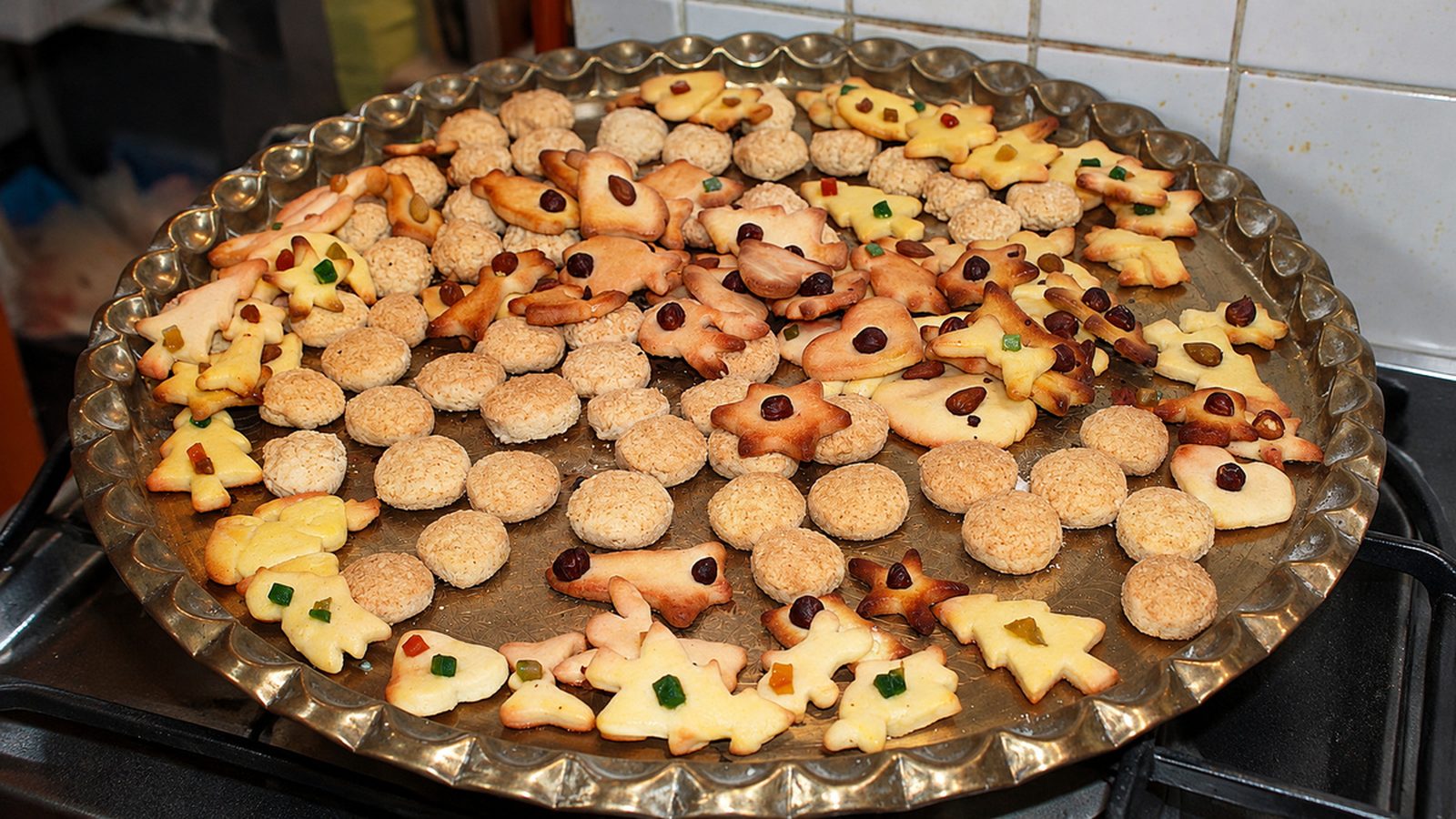
Schwowebredle, or Schwowebredele, are almond bredele: a butter dough enriched with ground almonds, cut out with cookie cutters, sprinkled with flaked almonds and baked for 10 to 12 minutes at 180 °C. More crumbly and more fragrant than butter shortbread, they are among the Christmas biscuits made in Alsace and Moselle during Advent.
Preparation: 30 minutes
Resting: 1 hour
Baking: 10 to 12 minutes per tray
Makes about 50 biscuits
Ingredients
- 250 g plain flour
- 125 g butter
- 125 g sugar
- 100 g ground almonds
- 1 egg
- 1 pinch of salt
- 1 teaspoon vanilla extract
- A few flaked almonds for decoration
Method
- Let the butter soften. Sift the flour and mix it with the ground almonds and salt.
- Beat the softened butter with the sugar until creamy. Add the egg and vanilla, then gradually work in the flour and almond mixture until the dough is smooth.
- Shape it into a ball, wrap it in cling film and leave it to rest in the fridge for at least an hour.
- Preheat the oven to 180 °C (gas mark 4). Roll the dough out to 4–5 mm on a floured surface and cut out the biscuits with cookie cutters.
- Place the biscuits on a tray lined with baking paper and sprinkle them with flaked almonds.
- Bake for 10 to 12 minutes on the middle shelf, until lightly golden, then leave them to cool on a wire rack before storing them in an airtight tin.
My tip: to make the flaked almonds stick, press them lightly into the raw dough, or brush the biscuits with a little beaten egg first. Watch the end of the baking time: the almonds colour faster than the dough.
Which variations to try?
The recipe above is the mild version, flavoured with vanilla. Many Alsatian recipes flavour Schwowebredele with cinnamon and a little lemon zest, and one Alsatian biscuit maker glazes them after baking with lemon and kirsch. To get close to that, add a teaspoon of cinnamon and the grated zest of an unwaxed lemon to the flour.
You can also replace part of the ground almonds with ground hazelnuts or walnuts: these three nuts are the basic ingredients of Schwowebredele. Finally, dipping one half in melted chocolate makes a lovely contrast with the toasted almonds.
Origins
In Alsatian, “Schwowe” means the Swabians, the people of Swabia, a region in south-west Germany: Schwowebredele are “Swabian bredele”. One Alsatian biscuit maker links the recipe to that region; when and how it was borrowed is not documented. The name is a reminder that the tradition of Christmas biscuits is shared with neighbouring Germany, where people also bake almond and cinnamon stars, Zimtsterne.
Schwowebredele belong to the bredele family, those little Christmas biscuits whose oldest known moulds date back to the 14th century and whose first written mention dates from 1570, in Strasbourg. The word is pronounced braedele in the Bas-Rhin as in Moselle: the tradition is found throughout the Northern Vosges Regional Nature Park, from the Outre-Forêt to the Pays de Bitche. To complete a Christmas tin, add some spiced bredele and Butterbredele, or an Alsatian gingerbread.
What to serve them with
Schwowebredle go with afternoon coffee or tea. Toasted almond pairs well with a sweet Alsace wine: a Gewurztraminer or a Pinot Gris, two grape varieties of the Cleebourg vineyards, near Wissembourg. A medium-dry Crémant d’Alsace also works for a festive aperitif. For an alcohol-free option, try a warm spiced apple juice.
Where to try them
During Advent, Schwowebredele can be found in bakeries and pâtisseries, often in the assortments of bredele sold by weight, and at Christmas markets. In the Wissembourg and Outre-Forêt area, Wissembourg and Hunspach have their Christmas markets; so do La Petite-Pierre and, on the edge of the Park, Haguenau. Dates change every year: check the Christmas markets calendar or the tourist office before you set off.
Good to know
Expected crowds this week: usual, busier at the weekend
In the Northern Vosges
- 25 December Christmas Day, public holiday in France (long weekend)
- 26 December St Stephen’s Day (Alsace-Moselle), public holiday in France
- 1 January New Year's Day, public holiday in France (long weekend)
- 20 December – 3 January French school holidays
Back home: the Netherlands
- 25 December Christmas Day
- 26 December St. Stephen's Day
- 19 December – 3 January Christmas Holidays
- 13 February – 21 March Spring Holidays (depending on region)
Getting here
- From Belgium and the Netherlands by car: via Luxembourg and Metz, or via Germany towards Karlsruhe and Wissembourg.
- By train: high-speed trains to Strasbourg (via Paris) or to Karlsruhe (via Germany), then regional trains.
- On site: a car is the easiest way to get around.
Holidays: Nager.Date and OpenHolidays.