Sainte-Croix Wildlife Park: European Animals in Semi-Freedom
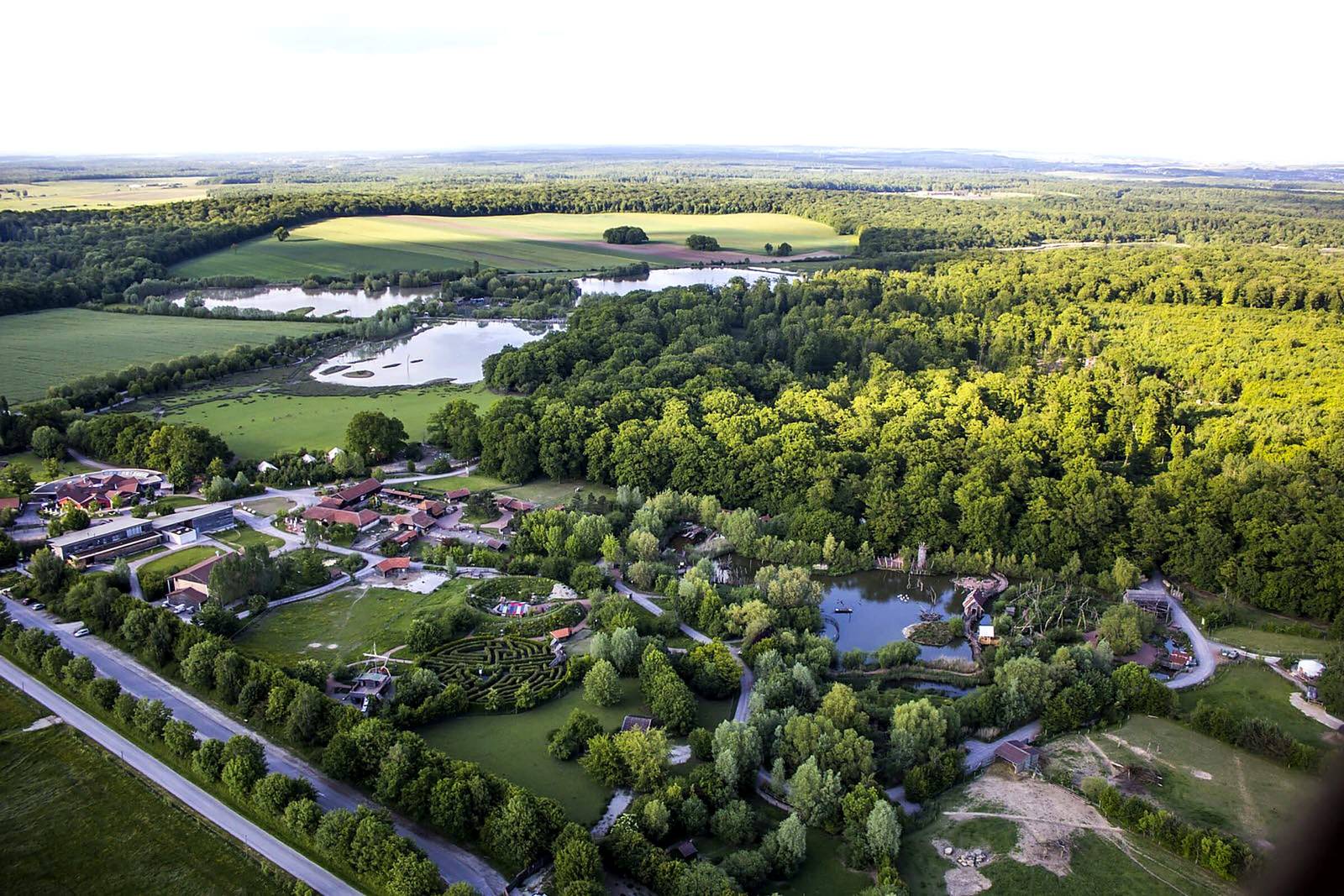
In Rhodes, in the Moselle department, Sainte-Croix park mainly showcases European wildlife across 130 hectares of forest and meadow. Allow a full day on site, or spend a night in a lodge among the animals.

From farm estate to wildlife park
The story begins in 1967, when farmer Gérald Singer and his wife Liliane became the owners of the Sainte-Croix estate. The park opened to the public on 10 June 1980. Today it covers 130 hectares in the commune of Rhodes, within the Lorraine Regional Nature Park. It is home to more than 1,500 animals of 130 species, most of them European wildlife, spread across five zones.
The park has welcomed more than 3 million visitors since it opened. It takes part in European conservation, breeding and reintroduction programmes, and supports field projects through its endowment fund, Sainte-Croix Biodiversité.
What you see on your visit
You explore on foot, along paths through forest and meadow. The animals live in large enclosures in semi-freedom: sometimes you have to scan the landscape to spot them, and that is the whole point. The park is divided into several areas:
- The Wild Expanses, the park’s wide open spaces;
- Wolf Stories;
- The New World, an area devoted to North American wildlife, opened in 2019;
- The Wind Farm (Ferme des Vents);
- Néo, Biodiversity Mission.
The park welcomed Canadian wolves in 2013, black wolves in 2020 and a pack of white Arctic wolves in 2022. European pond turtles joined the park in 2020, followed by a pair of white-tailed eagles. Observation walkways let you watch the bears and red deer.
My tip: arrive at opening time, as the park recommends. You will have time to see everything without rushing, and to go back to the enclosures where the animals were hiding the first time round. Some paths close before the rest of the park, so check the day’s programme when you arrive.
With children
Like the region’s other wildlife parks, this is a place designed for families. Children aged 3 to 11 pay a reduced rate, and under-3s go free. More than 90% of the park is step-free. Two areas remain difficult: the grey wolf watchtower and the barefoot trail.
The safari train lets you do part of the visit sitting down, with an additional ticket. For keen youngsters, the Keeper for a Day programme lets them join in the keepers’ work, booking required.
The park asks visitors to follow a few simple rules: stay on the paths, avoid long grass and check your skin after the walk, as insects may be about.
Sleeping among the animals
The park offers 56 eco-labelled lodges. Some look directly onto the wolf, bear or deer enclosures; others are treehouses, and lodges on stilts are offered in winter only. Dinner is served in the park restaurant; if you arrive late, a meal basket is delivered to your lodge. Prices vary with the season and type of lodge: book early for weekends and school holidays. The Northern Vosges have other unusual places to stay too.
When to go, and what to see nearby
Every season has its appeal. In autumn, the park runs outings to hear the red deer rut. In winter, it hosts “Lumières d’Hiver” (Winter Lights), from 21 November 2026 to 20 March 2027, in three phases. First comes Christmas, until 3 January 2027: at weekends and during school holidays, the ticket includes a live show at nightfall, “Le Cadeau d’Amarok”, followed by a light trail; on weekdays the visit is quieter. The park then closes for its January break, before reopening with two themes: the wolf mating season, from 30 January, and animal courtship displays, from mid-February to early March.
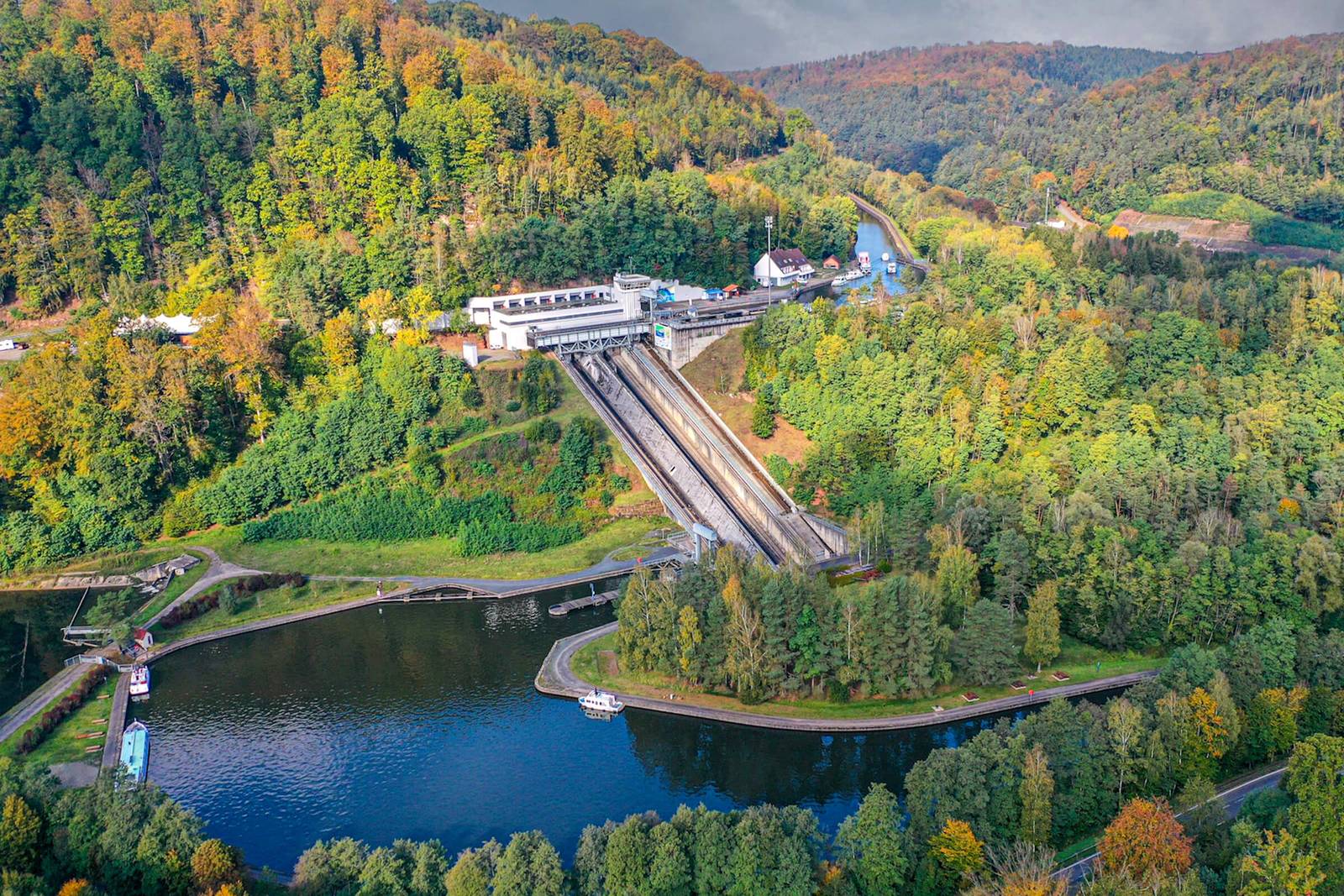
Rhodes sits on a peninsula of the Étang du Stock, a 750-hectare lake used for sailing, boating and fishing. The area has other large lakes, such as the one at Gondrexange. About twelve kilometres away, Sarrebourg’s Cordeliers Chapel holds a stained-glass window by Marc Chagall, “La Paix” (Peace). The Saint-Louis-Arzviller inclined plane is about 25 km away as the crow flies.
Practical information
The park is in the Moselle department, on the edge of the Northern Vosges Regional Nature Park, about 60 km from Nancy, 70 km from Saarbrücken, 80 km from Strasbourg and 85 km from Metz. Without a car, Sarrebourg TGV station is 15 km away, after which you need a taxi. Dogs and other pets are not allowed, and the park has no kennels. The car park has 10 charging points for electric vehicles.
The park closes for a few days each year, notably in mid-November, at Christmas and in January: check the opening calendar before you set off. On the budget side, reduced rates are available for over-65s and students, on presentation of proof at the ticket desk, as well as for visitors with disabilities. The Moselle destination pass (Pass destination Moselle) gives a discount. The Liberté ticket is undated: it remains valid until 31 December 2027, subject to the opening calendar. Opening hours and prices are on the official website.
Good to know
Expected crowds this week: usual, busier at the weekend
In the Northern Vosges
- 25 December Christmas Day, public holiday in France (long weekend)
- 26 December St Stephen’s Day (Alsace-Moselle), public holiday in France
- 1 January New Year's Day, public holiday in France (long weekend)
- 20 December – 3 January French school holidays
Back home: the Netherlands
- 25 December Christmas Day
- 26 December St. Stephen's Day
- 19 December – 3 January Christmas Holidays
- 13 February – 21 March Spring Holidays (depending on region)
Getting here
- From Belgium and the Netherlands by car: via Luxembourg and Metz, or via Germany towards Karlsruhe and Wissembourg.
- By train: high-speed trains to Strasbourg (via Paris) or to Karlsruhe (via Germany), then regional trains.
- On site: a car is the easiest way to get around.
Holidays: Nager.Date and OpenHolidays.