
Visiting Strasbourg in a day from the Northern Vosges
Strasbourg is 33 minutes by TER train from Haguenau and 25 minutes from Saverne. How to get there from the Northern Vosges, what to see in a day and how to combine the city with the Park.

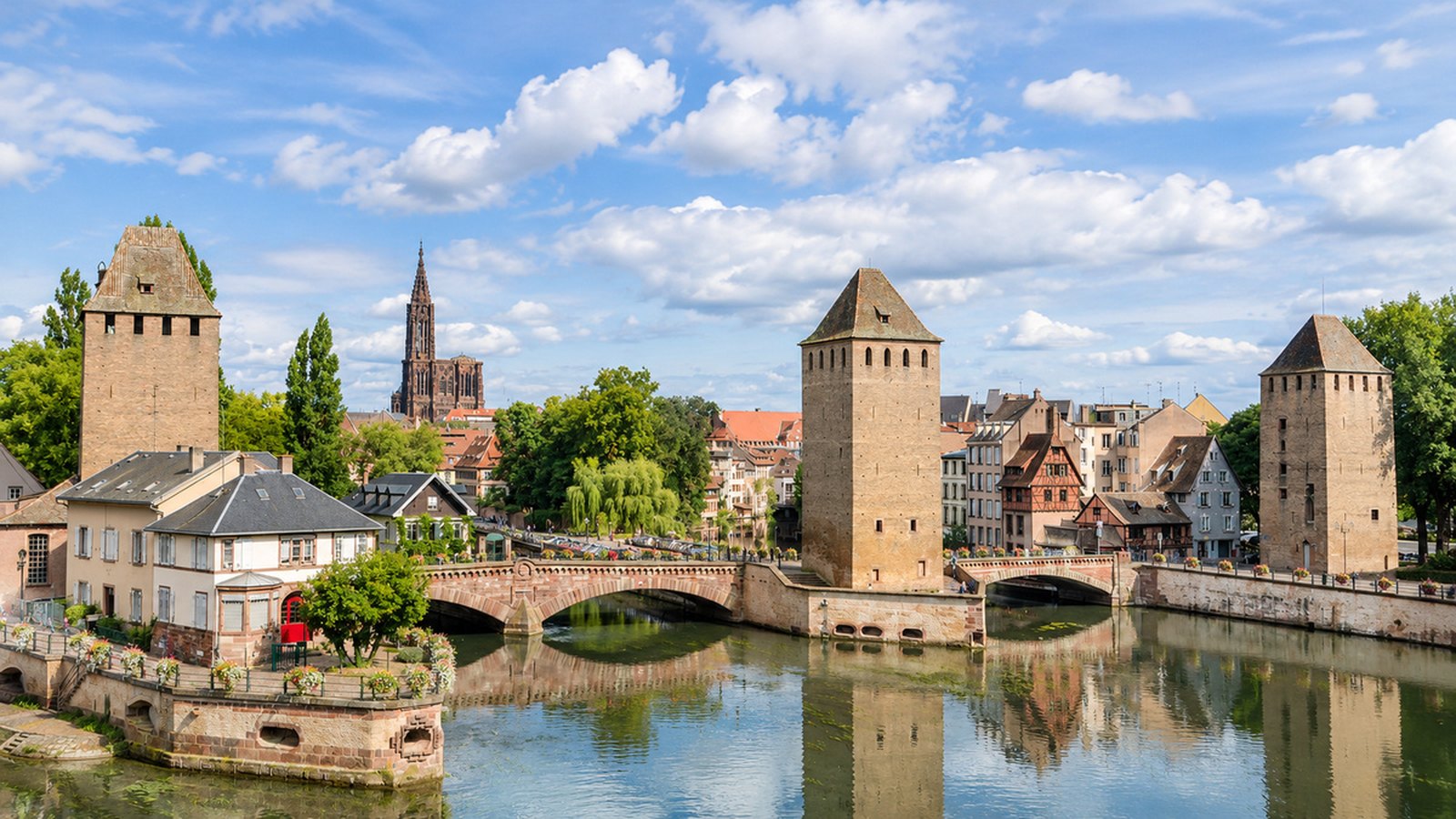
Strasbourg, capital of Alsace and prefecture of the Bas-Rhin, makes an easy day trip from the Northern Vosges: 33 minutes by TER regional train from Haguenau, about 25 minutes from Saverne. You go for the cathedral, Petite France and the Grande Île, a UNESCO World Heritage Site, then head back to sleep in the peace of the Park.
How long does it take to get to Strasbourg from the Northern Vosges?
The train is the simplest option: no parking to hunt for, and the main station is only 1.3 km from the cathedral as the crow flies.
- From Haguenau: direct TER in 33 minutes, with several departures an hour during the day. By car, 33 km.
- From Saverne: direct TER in about 25 minutes, up to four trains an hour. By car, about fifty kilometres on the A4.
- From Niederbronn-les-Bains: direct TER in about 50 to 55 minutes, via Haguenau. By car, about 51 km.
- From Wissembourg: direct TER in about 50 minutes to an hour, via Haguenau. By car, about 66 km.
By car, the journey time depends mostly on traffic jams at the edge of the city: allow extra time at rush hour.
What to see in Strasbourg in one day
In one day, stick to the Grande Île and its surroundings. Everything can be done on foot.
Notre-Dame Cathedral
Start here. Its pink sandstone spire, completed in 1439, rises to 142 metres. Inside, the astronomical clock draws crowds when the apostles parade around midday. If your legs are up to it, climb to the platform: 330 steps, 66 metres up, and the whole city at your feet. Allow an hour for everything.
Petite France, the Ponts Couverts and the Barrage Vauban
West of the Grande Île, the Ill splits into several channels lined with quays and half-timbered houses: this is Petite France. Further on, the Ponts Couverts (covered bridges) and their towers span the river. Just behind them, the Barrage Vauban (Vauban Dam) has had a panoramic terrace since 1996, from which you can take in the Ponts Couverts, Petite France and the cathedral at a single glance.
The Grande Île on foot or by boat
Encircled by the Ill and the Faux-Rempart canal, the Grande Île is linked to the rest of the city by 21 bridges and footbridges. In 1988, Strasbourg became the first French city whose UNESCO listing covered an entire historic centre rather than a single monument. Between Place Kléber and the Palais Rohan, the former residence of the prince-bishops, which now houses three museums, wander without a map. Several companies also run boat trips on the Ill: a good way to rest your legs in the afternoon.
The Neustadt, if you have time
After the annexation of 1871, the city expanded with a new district that roughly tripled its area. Wide avenues, eclectic façades, Place de la République overlooked by the Palais du Rhin: the Neustadt became a World Heritage Site in 2017, as an extension of the Grande Île. An hour’s walk is enough to get a feel for it.
Is Strasbourg worth visiting at Christmas?
Strasbourg has celebrated Christmas with a market since 1570, according to the city. Every year, from late November to 24 December, eight markets and festive areas set up in the historic centre, including the Christkindelsmärik on Place Broglie and the Great Christmas Tree on Place Kléber. Crowds are very heavy, especially at weekends: this is when the train from Haguenau or Saverne really comes into its own. Our Christmas markets calendar also lists the quieter ones in the Northern Vosges.
How to combine Strasbourg and the Park
The simplest idea: stay in the Park and visit Strasbourg for the day, without a car. From Niederbronn-les-Bains, the direct train drops you in central Strasbourg in under an hour.
To the west, Saverne makes a good stop on the way. Its Château des Rohan, the former bishops’ residence, bears the name of the family that also built the Palais Rohan in Strasbourg, between 1732 and 1742: visiting both on the same weekend gives each one more meaning.
If you have two days, carry on south. The Alsace Wine Route begins at Marlenheim, 20 km from Strasbourg as the crow flies, and Colmar is only half an hour away by TER. You will find more ideas for outings beyond the Park in our trips around the Northern Vosges.
Practical information
- Station: Strasbourg (main station), served directly by TER trains from Haguenau, Saverne, Niederbronn-les-Bains and Wissembourg.
- Car: the historic centre is largely pedestrianised. It is best to leave the car at a park-and-ride on the outskirts and finish by tram.
- Time needed: one day for the cathedral, Petite France and the Grande Île; two days with the Neustadt and the museums.
- Accessibility: the Grande Île is flat and easy to explore on foot; the cathedral platform can only be reached by stairs.
- Opening times and prices: on the Strasbourg tourist office website and on the cathedral’s website.
My tip: during the Christmas market, come on a weekday and by train. You will avoid traffic jams, full car parks and the Saturday afternoon crowds.
Good to know
Expected crowds this week: usual, busier at the weekend
In the Northern Vosges
- 25 December Christmas Day, public holiday in France (long weekend)
- 26 December St Stephen’s Day (Alsace-Moselle), public holiday in France
- 1 January New Year's Day, public holiday in France (long weekend)
- 20 December – 3 January French school holidays
Back home: the Netherlands
- 25 December Christmas Day
- 26 December St. Stephen's Day
- 19 December – 3 January Christmas Holidays
- 13 February – 21 March Spring Holidays (depending on region)
Getting here
- From Belgium and the Netherlands by car: via Luxembourg and Metz, or via Germany towards Karlsruhe and Wissembourg.
- By train: high-speed trains to Strasbourg (via Paris) or to Karlsruhe (via Germany), then regional trains.
- On site: a car is the easiest way to get around.
Holidays: Nager.Date and OpenHolidays.