The Alsace Wine Route from the Northern Vosges
The Alsace Wine Route starts in Marlenheim, 19 km from Saverne, and runs south to Thann. How to approach it from the Northern Vosges, what to do in a day and where its northern section begins.

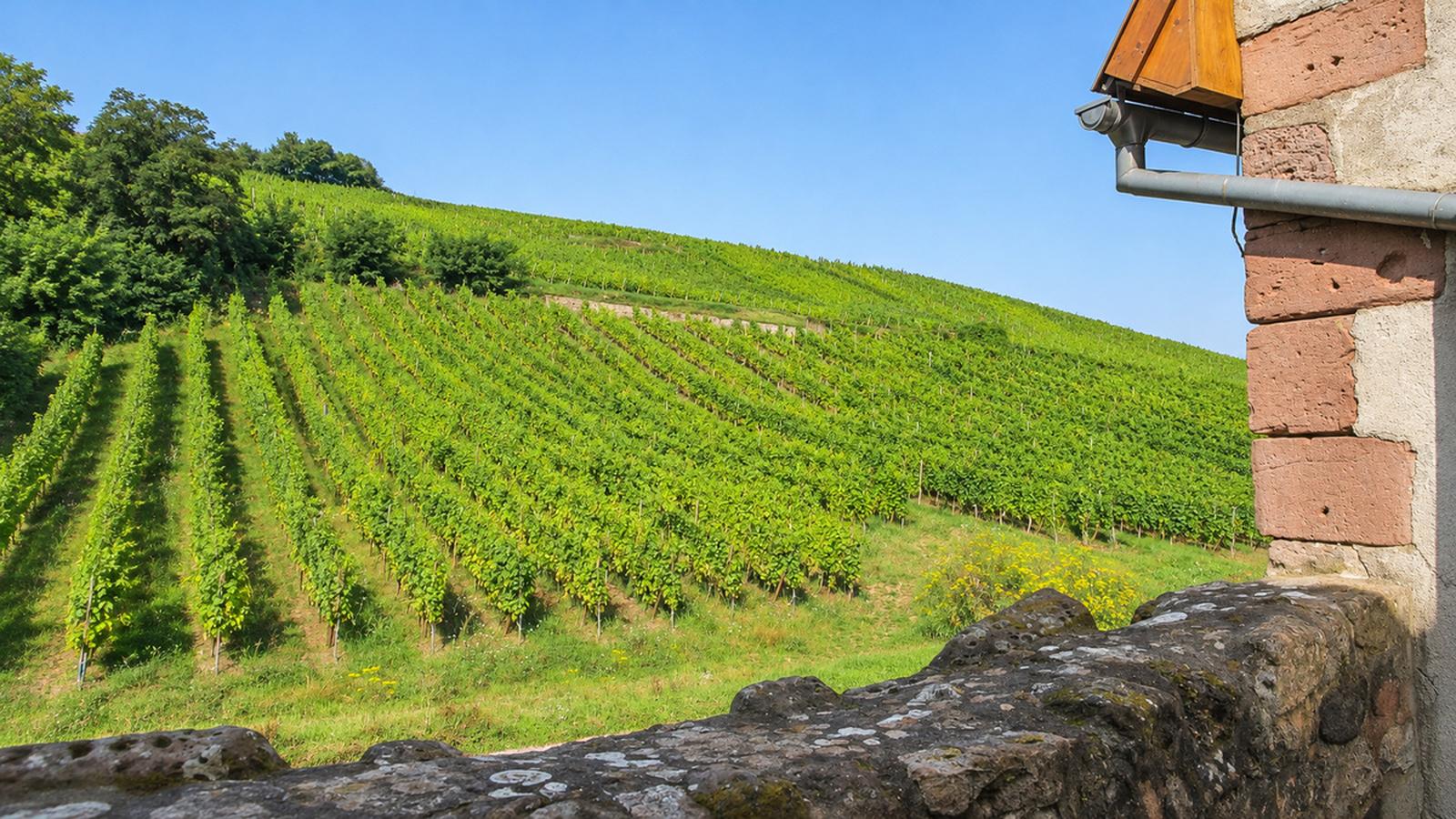
The Alsace Wine Route follows the foothills of the Vosges for more than 170 km, from Marlenheim in the Bas-Rhin to Thann in the Haut-Rhin. From the Northern Vosges, its starting point is very close: Marlenheim is only 19 km from Saverne by road. One day is enough for the northern section, as far as Obernai; allow two or three days to reach the villages of the Haut-Rhin.
What is the Alsace Wine Route?
It is a tourist route created on 30 May 1953: that day, two motorcades set off from Marlenheim and Thann to inaugurate it. It links wine villages at the foot of the Vosges, between the forest and the Alsace plain. Alsace has 119 wine-growing communes and 51 grands crus, 49 of which lie along the route.
The winegrowers here grow seven grape varieties: Sylvaner, Pinot Blanc-Auxerrois, Riesling, Pinot Noir, Pinot Gris, Muscat and Gewurztraminer. People come for tastings in the wine cellars, walks through the vineyards and villages of half-timbered houses.
What about the north? The Cleebourg vineyard
The Wine Route does not quite end at Marlenheim. A detached section, the Northern Alsace Wine Route, circles Wissembourg and Cleebourg, some sixty kilometres north of Strasbourg. The Cleebourg vineyard is the northernmost in Alsace: its slopes, between the forest and the Outre-Forêt, produce all seven Alsace grape varieties as well as crémants.
It is the easiest way to taste Alsace wines without leaving the Wissembourg area. Add Hunspach and its white houses, a few kilometres away, and you have a fine day out.
How far is it from the Northern Vosges?
By road, the starting point in Marlenheim is:
- 19 km from Saverne, about twenty minutes;
- 45 km from Haguenau, about 40 minutes;
- 63 km from Niederbronn-les-Bains, about an hour;
- 78 km from Wissembourg, just over an hour.
Obernai, the first major stop, is 55 km from Haguenau and 40 km from Saverne. The heart of the route, around Colmar, is about a hundred kilometres from Haguenau: allow an hour and a quarter to an hour and a half.
Without a car, it is partly possible. Take the TER regional train to Strasbourg, then the Strasbourg–Obernai–Barr–Sélestat line: Obernai is 32 minutes from Strasbourg. Colmar is half an hour from Strasbourg by TER. Between villages, plan to walk or cycle.
What to do on the Wine Route in one day
The north, from Marlenheim to Obernai
This is the part closest to the Park. Obernai, listed among the Plus Beaux Détours de France, deserves a morning. To the south, Mittelbergheim is one of the Plus Beaux Villages de France (Most Beautiful Villages of France). In between, alternate village visits, a stop at a wine cellar and a walk through the vines.
The centre, around Colmar
This is where the best-known villages are: Riquewihr, Hunawihr, Bergheim and Eguisheim, all listed as Most Beautiful Villages of France, as well as Kaysersberg and Ribeauvillé. From the Northern Vosges, it is a long way for a day trip: stay overnight, and spend half a day in Colmar.
Tasting, walking, celebrating
Many winegrowers welcome visitors to their cellar for a tasting; check beforehand, especially out of season. Many villages have a waymarked vineyard trail. From summer to autumn, wine festivals follow one after another: our calendar of wine events lists them.
How to combine the Wine Route and the Park
Three options work well. The first starts in Saverne: a morning in town, then Marlenheim and the villages as far as Obernai in the afternoon. The second stays in the north: Wissembourg, Cleebourg and Hunspach in one day, with no long drive. The third takes two days: a night in Strasbourg or Colmar, and the Haut-Rhin villages the next day.
Practical information
- Start and finish: Marlenheim (Bas-Rhin) in the north, Thann (Haut-Rhin) in the south; detached section around Wissembourg and Cleebourg.
- Train: TER stations at Obernai, Barr and Sélestat on the line from Strasbourg; Colmar on the Strasbourg–Mulhouse line.
- Time needed: one day for the northern section; two to three days for the whole route.
- Season: spring to autumn; autumn for the grape-harvest atmosphere.
- Tastings: opening hours and conditions on each winery’s website; general information on the official Wine Route website.
My tip: if you are tasting, choose a designated driver who doesn’t drink, or do the northern section by train as far as Obernai.
Good to know
Expected crowds this week: usual, busier at the weekend
In the Northern Vosges
- 25 December Christmas Day, public holiday in France (long weekend)
- 26 December St Stephen’s Day (Alsace-Moselle), public holiday in France
- 1 January New Year's Day, public holiday in France (long weekend)
- 20 December – 3 January French school holidays
Back home: the Netherlands
- 25 December Christmas Day
- 26 December St. Stephen's Day
- 19 December – 3 January Christmas Holidays
- 13 February – 21 March Spring Holidays (depending on region)
Getting here
- From Belgium and the Netherlands by car: via Luxembourg and Metz, or via Germany towards Karlsruhe and Wissembourg.
- By train: high-speed trains to Strasbourg (via Paris) or to Karlsruhe (via Germany), then regional trains.
- On site: a car is the easiest way to get around.
Holidays: Nager.Date and OpenHolidays.