The Northern Vosges Regional Nature Park: forests, sandstone and villages
Created in 1975 and recognised as a UNESCO biosphere reserve in 1989, the Northern Vosges Regional Nature Park covers 111 communes in the Bas-Rhin and Moselle. Here is how to explore it.

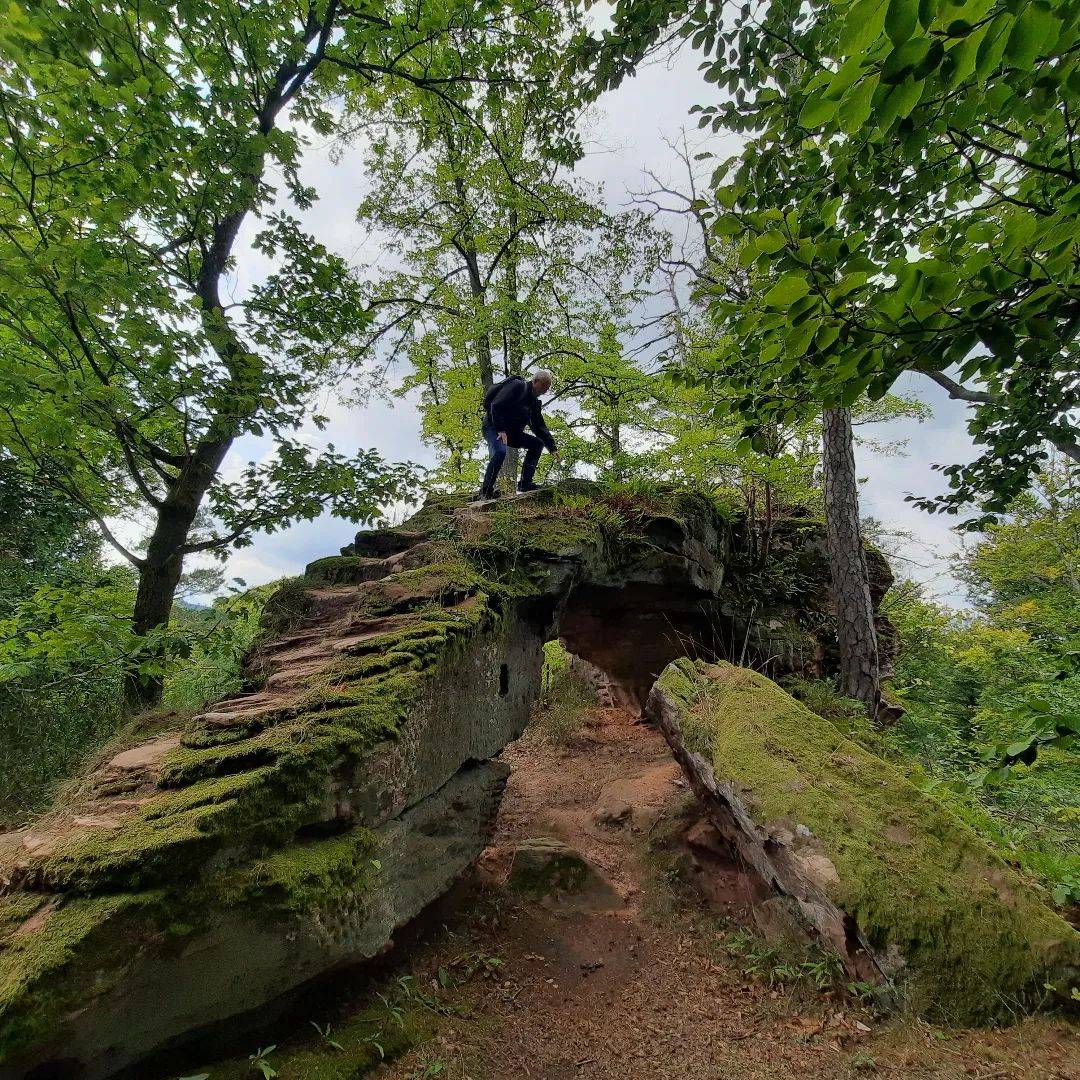
A park of hills and forests
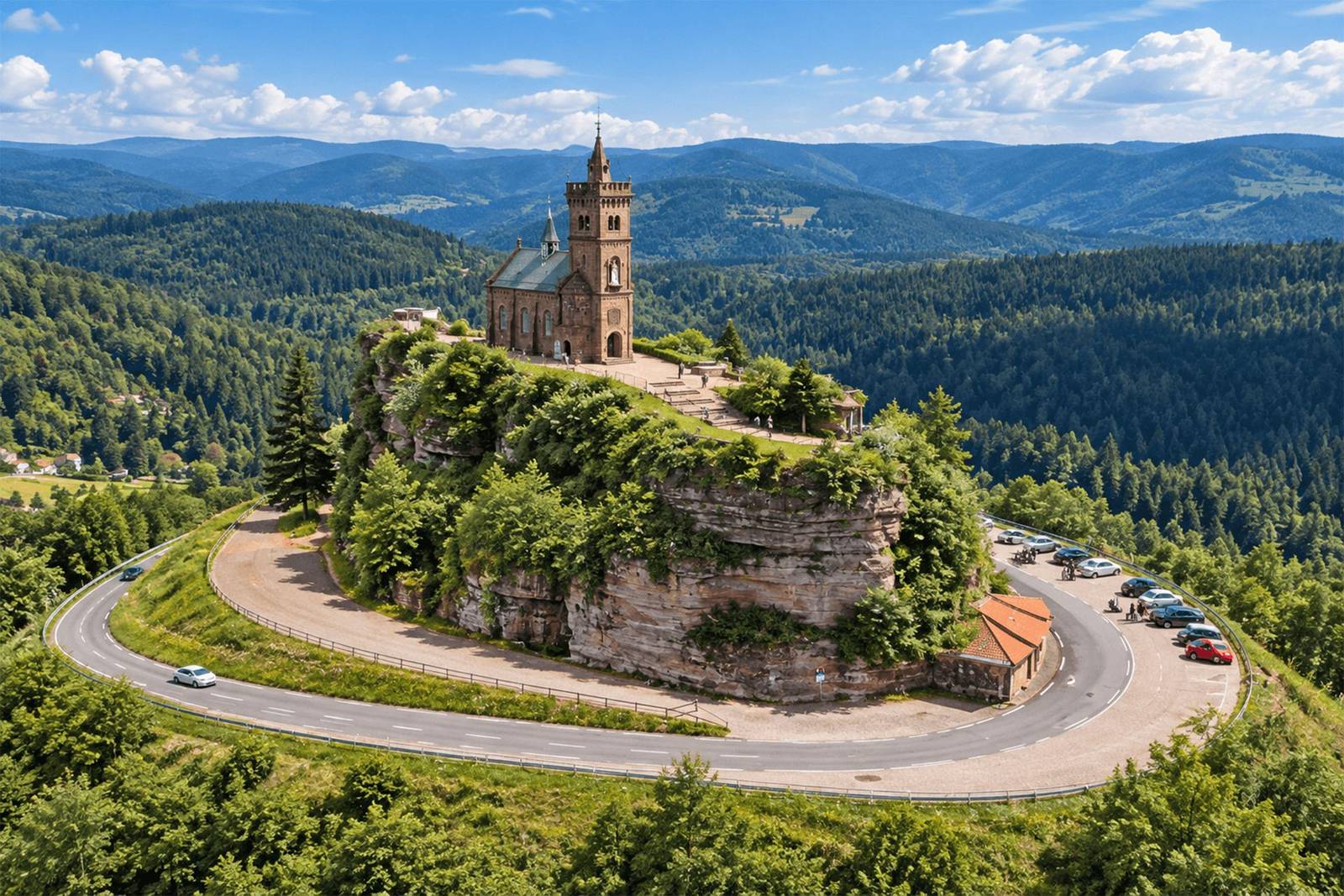
The Northern Vosges look nothing like the rounded summits, or ballons, of the southern part of the range. There are no big peaks here: the highest point, the Grand Wintersberg, near Niederbronn-les-Bains, reaches 581 metres. The landscape is made up of wooded hills, narrow valleys and pink sandstone crags sculpted by erosion.
Forest covers nearly 66% of the area. Beech, oak and Scots pine alternate with meadows, ponds and peat bogs. It is this mix of habitats that has earned the area its international recognition.
A protected area since 1975
The Northern Vosges Regional Nature Park was created in 1975. It brings together 111 communes: two thirds in the Bas-Rhin, one third in Moselle, home to the Pays de Bitche. A regional nature park is not a closed reserve: people live and work here, and the Park helps the communes protect the landscape while keeping the area alive.
UNESCO recognised the Park as a biosphere reserve in 1989. In 1998, together with the neighbouring Palatinate Forest, the Pfälzerwald, it formed a cross-border biosphere reserve: the forest does not stop at the border, and neither does its protection.
A wealth of heritage
What strikes you as you travel through the Northern Vosges is the sheer density of heritage. The Park counts 40 castles listed or registered as historic monuments, most of them perched on sandstone crags, such as Fleckenstein or Lichtenberg. Add to these the Bitche citadel, several Maginot Line forts, glassworks and crystal works, and villages of half-timbered houses.
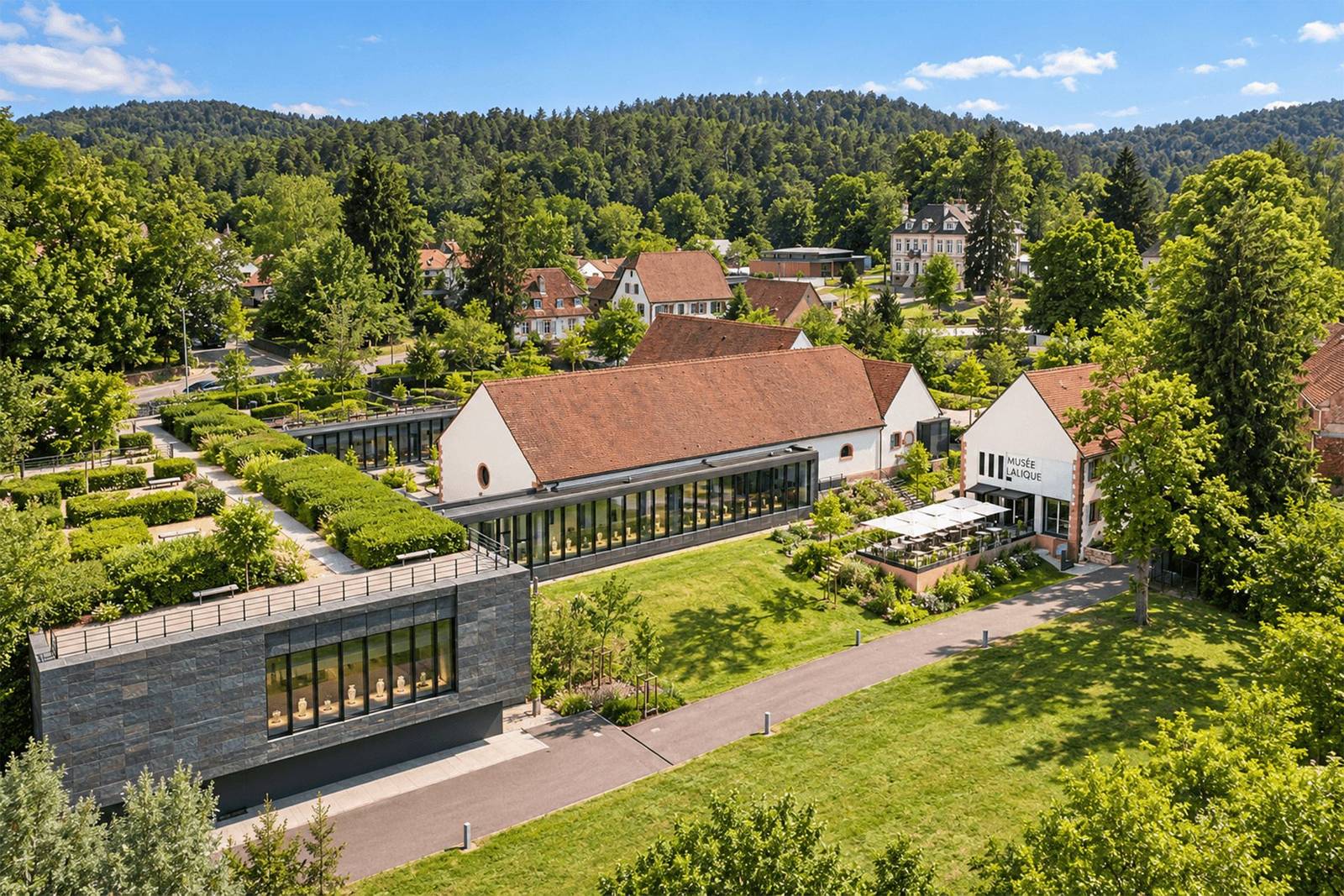
The area also has 28 museums and cultural venues, from glass and crystal to folk arts and traditions: plenty of options for a rainy day.
Hiking in the Park
The Park is first and foremost walking country. It has around 2,600 km of waymarked routes, 1,700 km of them marked by the Club vosgien (Vosges Hiking Club). The hiking trails often link several castles or crags: it is the best way to understand the landscape.
- For a first outing, choose a 2 to 3-hour loop starting from a village: La Petite-Pierre, Lembach or Niederbronn-les-Bains are well suited.
- Wear good shoes: sandstone paths are sandy and slippery after rain.
- Mobile coverage is weak at the bottom of the valleys: download the map before you set off.
Planning your visit
The Park is best explored area by area: the Pays de Bitche to the west, Wissembourg and the Outre-Forêt to the north-east, Niederbronn-les-Bains in the centre and La Petite-Pierre to the south. Each area has its own page on our site, with its villages, castles and walks.
Spring and autumn are the most pleasant seasons for walking. Summer suits families, with the lakes and wildlife parks. In winter, the villages light up for Christmas.
Practical information
The Park’s headquarters, the Maison du Parc, is in the Château de La Petite-Pierre. The offices are not open to visitors, but the outer courtyard is, with panels on the history of the castle. On the ground floor, the welcome desk and shop provides information about the Park and showcases the work of around fifty local craftspeople and artists; its opening days are in the practical information box. For trails, visits and events in a given area, contact the nearest tourist office.
FAQ
How big is the Northern Vosges Regional Nature Park?
The Northern Vosges Regional Nature Park covers 127,666 hectares, including 83,525 hectares of forest, or nearly 66% of its area (the Park’s key figures).
How many communes are in the Northern Vosges Regional Nature Park?
The Northern Vosges Park brings together 111 communes in 8 groupings of communes: two thirds are in the Bas-Rhin and one third in Moselle, home to the Pays de Bitche.
Since when have the Northern Vosges been a biosphere reserve?
UNESCO recognised the Northern Vosges as a biosphere reserve in 1989, and the neighbouring Pfälzerwald (Palatinate Forest) in 1993. Since 1998, the two areas have formed the cross-border Northern Vosges-Pfälzerwald biosphere reserve, renewed by UNESCO in June 2022 (source: the Park).
Where is the Maison du Parc of the Northern Vosges?
The Maison du Parc is in the Château de La Petite-Pierre (2 place du Château, 67290 La Petite-Pierre, +33 3 88 01 49 59). Its welcome desk and shop is open from 1 October to 23 December, Tuesday to Friday, 10 am–12.30 pm and 2–5 pm, as well as the four weekends of Advent; from April to September, Tuesday to Sunday, 10 am–12.30 pm and 2–6 pm.
What is the highest point in the Northern Vosges?
The highest point in the Northern Vosges Regional Nature Park is the Grand Wintersberg, at 581 metres, near Niederbronn-les-Bains.
When was the Northern Vosges Regional Nature Park created?
The Northern Vosges Regional Nature Park was created on 30 December 1975. It is run by a joint authority, SYCOPARC, headquartered in La Petite-Pierre.
Good to know
Expected crowds this week: usual, busier at the weekend
In the Northern Vosges
- 25 December Christmas Day, public holiday in France (long weekend)
- 26 December St Stephen’s Day (Alsace-Moselle), public holiday in France
- 1 January New Year's Day, public holiday in France (long weekend)
- 20 December – 3 January French school holidays
Back home: the Netherlands
- 25 December Christmas Day
- 26 December St. Stephen's Day
- 19 December – 3 January Christmas Holidays
- 13 February – 21 March Spring Holidays (depending on region)
Getting here
- From Belgium and the Netherlands by car: via Luxembourg and Metz, or via Germany towards Karlsruhe and Wissembourg.
- By train: high-speed trains to Strasbourg (via Paris) or to Karlsruhe (via Germany), then regional trains.
- On site: a car is the easiest way to get around.
Holidays: Nager.Date and OpenHolidays.