
Alsatian carnival doughnuts (Fasnachtkiechle): the recipe
Alsatian carnival doughnuts, or Fasnachtkiechle: a brioche-like yeast dough cut into rounds, fried at 170 °C and dusted with icing sugar. The afternoon treat of the weeks before Shrove Tuesday.

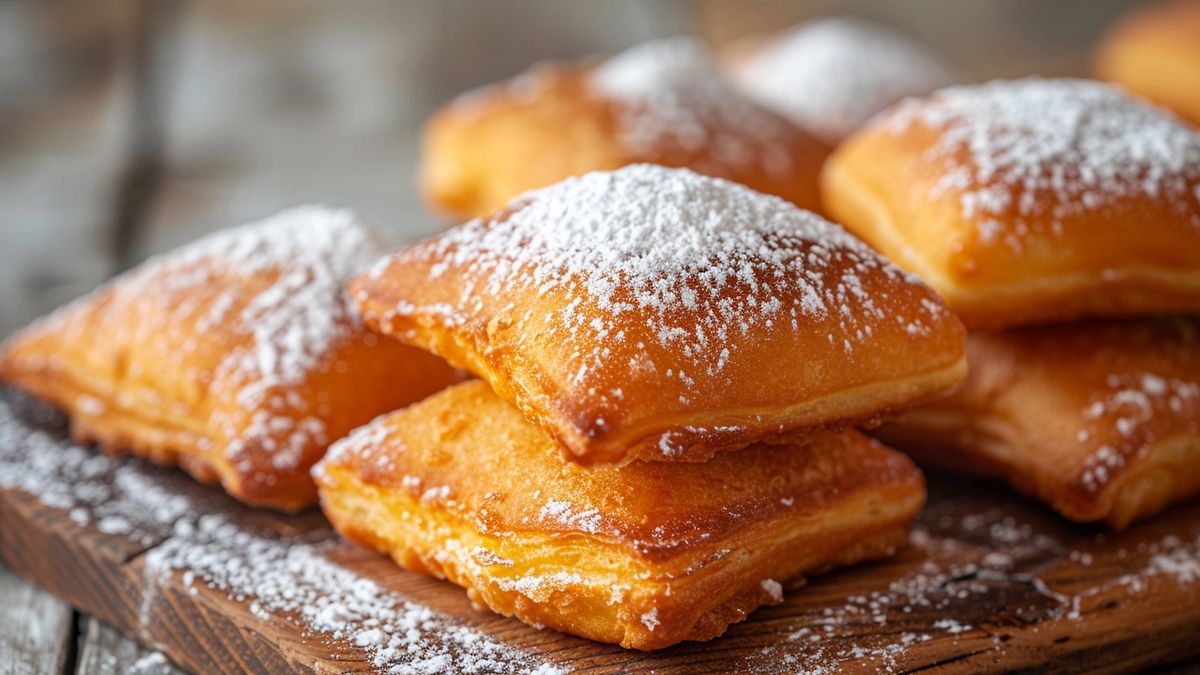
Alsatian carnival doughnuts, or Fasnachtkiechle, are made from a yeast dough close to brioche dough, cut out, fried at 170 °C and then rolled in icing sugar. They are made for afternoon snacks from the weeks before Shrove Tuesday (Mardi Gras) right through carnival. In northern Alsace as in Moselle, they herald the end of winter.
Rising: 1 hour 30 minutes
Cooking: 4 to 6 minutes per batch
Ingredients
- 500 g flour
- 80 g sugar
- 2 sachets vanilla sugar
- 1 pinch salt
- 2 eggs
- 100 g melted butter
- 20 g fresh baker’s yeast
- 200 ml lukewarm milk
- Oil for frying
- Icing sugar for dusting
Method
- Dissolve the yeast in the lukewarm milk.
- Sift the flour into a large bowl, add the sugar, vanilla sugar and salt, then make a well.
- Break in the eggs, add the melted butter and the yeasted milk, mix, then knead for about 10 minutes until you have a soft, elastic dough.
- Cover with a cloth and leave to rise for at least an hour in a warm place, until the dough has doubled in size.
- Knock back the dough, roll it out to a thickness of 1 cm on a floured surface and cut out rounds with a cutter or a glass.
- Place the rounds on a floured tray and leave to rise for another 30 minutes.
- Heat the oil to about 170 °C and fry the doughnuts a few at a time, 2 to 3 minutes on each side, until golden.
- Drain on kitchen paper and dust with icing sugar while still warm.
My tip: if you don’t have a thermometer, drop a small piece of dough into the oil. It should rise to the surface straight away, surrounded by small bubbles. If the oil is too cold, it soaks into the doughnuts; too hot, and it browns them before the centre is cooked.
How to fry them successfully
Choose a neutral oil that can take the heat, such as sunflower or groundnut oil, in a deep saucepan or a deep-fat fryer. Never fill the pan more than halfway and keep a lid within reach.
Fry three or four doughnuts at a time, no more: too many make the oil temperature drop. Turn them with a slotted spoon as soon as the underside is golden. Because the dough has risen twice, they puff up well and keep a light crumb.
The doughnuts are best eaten the same day, ideally still warm. The next day, a few minutes in a hot oven brings back a little crispness.
Origins
Shrove Tuesday fritters are found all over France, under names that change from region to region: bugnes, merveilles, oreillettes. Their reason for being is the same everywhere: before Lent, households used up their stock of eggs and butter, and frying used a great deal of both.
In Alsace, carnival doughnuts are called Fasnachtkiechle, “little carnival cakes”. They are made from a yeast dough and are sometimes compared to German Berliners; their shape varies from one family and one bakery to another. Alsatian cooking has other fried carnival treats, such as Schenkele, little sticks also made at Christmas, and Scharwe. Alsatian carnival owes much to the Rhineland carnivals of Germany and Switzerland: in the Northern Vosges, the border with the Palatinate is never far away. For other customs of the calendar, browse the Folk traditions section.
Variations
Add the zest of an unwaxed lemon or orange to the dough. You can also fill the cooled doughnuts with jam using a piping bag, like Berliners, or roll them in a mixture of sugar and cinnamon instead of icing sugar. The same yeast dough, steamed, is used for Dampfnudle.
What to serve them with
In the afternoon, with coffee, hot chocolate or tea. For a carnival party with friends, a bowl of apple compote or a pot of jam on the table lets everyone fill their own doughnut.
As for wine, a medium-dry Crémant d’Alsace goes well with the sugar and the frying: its bubbles lighten the richness. The Cleebourg vineyards near Wissembourg produce crémants in the far north of Alsace. If you prefer beer, a wheat beer or a light lager works.
Where to try them
In the weeks before Shrove Tuesday, carnival doughnuts reappear in the windows of bakeries and pâtisseries across Alsace and Moselle, for the afternoon snack.
The festivities themselves happen at the cavalcades (carnival parades). In Haguenau, on the edge of the Park, carnival brings together a children’s parade and a large cavalcade of floats in the historic centre; recent editions have taken place in March, so check the date with the town. For other festive and seasonal recipes, browse the Recipes section.
Good to know
Expected crowds this week: usual, busier at the weekend
In the Northern Vosges
- 25 December Christmas Day, public holiday in France (long weekend)
- 26 December St Stephen’s Day (Alsace-Moselle), public holiday in France
- 1 January New Year's Day, public holiday in France (long weekend)
- 20 December – 3 January French school holidays
Back home: the Netherlands
- 25 December Christmas Day
- 26 December St. Stephen's Day
- 19 December – 3 January Christmas Holidays
- 13 February – 21 March Spring Holidays (depending on region)
Getting here
- From Belgium and the Netherlands by car: via Luxembourg and Metz, or via Germany towards Karlsruhe and Wissembourg.
- By train: high-speed trains to Strasbourg (via Paris) or to Karlsruhe (via Germany), then regional trains.
- On site: a car is the easiest way to get around.
Holidays: Nager.Date and OpenHolidays.