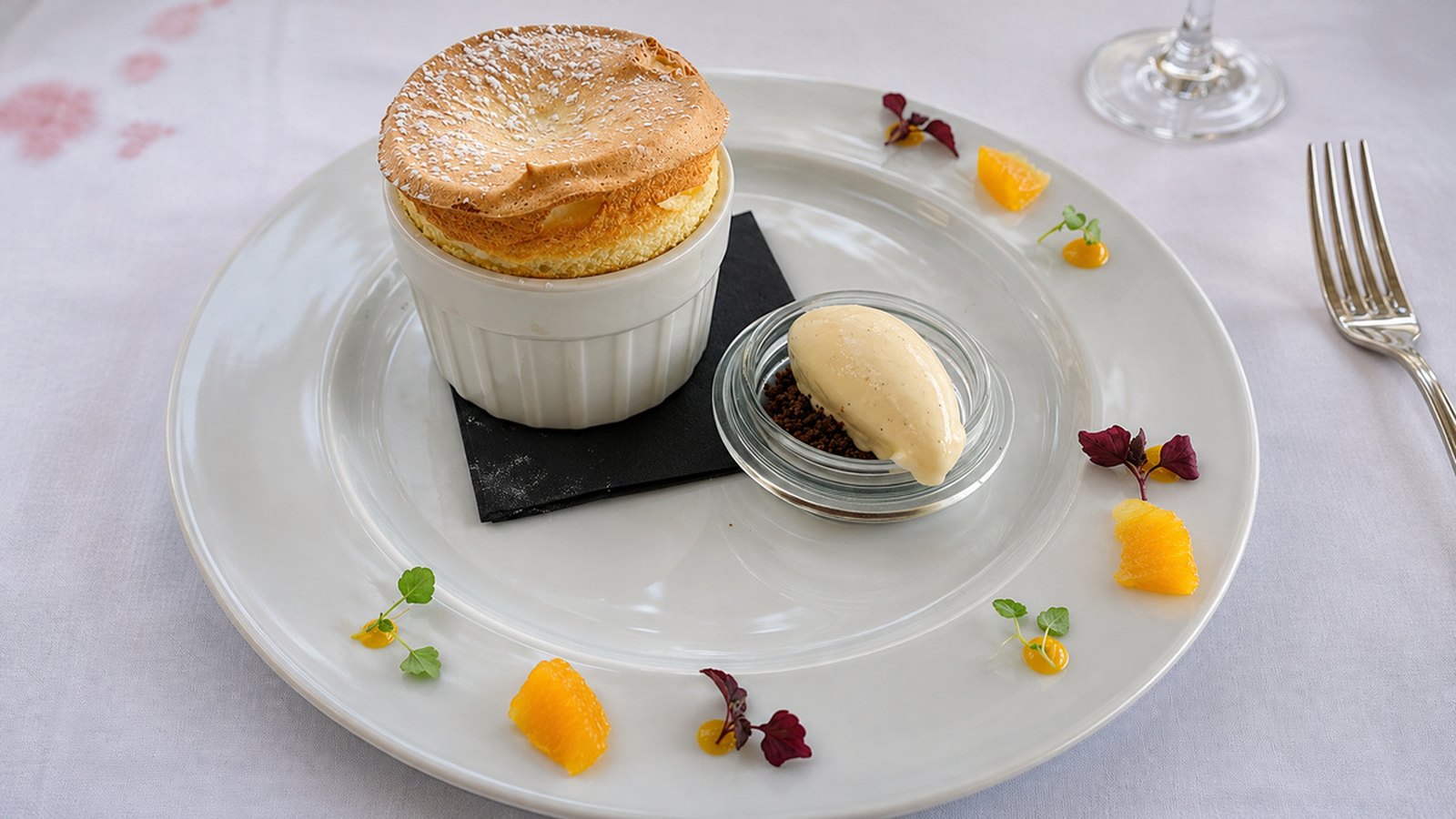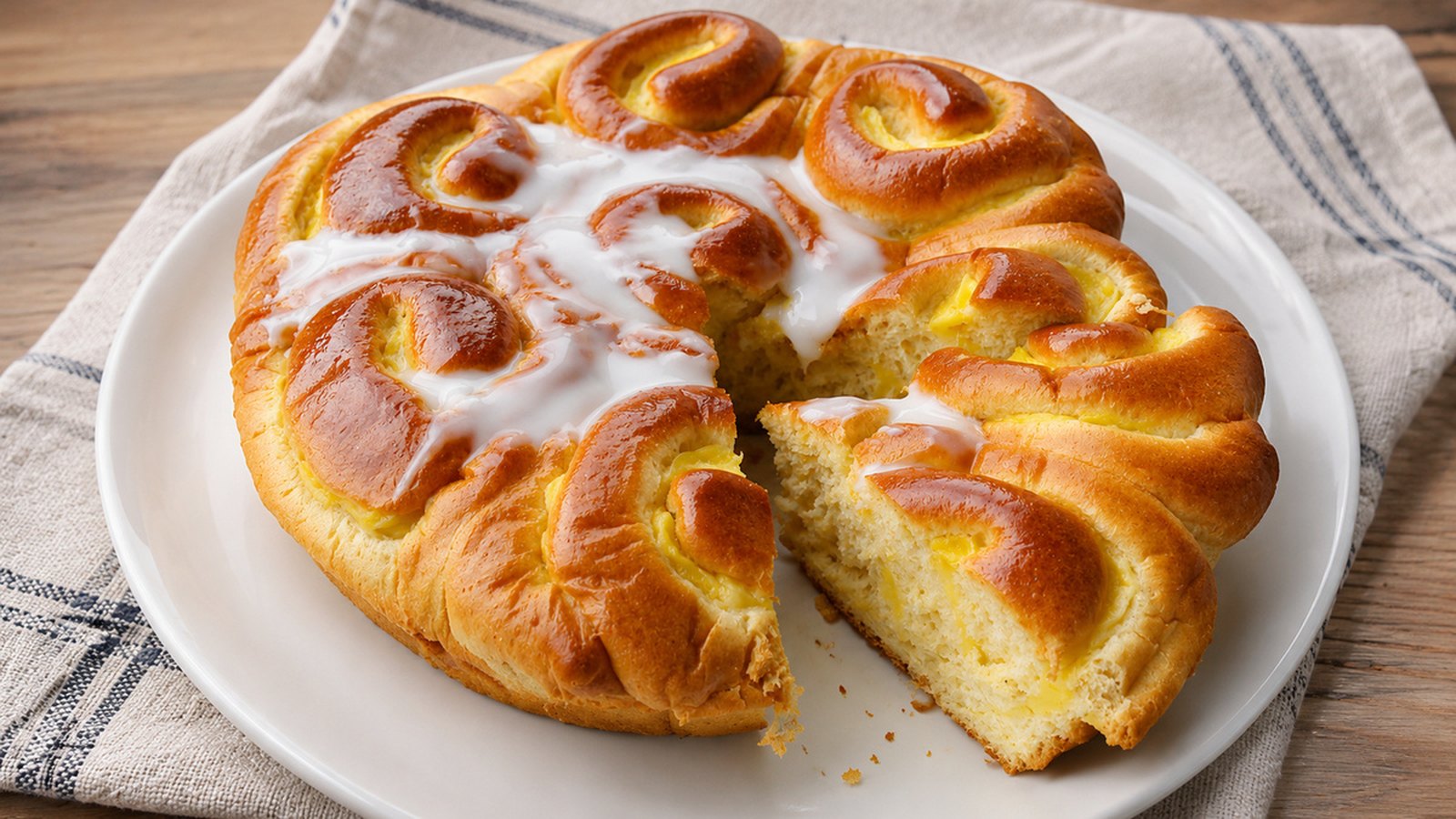
Dampfnudle with plum compote and cinnamon ice cream: the recipe
Dampfnudle, little yeast buns cooked covered in butter and water, soft on top and golden underneath, served here with a quetsche plum compote and cinnamon ice cream.

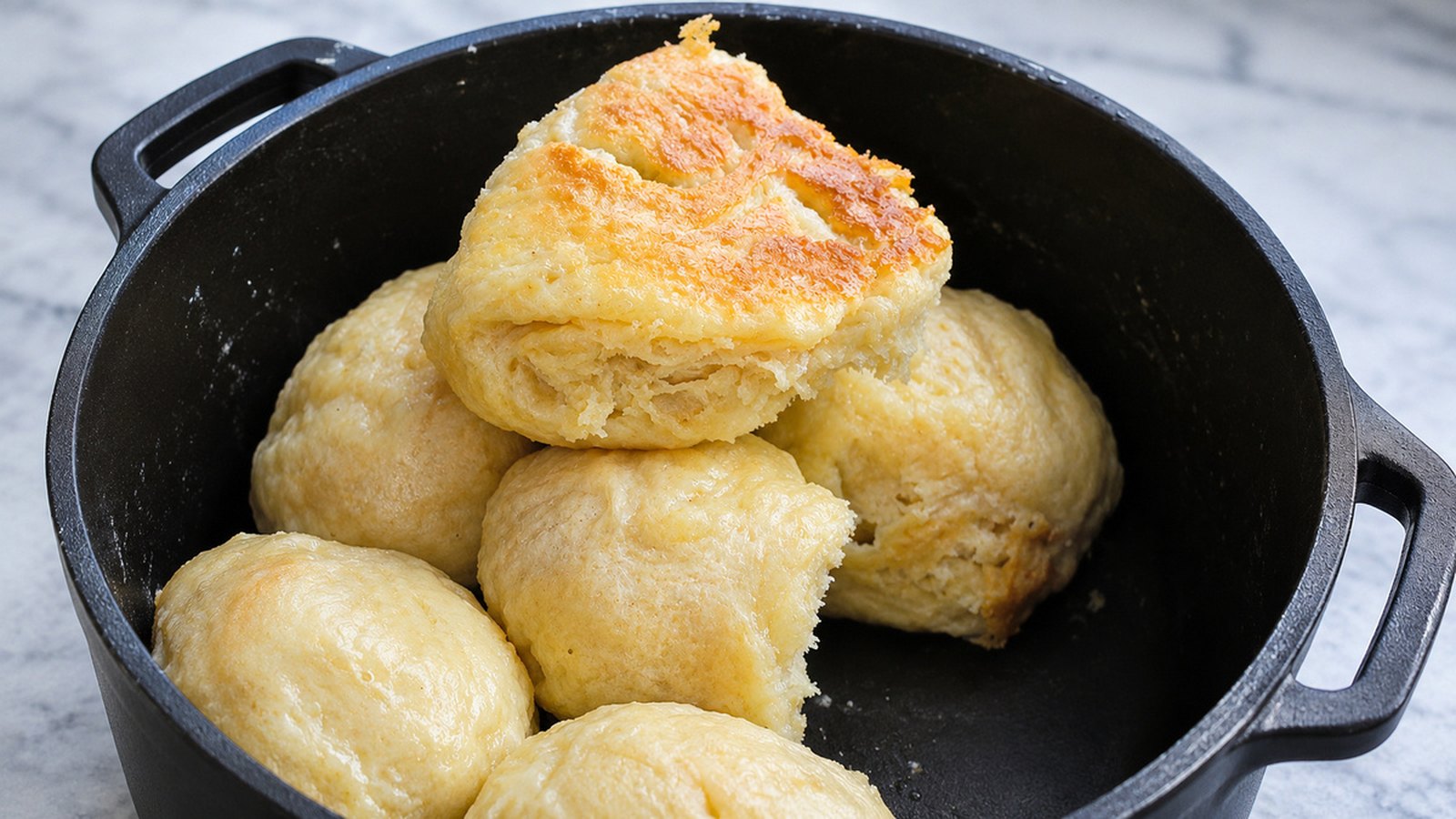
Dampfnudle are little yeast-dough buns cooked covered in a frying pan with a little butter and water: the top stays white and soft while the underside turns golden and crisp. Here they are served as a dessert with a vanilla quetsche plum compote and home-made cinnamon ice cream. The dish is shared by Alsace, Moselle and the neighbouring Palatinate, on both sides of the border in the Northern Vosges.
Resting: 3 hr 40 min (rising the dough and chilling the ice-cream custard)
Cooking: 50 minutes (dampfnudle and compote)
Makes about 12 dampfnudle
Ingredients
For the dampfnudle
- 500 g flour
- 25 g fresh yeast
- 250 ml lukewarm milk
- 50 g sugar
- 50 g melted butter
- 1 egg
- 1 pinch salt
- A little butter and water for cooking
For the quetsche plum compote
- 1 kg quetsche plums
- 150 g sugar
- 1 vanilla pod
- The juice of one lemon
For the cinnamon ice cream
- 500 ml milk
- 250 ml single cream
- 150 g sugar
- 4 egg yolks
- 2 teaspoons ground cinnamon
Method
- Dissolve the yeast in the lukewarm milk with a teaspoon of sugar and leave to froth for about ten minutes.
- Mix the flour, the rest of the sugar and the salt. Add the yeast, melted butter and egg, then knead for about 10 minutes until you have an elastic dough.
- Cover and leave to rise for about 1 hour in a warm place, until the dough has doubled in size.
- Knock back the dough, divide it into about 12 balls and leave them to rise for another 30 minutes on a floured tray.
- In a large frying pan, melt a little butter and add about 1 cm of water. Place the balls in the pan, cover and cook for 15 to 20 minutes over a medium heat without lifting the lid, until the water has evaporated and the underside is golden.
- For the compote, cook the stoned and quartered plums with the sugar, the split vanilla pod and the lemon juice for about 30 minutes. Remove the vanilla and leave to cool.
- For the ice cream, heat the milk and cream. Pour them over the egg yolks whisked pale with the sugar, return to a low heat and cook until the custard coats the back of the spoon. Add the cinnamon, leave to cool for at least 2 hours, then churn in an ice-cream maker.
- Serve the dampfnudle hot, topped with compote, with a scoop of cinnamon ice cream.
My tip: make the compote and the ice cream the day before. On the day, only the dough and the cooking remain, and you can serve the dampfnudle straight from the pan, while the crust underneath is still crisp.
Why “steamed”?
The German name Dampfnudel combines “Dampf”, steam, and “Nudel”, a word related here to Knödel (dumpling) rather than to flat pasta. The dough does not cook above water, as in a steamer: it cooks in a closed casserole or frying pan, where the liquid evaporates. The balls puff up in the steam, then, once the water has gone, they fry in the fat. Hence their two faces: a pale, brioche-like top and a brown, crunchy base.
The lid must stay on throughout the cooking. A heavy-based frying pan or a cast-iron casserole spreads the heat better and stops the crust burning before the water has evaporated.
Origins
The Dampfnudel is a speciality of southern German cooking, from Bavaria to the Palatinate, also known in Austria, Switzerland, Luxembourg and Alsace-Moselle. Its precise origin remains unknown. A cookbook from 1791, by Friederike Luise Löffler, already gives several recipes for it. In Alsatian it is written Dampfnüdle or Dampfnüdel. Long a grandmother’s dish, it is now returning to the menus of Alsatian restaurants.
The link with the Northern Vosges runs across the border. On the German side, the biosphere reserve continues into the Pfälzerwald (Palatinate Forest), and the Palatinate makes the Dampfnudel a main course: there it is cooked with salted water and fat, with no filling inside. In Freckenfeld, a village in the Southern Palatinate about twelve kilometres from Wissembourg, a door decorated with dampfnudel even features in the village coat of arms. Legend has it that a baker there fed dampfnudel to Swedish soldiers during the Thirty Years’ War to spare the village from looting. There is no way of verifying the story, but it says a great deal about the area’s attachment to the dish.
Sweet or savoury
As a dessert, as here, it is served with vanilla custard, a compote or cooked fruit: quetsche plums, mirabelles or pears. In the Palatinate it also accompanies a potato soup or a dish in sauce, and is often eaten in two stages, first with the soup, then with a sweet sauce. The quetsche chosen here is the autumn fruit of the region’s orchards: it is also the plum used in Alsatian plum tart.
What to serve it with
The cinnamon ice cream and the compote are enough to make a complete dessert. For a lighter version, replace the ice cream with vanilla custard (crème anglaise), as they do in Bavaria.
As for wine, cooked fruit and cinnamon call for a sweet Alsace white, Gewurztraminer or Pinot Gris. These grapes are grown in the far north of Alsace, in the Cleebourg vineyards, a stone’s throw from Wissembourg. In the afternoon, coffee or black tea goes just as well.
Where to try it
Dampfnudle are mostly made at home, in autumn and winter, when plums are in season and evenings are cold. Across the border from Wissembourg and the Outre-Forêt, the Palatinate is very close: dampfnudel appear on the menu of many inns and of some Pfälzerwald-Verein huts (the local hiking club), which offer them to walkers to take away. Check opening days before you set off.
For other yeast-dough desserts, see kougelhopf and the Recipes section, which brings together the classics of Alsatian and Lorraine cooking.
Good to know
Expected crowds this week: usual, busier at the weekend
In the Northern Vosges
- 25 December Christmas Day, public holiday in France (long weekend)
- 26 December St Stephen’s Day (Alsace-Moselle), public holiday in France
- 1 January New Year's Day, public holiday in France (long weekend)
- 20 December – 3 January French school holidays
Back home: the Netherlands
- 25 December Christmas Day
- 26 December St. Stephen's Day
- 19 December – 3 January Christmas Holidays
- 13 February – 21 March Spring Holidays (depending on region)
Getting here
- From Belgium and the Netherlands by car: via Luxembourg and Metz, or via Germany towards Karlsruhe and Wissembourg.
- By train: high-speed trains to Strasbourg (via Paris) or to Karlsruhe (via Germany), then regional trains.
- On site: a car is the easiest way to get around.
Holidays: Nager.Date and OpenHolidays.