Alsatian Kougelhopf (Kugelhopf): the recipe
Alsatian kougelhopf: a brioche with raisins and almonds, risen twice and baked for 40 to 50 minutes in its fluted ring mould, then dusted with icing sugar.

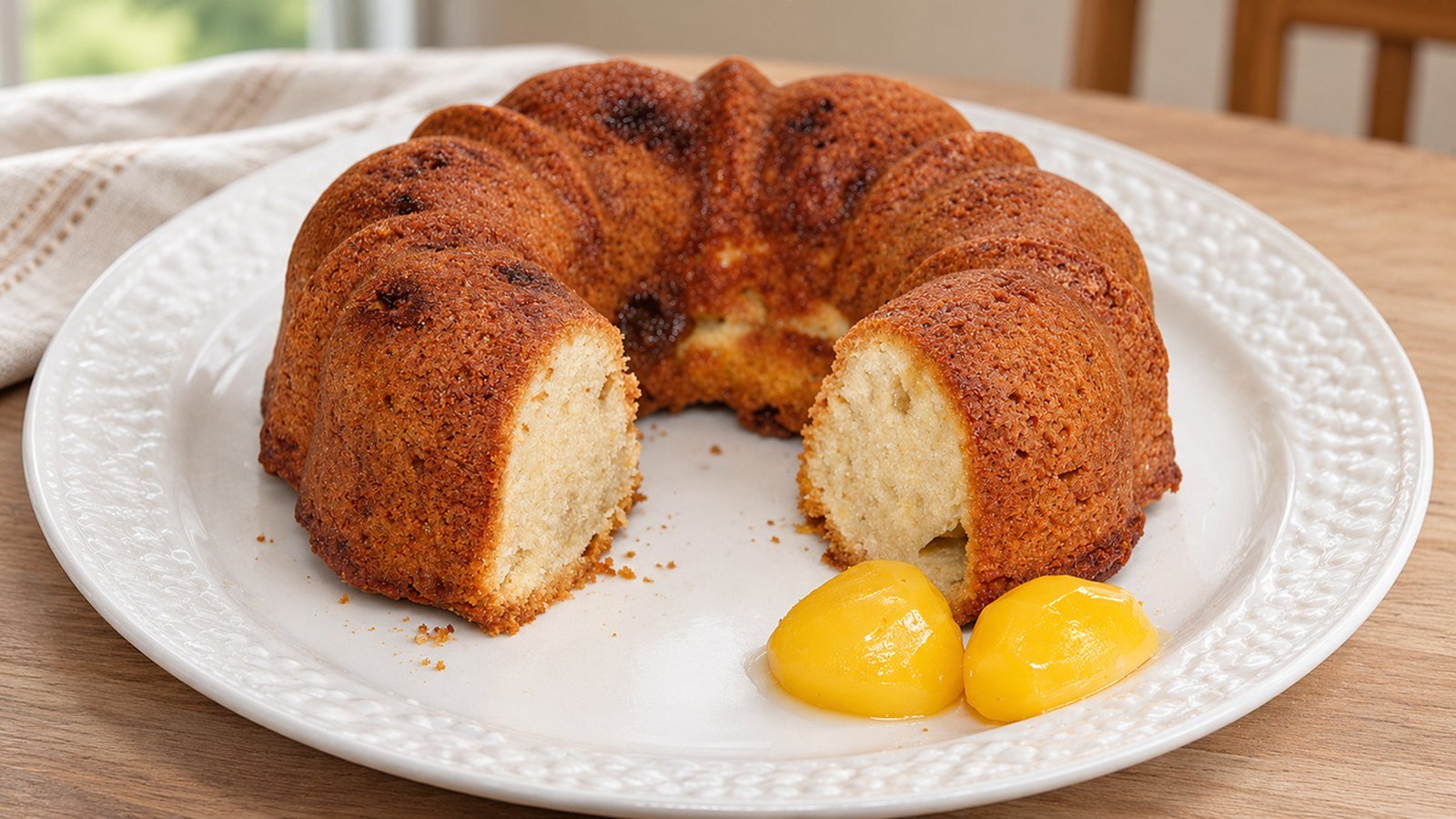
Kougelhopf, also spelled kugelhopf or kouglof, is the Alsatian brioche with raisins and almonds, baked in a fluted ring mould with a central funnel. The dough rises twice, then bakes for 40 to 50 minutes at 180 °C. Allow half a day, waiting time included, for a cake that is eaten at breakfast, as an afternoon treat or with drinks before dinner.
Preparation: 30 minutes
Rising: 2 hours to 2 hours 45 minutes
Baking: 40 to 50 minutes
Makes 1 kougelhopf mould
Ingredients
- 500 g plain flour
- 20 g fresh baker’s yeast or 7 g dried yeast
- 200 ml whole milk
- 120 g butter, at room temperature
- 2 eggs
- 100 g sugar
- 10 g salt
- 100 g raisins
- 50 g whole almonds
- 1 tablespoon rum or kirsch (optional)
- Icing sugar, to decorate
Method
- Warm the milk until lukewarm, crumble in the yeast and leave to stand for 10 minutes.
- In a large mixing bowl, combine the flour, salt and sugar. Make a well in the centre, pour in the yeasted milk, then add the eggs and the softened butter.
- Knead with a mixer fitted with dough hooks until the dough is smooth and elastic. Then work in the raisins, soaked in the rum or kirsch and drained.
- Cover with a tea towel and leave to rise in a warm place for 1 hour 30 minutes to 2 hours, until doubled in size.
- Butter the kougelhopf mould generously and place the whole almonds in the bottom of the flutes.
- Knock back the dough, place it in the mould and leave to rise a second time for 30 to 45 minutes under a tea towel.
- Bake in an oven preheated to 180 °C (350 °F, gas mark 4) for 40 to 50 minutes, until the tip of a knife comes out clean. If the top browns too quickly, cover it with a sheet of foil.
- Leave to cool for a few minutes, turn out onto a wire rack, leave to cool completely and dust with icing sugar.
My tip: put the raisins to soak at the very start of the recipe, while the yeast is working. Nice and plump, they stay soft during baking and do not burn on the surface. And do not overheat the milk: it should feel lukewarm to the touch, not hot, or the yeast will die.
Which mould should you use?
The mould makes the kougelhopf. Its fluted turban shape, with a funnel in the centre, spreads the heat through the whole dough, which bakes evenly despite its volume. The almonds placed in the bottom of the flutes end up on top once the cake is turned out.
The traditional mould is made of glazed earthenware, often produced in Soufflenheim, a potters’ village in northern Alsace, east of Haguenau. Copper and enamelled metal versions also exist. Whatever the material, butter it carefully, flute by flute: that is what gives a clean turn-out.
Origins
Kougelhopf is an Alsatian speciality shared with Germany and Austria, where it is called Gugelhupf. The origin of the word is unknown. It is often linked to Gugel, a hood, which the shape of the cake recalls. The cake was known in Alsace in the 18th century, moulds from that period have been found, and Gault&Millau credits its spread “probably” to the pastry cooks of King Stanislas, Duke of Lorraine. The oldest known written recipe appears in Alexandre Dumas’s Grand dictionnaire de cuisine, in 1873.
There is no shortage of legends. In Ribeauvillé, the story goes that the Three Wise Men, on their way back from Bethlehem, made it to thank a local pastry cook named Kugel, and that its shape imitates their turbans. There is no way of verifying it.
Originally a festive cake, kougelhopf is now an everyday food: sweet at breakfast, savoury with pre-dinner drinks.
Variations
The recipe above is the classic version. Some families add orange or lemon zest, others prefer a chocolate marble kougelhopf. Finally, there is a savoury version with bacon lardons and walnuts, served with drinks: see the recipe for savoury kougelhopf.
What to serve it with
At breakfast or teatime, kougelhopf needs nothing more than a coffee, a tea or a hot chocolate. It keeps for two to three days in an airtight tin or wrapped in cling film.
In the late afternoon or for dessert, it goes well with an aromatic Alsace white wine: a Muscat, a Gewurztraminer, or a glass of Crémant d’Alsace as an aperitif. These wines are made in the far north of Alsace, in the Cleebourg vineyards, near Wissembourg.
Where to try it
Kougelhopf is sold all year round in the bakeries and patisseries of the Northern Vosges, often in several sizes. During Advent, it joins the Christmas biscuits on the stalls of the Christmas markets.
On the edge of the Park, a kougelhopf festival is announced every summer, on a Sunday in August, at the Château du Haut-Barr overlooking Saverne: check the date with the tourist office before you go. Elsewhere in Alsace, Ribeauvillé, in the Haut-Rhin, holds a festival in its honour on the second Sunday of June.
For the other classics of Alsatian and Lorraine cooking, browse the Recipes section.
Good to know
Expected crowds this week: usual, busier at the weekend
In the Northern Vosges
- 25 December Christmas Day, public holiday in France (long weekend)
- 26 December St Stephen’s Day (Alsace-Moselle), public holiday in France
- 1 January New Year's Day, public holiday in France (long weekend)
- 20 December – 3 January French school holidays
Back home: the Netherlands
- 25 December Christmas Day
- 26 December St. Stephen's Day
- 19 December – 3 January Christmas Holidays
- 13 February – 21 March Spring Holidays (depending on region)
Getting here
- From Belgium and the Netherlands by car: via Luxembourg and Metz, or via Germany towards Karlsruhe and Wissembourg.
- By train: high-speed trains to Strasbourg (via Paris) or to Karlsruhe (via Germany), then regional trains.
- On site: a car is the easiest way to get around.
Holidays: Nager.Date and OpenHolidays.