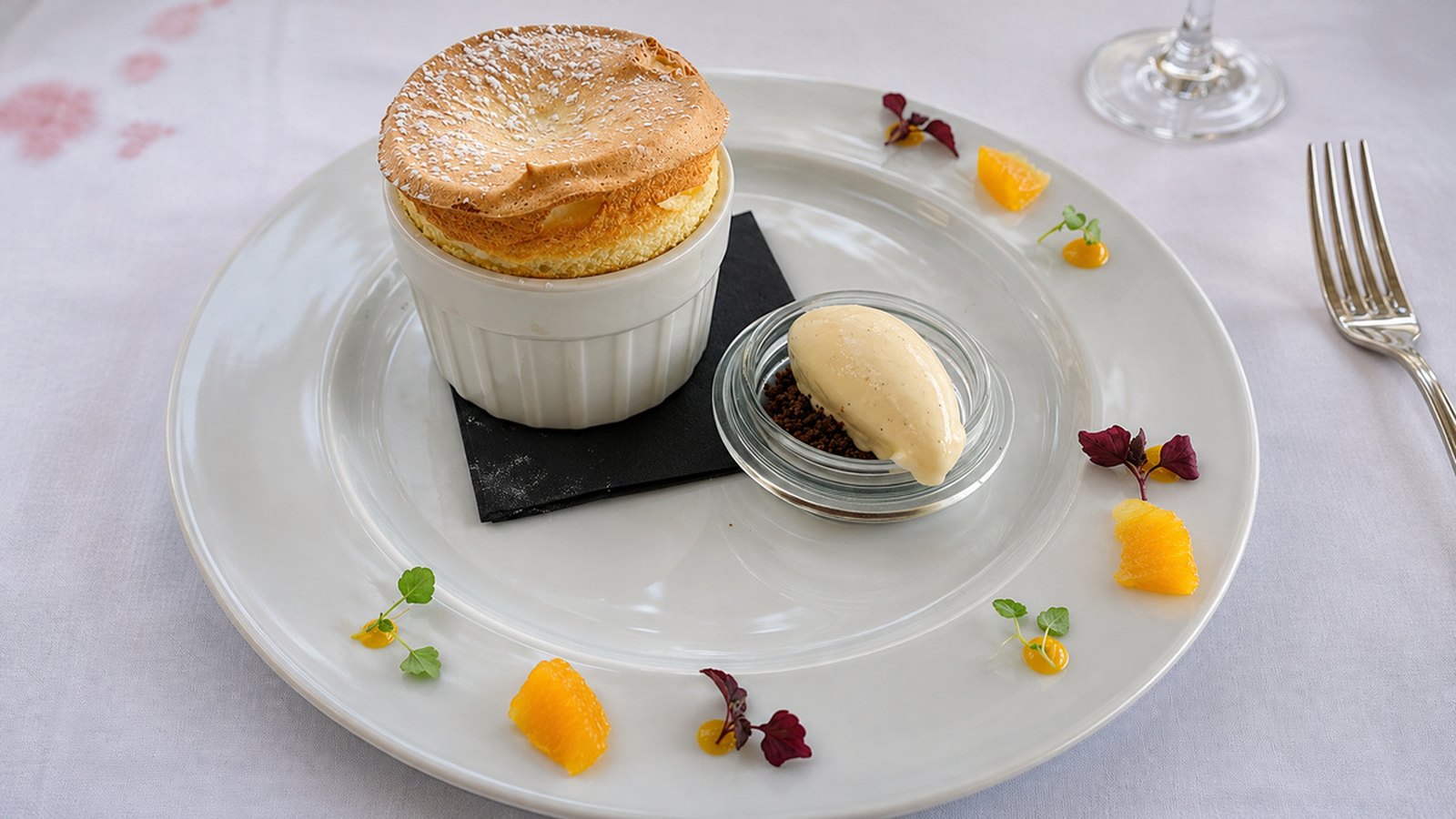
Rosehip jam (Bottemues): the Alsatian recipe
Rosehip jam is made with hips picked in autumn: seeded, cooked, sieved, then cooked again with sugar. A tangy orange jam known in Alsace as Bottemues.

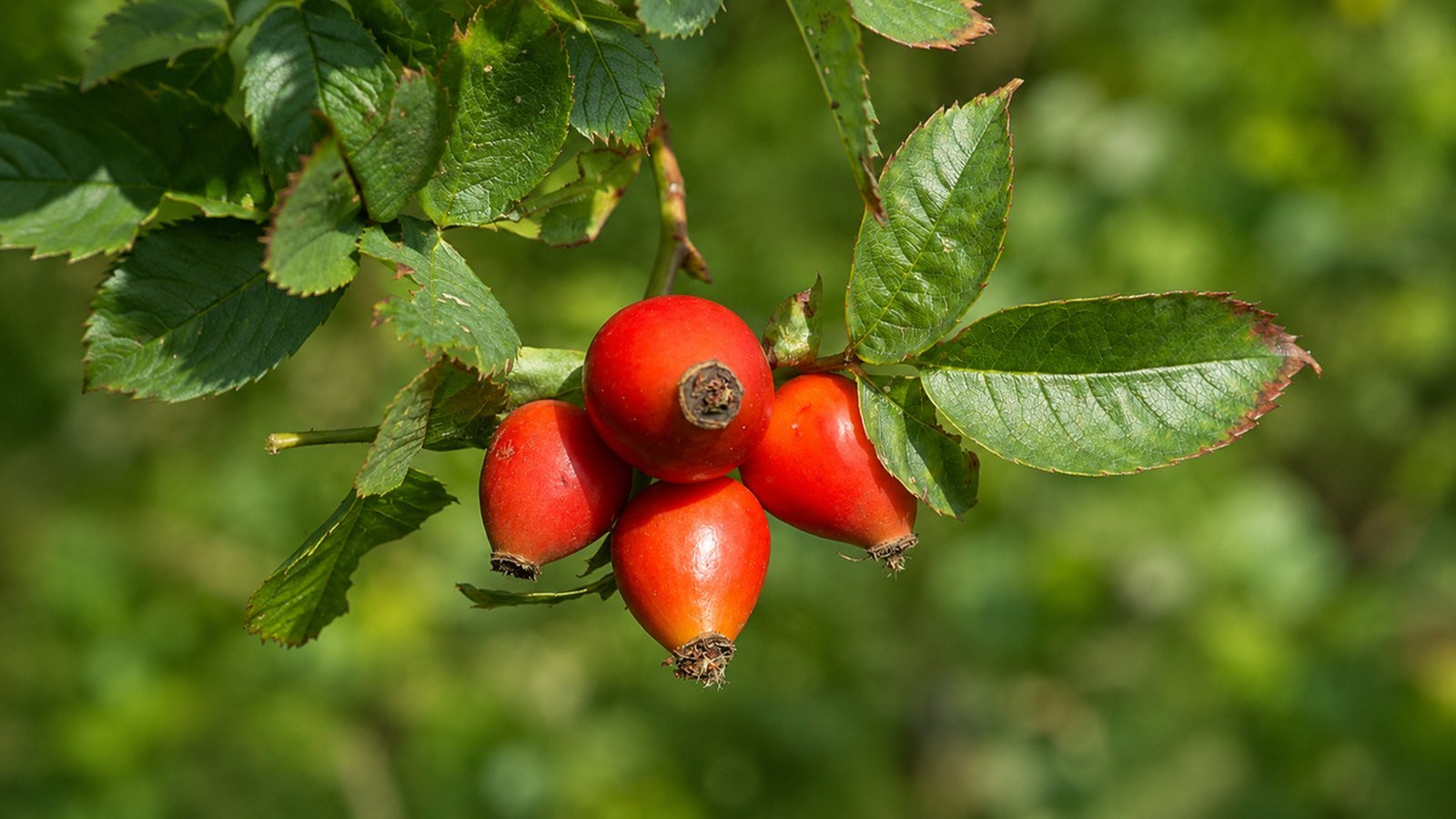
Rosehip jam is made with the red fruit of the dog rose, picked in autumn. Split open and cleaned of their seeds, the hips cook for an hour in water, go through a sieve, then cook for another 45 minutes with sugar and lemon. The result is an orange jam, sweet and tangy, which Alsace calls Bottemues.
Cooking: about 1 hour 45 minutes
Ingredients
- 1 kg dog-rose hips (rosehips)
- 800 g granulated sugar
- The juice of one lemon
- 1 litre water
Method
- Sort the hips, picked when fully red in autumn, wash them and split them in two to remove the seeds and hairs.
- Cook them in a litre of water for about an hour over a low heat once boiling, until they crush easily.
- Press the hips through a sieve to obtain a smooth purée.
- Return the purée to the heat with the sugar and lemon juice and cook for about 45 minutes, stirring regularly.
- Test the set on a cold plate: the jam should set and wrinkle.
- Pour straight into sterilised jars, seal, turn upside down for a few minutes, then store in a cool, dark place.
My tip: wear thin gloves to clean the hips. The hairs around the seeds are the ones used as “itching powder” and they irritate the skin. For sieving, choose a fine mesh or line a colander with muslin: not a single hair should get into the purée.
When and how to pick rosehips
Rosehips ripen in autumn, in October and November. They are bright red, smooth and slightly firm. Many people wait for the first frosts to pick them: the cold softens the pulp, which is then easier to work.
The dog rose (Rosa canina) is a wild rose of hedgerows, woodland edges and banks. In the Northern Vosges, look for it along country lanes and around meadows and orchards rather than deep in the forest. Only pick on public land or with the owner’s permission, and leave some fruit for the birds.
Origins
The rosehip is the false fruit of the dog rose: the red part you eat surrounds the true fruits, small hairy achenes. Its French name, cynorhodon, comes from Greek and means “dog rose”. In everyday French it is also called gratte-cul (“scratch-bottom”), because of those hairs.
Rosehip jam is one of the specialities of Alsatian cooking under its Alsatian name, Bottemues. The neighbouring German-speaking countries love it too: Germany makes it into jam and above all an infusion, Hagebuttentee, and German-speaking Switzerland a sweetened purée, Buttenmost. In eastern France it is also distilled into a fruit brandy.
Village hedgerows and orchards are among the landscapes the Northern Vosges Regional Nature Park seeks to protect. To recognise the dog rose and the other shrubs in these hedges, browse the Flora section.
Variations
Add a split vanilla pod or a cinnamon stick while cooking with the sugar, and remove them before potting. For a less sweet jam, some grated apple adds pectin and helps it set.
What to serve it with
At breakfast, on buttered country bread, brioche or a slice of kougelhopf. It also goes with fromage blanc or crêpes. Finally, its tangy sweetness works well with a fresh goat’s cheese.
To drink, nothing beats tea or a herbal infusion. If you serve it with a dessert at the end of a meal, a sweet Alsace white such as a late-harvest Gewurztraminer matches its cooked-fruit flavour. Don’t count on it for vitamin C: the raw fruit is very rich in it, but cooking destroys most of it.
Where to try it
Rosehip jam is mostly made at home after the autumn picking. You will sometimes find it at artisan jam makers in Alsace and on market stalls: look for it at the region’s Christmas markets, among the wild-fruit jams.
To combine picking with a walk, autumn is the right season in the Park: russet forests, orchards and ridge paths. Find our ideas for outings in what to do in the Northern Vosges in September and October.
FAQ
How do you make rosehip jam?
For rosehip jam, split 1 kg of rosehips to remove the seeds and hairs, cook them for about an hour in a litre of water, press them through a sieve, then cook the purée for 45 minutes with 800 g of sugar and the juice of one lemon before pouring it into sterilised jars.
When should rosehips be picked for jam?
Rosehips are picked in October and November, when they are bright red, smooth and slightly firm. Many people wait for the first frosts: the cold softens the pulp, which is easier to work.
How do you remove the hairs from rosehips?
Split each hip in two wearing thin gloves and remove the seeds and hairs, which irritate the skin. After the first cooking, press the hips through a fine-mesh sieve or a colander lined with muslin: not a single hair should get into the purée.
What is rosehip jam called in Alsace?
In Alsace, rosehip jam is called Bottemues. German-speaking Switzerland makes a sweetened purée from the hips, Buttenmost, and Germany mostly an infusion, Hagebuttentee.
Does rosehip jam contain vitamin C?
Raw rosehips are very rich in vitamin C, but the long cooking of rosehip jam destroys most of it: people eat it for its sweet, tangy taste rather than for its vitamins.
Good to know
Expected crowds this week: usual, busier at the weekend
In the Northern Vosges
- 25 December Christmas Day, public holiday in France (long weekend)
- 26 December St Stephen’s Day (Alsace-Moselle), public holiday in France
- 1 January New Year's Day, public holiday in France (long weekend)
- 20 December – 3 January French school holidays
Back home: the Netherlands
- 25 December Christmas Day
- 26 December St. Stephen's Day
- 19 December – 3 January Christmas Holidays
- 13 February – 21 March Spring Holidays (depending on region)
Getting here
- From Belgium and the Netherlands by car: via Luxembourg and Metz, or via Germany towards Karlsruhe and Wissembourg.
- By train: high-speed trains to Strasbourg (via Paris) or to Karlsruhe (via Germany), then regional trains.
- On site: a car is the easiest way to get around.
Holidays: Nager.Date and OpenHolidays.