Mushroom tarte flambée (forestière): the recipe
Tarte flambée forestière: thin dough, cream, softened onion, golden button mushrooms and smoked lardons, 15–20 minutes at 220 °C. The recipe, which mushrooms to choose and the wine.

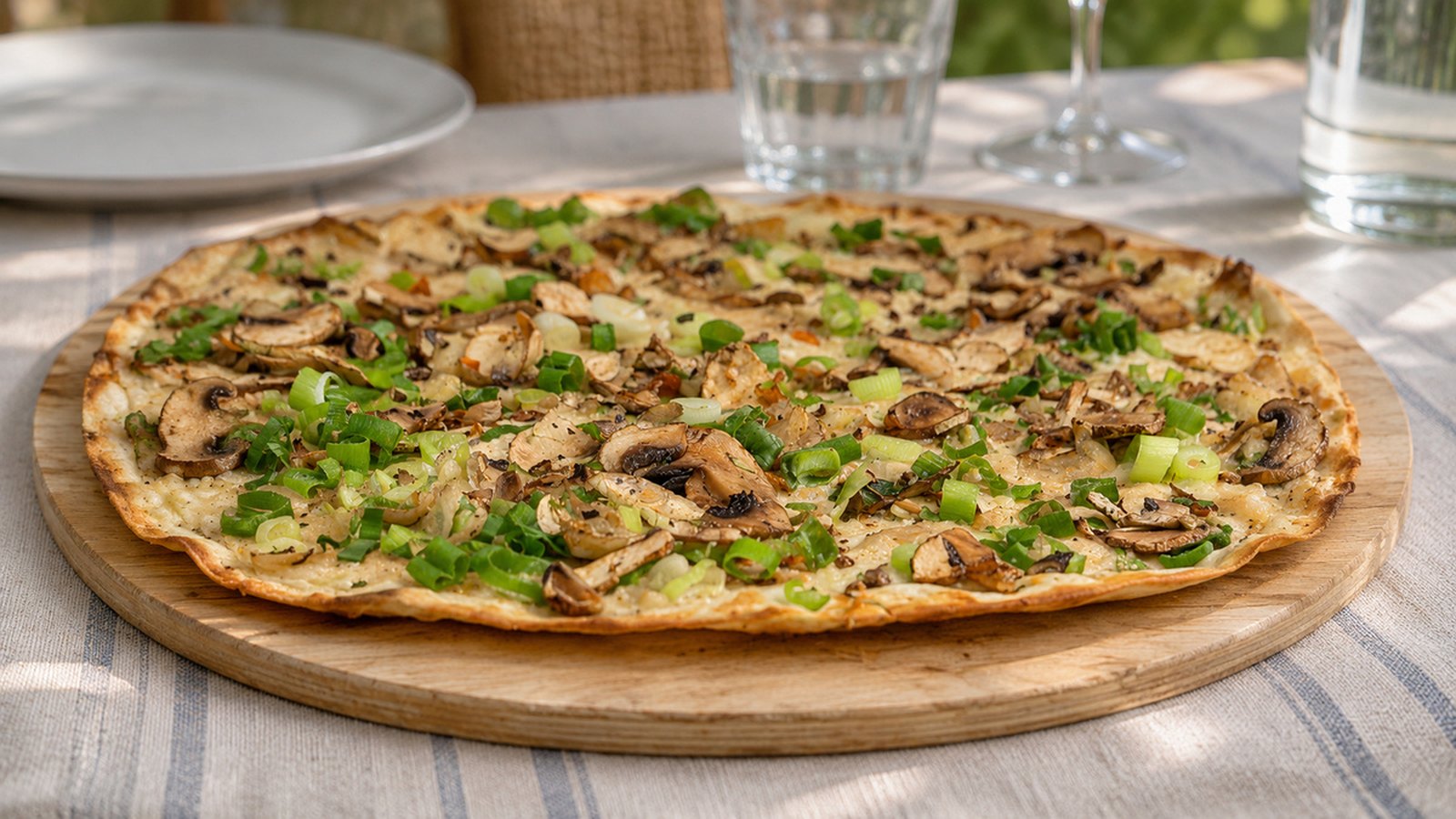
Mushroom tarte flambée is the forestière version of Flammekueche: on top of the thin dough and cream, button mushrooms sautéed until golden are added to the lardons and onion. It bakes for 15–20 minutes at 220 °C. This variation was born when the dish reached restaurants, has become a classic, and makes a good autumn recipe.
Preparation: 25 minutes
Cooking: 15–20 minutes
Makes 1 tarte flambée
Ingredients
- 1 tarte flambée base (thin dough made from flour, water, salt and oil)
- 200 g button mushrooms
- 1 medium onion
- 200 ml thick crème fraîche
- 100 g smoked lardons
- 1 tablespoon olive oil
- Salt and pepper
- Fresh chives (optional)
Method
- Clean the mushrooms with a damp cloth, without rinsing them under the tap, and slice them thinly. Peel and finely slice the onion.
- Fry the lardons in the hot olive oil for about 5 minutes, then drain them on kitchen paper.
- In the same pan, soften the onion over a low heat for 5–7 minutes. Add the mushrooms and sauté them until they have released all their liquid and turned golden. Season with salt and pepper.
- Preheat the oven to 220 °C. Roll the dough out thinly on a baking tray lined with baking paper.
- Season the crème fraîche with salt and pepper and spread it evenly over the dough.
- Scatter over the onion, then the mushrooms, then the lardons. Sprinkle with snipped chives if you like.
- Bake for 15–20 minutes, until the dough is nicely golden and the edges are crisp.
My tip: do not cut step 3 short. Mushrooms that have not given up all their liquid release it in the oven, making the cream watery and the dough soggy.
Which dough to use?
The recipe starts from a ready-made or homemade tarte flambée base. To make it yourself, follow the dough for the classic tarte flambée: flour, lukewarm water, oil and salt, no yeast, kneaded for 5–10 minutes and then rested for 30 minutes. Allow an extra half-hour in that case. Roll it out as thinly as you can: the mushroom topping is heavier than the plain version, and a thick base would stay soft in the middle.
Which mushrooms to choose?
Button mushrooms are the easiest: they are available all year round, have a mild flavour and release liquid that is easy to cook off. In season, you can replace some of them with oyster mushrooms or ceps from the market, which have more flavour. Slice them to the same thickness so they cook evenly.
If you pick your own in the forest, keep only the species you know perfectly. If in any doubt, have your harvest checked by a pharmacist or a mycological society before cooking it.
Origins
Tarte flambée comes from Alsatian farms, where a piece of bread dough topped with cream, onions and bacon was put into the wood-fired oven to test its heat before the bread went in. The dish stayed a home dish until the 1960s, when it reached restaurants. Variations then multiplied: the gratinée with grated cheese, the Munster version and the forestière, topped with mushrooms, now a regular on menus.
Tarte flambée is also eaten in German-speaking Moselle, where the base tends to be cream alone, as in this recipe. The Northern Vosges Regional Nature Park, between the Bas-Rhin and the Moselle, therefore knows it on both sides, as far as the Pays de Bitche.
What to serve it with
Cut into squares and shared in the middle of the table, it is served as a main course with a green salad, or as a starter.
Mushrooms call for a slightly rounder wine than plain tarte flambée. An Alsace Pinot Blanc or Auxerrois goes well with the cream; a Pinot Noir, as a rosé or a light red, matches the woodland flavour. These grapes are grown in the north of Alsace, in the Cleebourg vineyards, near Wissembourg. For beer, a light Alsace lager is a good choice.
Where to try it
In summer and autumn, village festivals in the Northern Vosges often serve tartes flambées baked by local associations, plain or topped depending on the stall. The dates change every year: check the village festivals calendar. For more seasonal recipes, browse the Recipes section.
Good to know
Expected crowds this week: usual, busier at the weekend
In the Northern Vosges
- 25 December Christmas Day, public holiday in France (long weekend)
- 26 December St Stephen’s Day (Alsace-Moselle), public holiday in France
- 1 January New Year's Day, public holiday in France (long weekend)
- 20 December – 3 January French school holidays
Back home: the Netherlands
- 25 December Christmas Day
- 26 December St. Stephen's Day
- 19 December – 3 January Christmas Holidays
- 13 February – 21 March Spring Holidays (depending on region)
Getting here
- From Belgium and the Netherlands by car: via Luxembourg and Metz, or via Germany towards Karlsruhe and Wissembourg.
- By train: high-speed trains to Strasbourg (via Paris) or to Karlsruhe (via Germany), then regional trains.
- On site: a car is the easiest way to get around.
Holidays: Nager.Date and OpenHolidays.