Alsatian potato dumplings (Grumbeerknepfle): the recipe
Potato dumplings are made from floury mashed potatoes bound with eggs, butter and flour, then poached in simmering water or baked au gratin. Alsatian Grumbeerknepfle.

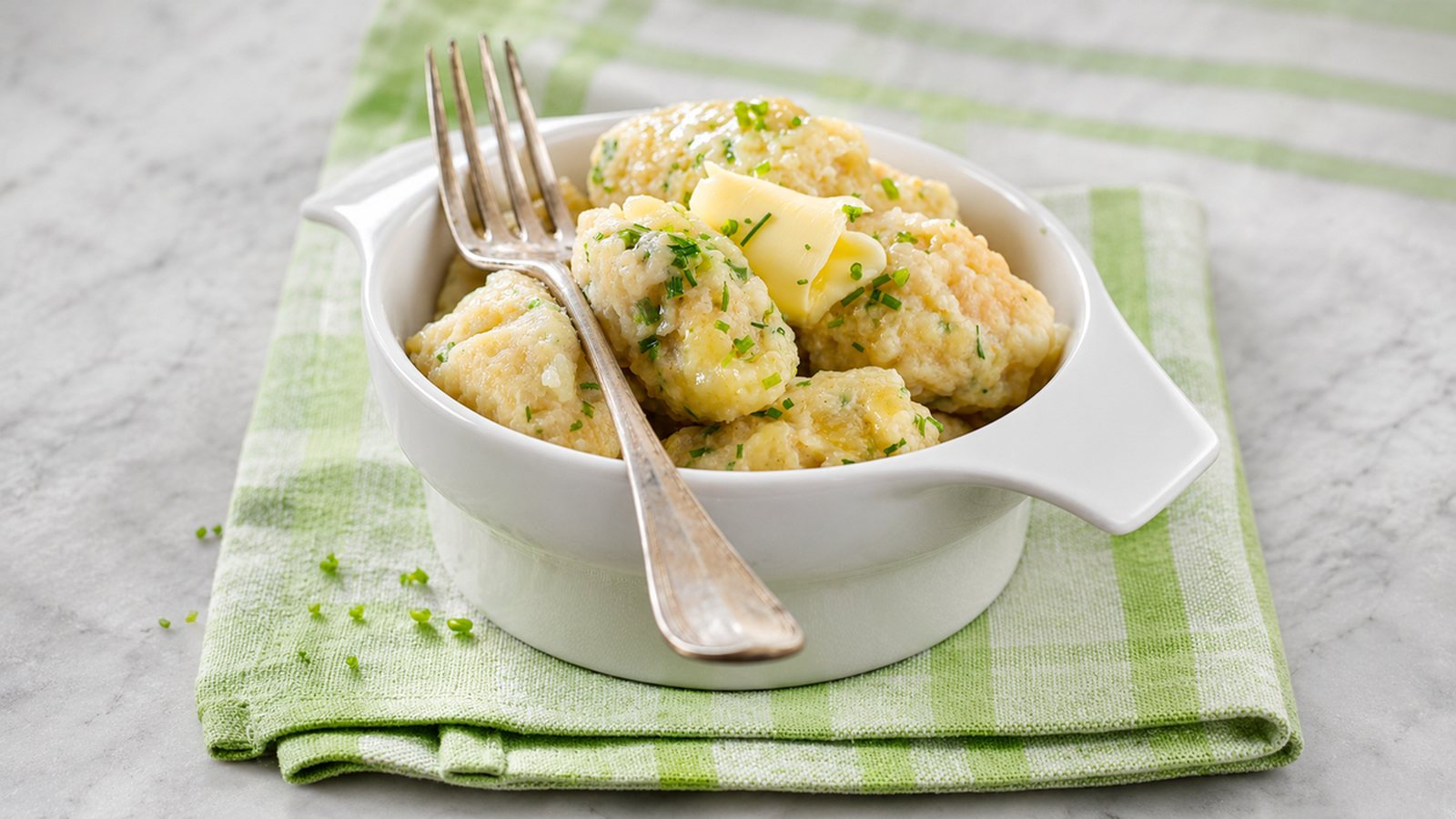
Potato dumplings are made from floury mashed potatoes bound with eggs, butter and flour, then shaped by hand. Poached in simmering water, they go with meat in a sauce; baked au gratin, they make a dish in their own right. In Alsace they belong to the Knepfle family of dumplings, under the name Grumbeerknepfle.
Oven time (gratin variation): 20–25 minutes at 180 °C
Ingredients
- Floury potatoes
- Eggs
- Flour
- Butter
- Salt, pepper and nutmeg
- Grated Parmesan (optional)
Method
- Peel the potatoes, cut them into chunks and boil them in salted water until tender. Drain and leave them to steam dry for a few minutes.
- Put them through a potato masher or ricer to get a smooth purée.
- Add the beaten eggs, melted butter, salt, pepper and nutmeg. Then work in the flour a little at a time until you have a soft dough that is not sticky. Add the Parmesan if you like.
- With wet hands, shape dumplings about 6–8 cm long.
- Slide them into simmering salted water and cook for a few minutes after they rise to the surface. Drain.
- Variation: arrange them in a buttered dish with a little cream or tomato sauce, scatter with grated cheese and bake for 20–25 minutes at 180 °C.
My tip: the amount of flour depends on how moist your potatoes are, which is why the recipe does not give a fixed quantity. Poach a test dumpling first. If it falls apart, add a little more flour; if it is hard, the dough already has too much, so use less next time.
Which potatoes should you use?
Choose floury potatoes, the kind meant for mash: their dry flesh needs less flour, so the dumplings stay lighter.
Let the cooked chunks dry out properly for a few minutes in the hot pan: this is the step that stops you adding too much flour.
Origins
In Alsatian, the potato is called “Grumbeer”. Grumbeerknepfle are among the Knepfle of Alsatian cooking, alongside dumplings made with flour, cheese or spinach. They are listed together with Buewespatzle, another Alsatian potato dough.
Across the Rhine, German Kartoffelklöße belong to the same family; some recipes there combine cooked and raw potatoes.
Elsewhere in Alsace there are versions without eggs. The Guebwiller tourist office, in the Haut-Rhin, publishes a recipe for Hardeapfelpflutta: 2.5 kg of potatoes, 200 g of flour and 50 g of butter for 6 to 8 people, no eggs, the dough dried out over a high heat and then browned in a frying pan. These proportions are a useful guide for the recipe above.
What to serve them with
Poached, potato dumplings go with roast meat or meat in a sauce, such as a smoked pork shoulder. Baked with cream, they are served with a green salad. For an all-potato Alsatian meal, see also the potato pancakes and the potato salad.
For wine, an Alsace Pinot Blanc goes well with the gratin; with pork, a Sylvaner also works. The Cleebourg vineyards, near Wissembourg, produce both. If you prefer beer, choose a light lager.
Where to try them
Like most Knepfle, potato dumplings are mainly made at home. Make them in autumn, with new-season potatoes bought at the local markets.
More recipes from the region are waiting for you in the Recipes section.
Good to know
Expected crowds this week: usual, busier at the weekend
In the Northern Vosges
- 25 December Christmas Day, public holiday in France (long weekend)
- 26 December St Stephen’s Day (Alsace-Moselle), public holiday in France
- 1 January New Year's Day, public holiday in France (long weekend)
- 20 December – 3 January French school holidays
Back home: the Netherlands
- 25 December Christmas Day
- 26 December St. Stephen's Day
- 19 December – 3 January Christmas Holidays
- 13 February – 21 March Spring Holidays (depending on region)
Getting here
- From Belgium and the Netherlands by car: via Luxembourg and Metz, or via Germany towards Karlsruhe and Wissembourg.
- By train: high-speed trains to Strasbourg (via Paris) or to Karlsruhe (via Germany), then regional trains.
- On site: a car is the easiest way to get around.
Holidays: Nager.Date and OpenHolidays.