Leverknepfle (Alsatian liver dumplings): the recipe
Leverknepfle are Alsatian liver dumplings: chicken livers, minced meat and soaked bread, browned in butter then poached for 20 minutes in stock. Recipe and origins.

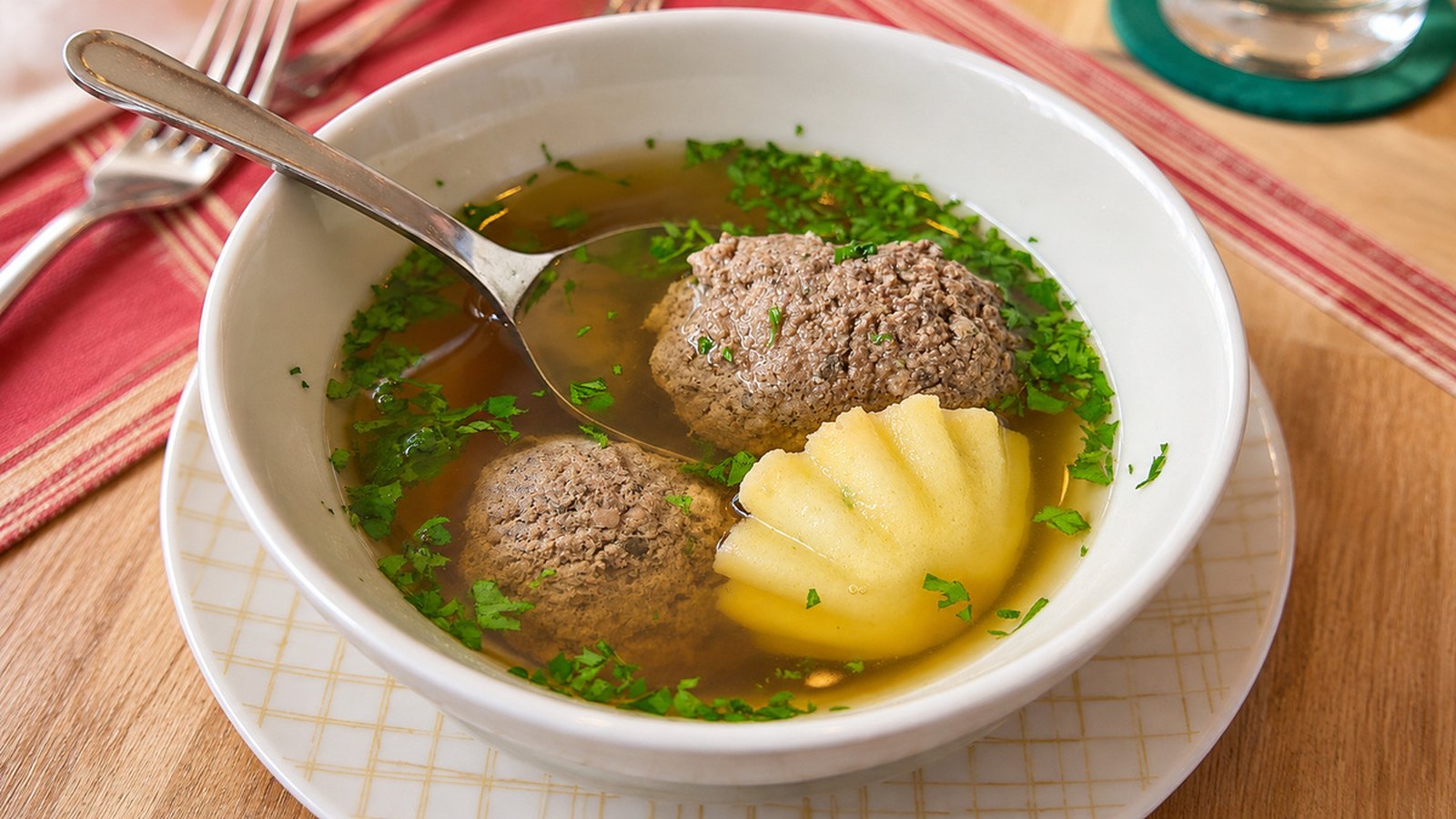
Leverknepfle (also spelt Lewerknepfle) are liver dumplings from Alsatian cooking. This quick version combines chicken livers and minced meat, bound with milk-soaked bread and eggs. The dumplings are browned in butter, then poached for around twenty minutes in stock. It is a winter dish found on both sides of the border, all the way into the Palatinate.
Cooking time: 20 minutes in stock, after browning in a frying pan
Serves 4
Ingredients
- 250 g chicken livers
- 250 g minced meat (pork or veal, as you prefer)
- 1 medium onion
- 1 bunch fresh parsley
- 2 eggs
- 3 slices white sandwich bread
- 100 ml milk
- 3 tablespoons flour
- Butter for frying
- 1 litre stock (vegetable or chicken)
- Salt and pepper
Method
- Trim any sinewy bits from the chicken livers and cut them into small pieces.
- Finely chop the onion. Soak the bread in the milk, then squeeze it out.
- Blend the livers, then mix them with the minced meat, onion, squeezed bread, eggs, chopped parsley, salt and pepper.
- Shape into balls 3 to 4 cm across and roll them lightly in the flour.
- Brown them on all sides in a frying pan with a knob of butter over a medium heat.
- Bring the stock to the boil, lower in the dumplings and simmer gently for about 20 minutes.
My tip: once the dumplings are in the stock, keep it at a bare simmer. A rolling boil will make them break apart. If the mixture seems too soft to roll, rest it in the fridge for a quarter of an hour before shaping the dumplings.
What are Leverknepfle?
The name combines “Lewer”, Alsatian for liver, and “Knepfle”, the Alsatian word for dumplings and quenelles. The same family includes dumplings made from flour, meat or semolina.
The classic recipe tends to use pig’s or ox liver, minced with stale bread, eggs and parsley. This version uses milder chicken livers and cuts them with minced meat, so the liver flavour comes through without taking over. White sandwich bread stands in for stale bread, giving a finer mixture.
Origins
Liver dumplings belong to the large family of Knödel, the poached dumplings of Central Europe. In Alsace, Lewerknepfle are counted among the meat dishes, and the regional repertoire also includes a liver dumpling soup known as “à la strasbourgeoise” (Strasbourg style).
Across the Rhine and the Lauter, the Leberknödel is a classic in Bavaria, Austria and the Palatinate. In Bavaria and Austria it is mostly served as a soup, in clear broth. In the Palatinate, where it is called Läwwerknepp and is often made with pig’s liver, it becomes a main course.
This is where the link with the Northern Vosges comes in: together with the Palatinate Forest, the Park forms a cross-border biosphere reserve recognised by UNESCO. Both sides share this dumpling cuisine, with a different name on each side of the border.
What to serve with it
You can serve Leverknepfle in their stock, in a soup plate, as a hearty soup. Or drain them and serve them the Palatinate way, with sauerkraut and mashed potatoes. Alsatian choucroute works well here. Sautéed potatoes with parsley or a green salad with a mustard dressing also go nicely.
For wine, choose a dry Alsace white: a Sylvaner, which goes well with charcuterie, pork and sauerkraut, or a rounder Pinot Blanc. The Cleebourg vineyards, near Wissembourg, produce both, the Pinot Blanc in the form of Auxerrois. If you prefer beer, a light lager will do the job.
Where to try it
This is first and foremost a home-cooked dish, made in the family kitchen when the cold weather arrives. On the German side of the biosphere reserve, in the Palatinate, Läwwerknepp are very popular and served as a main course, with sauerkraut and mash.
For more classics from the Alsatian and Lorraine table, browse the Recipes section.
Good to know
Expected crowds this week: usual, busier at the weekend
In the Northern Vosges
- 25 December Christmas Day, public holiday in France (long weekend)
- 26 December St Stephen’s Day (Alsace-Moselle), public holiday in France
- 1 January New Year's Day, public holiday in France (long weekend)
- 20 December – 3 January French school holidays
Back home: the Netherlands
- 25 December Christmas Day
- 26 December St. Stephen's Day
- 19 December – 3 January Christmas Holidays
- 13 February – 21 March Spring Holidays (depending on region)
Getting here
- From Belgium and the Netherlands by car: via Luxembourg and Metz, or via Germany towards Karlsruhe and Wissembourg.
- By train: high-speed trains to Strasbourg (via Paris) or to Karlsruhe (via Germany), then regional trains.
- On site: a car is the easiest way to get around.
Holidays: Nager.Date and OpenHolidays.