Pike in Riesling: an Alsatian recipe
Pike in Riesling: pike steaks cooked for 20 minutes in Alsace white wine and coated with a reduced cream sauce. A freshwater fish dish in the Alsatian tradition.

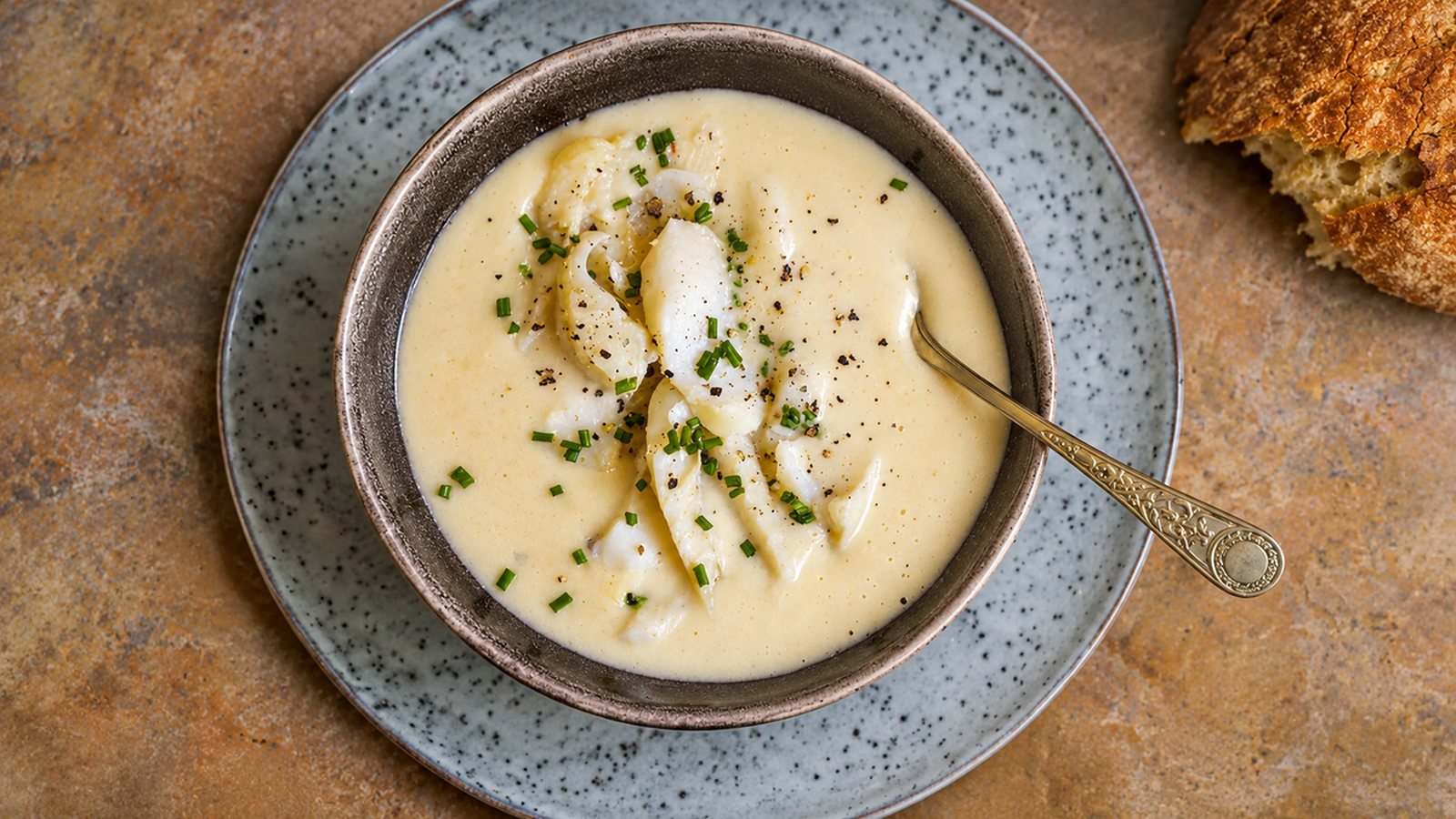
Pike in Riesling is made with thick pike steaks cooked, covered, in Riesling with shallots, then coated with their cooking liquid, reduced and thickened with cream and seasoned with nutmeg and lemon. The fish cooks gently for about twenty minutes. It is a freshwater fish dish in the Alsatian tradition of white wine sauces, served with steamed potatoes.
Preparation: 20 minutes
Cooking: 20 minutes for the fish, plus time to reduce the sauce
Serves 4
Ingredients
- 1 fresh pike, about 1.5 kg
- 500 ml Riesling (dry Alsace white wine)
- 2 shallots, finely chopped
- 150 ml thick crème fraîche
- 3 tbsp butter
- 1 pinch of nutmeg
- Salt and pepper
- A few sprigs of fresh parsley to garnish
- Juice of half a lemon
Method
- Scale and gut the pike, rinse it under running water and pat it dry with kitchen paper.
- Cut it into steaks about 5 cm thick.
- Melt the butter over a medium heat in a large frying pan and sweat the shallots until translucent.
- Pour in the Riesling, bring to the boil, then leave to simmer over a low heat for a few minutes.
- Add the pike steaks, cover and cook over a low heat for about 20 minutes.
- Remove the fish and keep it warm. Reduce the sauce by half over a high heat.
- Stir in the crème fraîche, season with salt, pepper and nutmeg, then add a few drops of lemon juice.
- Spoon the sauce over the pike steaks, garnish with parsley and serve on warmed plates.
My tip: ask your fishmonger to scale, gut and cut the pike into steaks. You save a quarter of an hour, and they will remove the fins at the same time. At the table, warn your guests: pike still has fine bones, even when cut into steaks.
Which pike to choose
Pike is a predator of still waters: slow rivers, oxbow lakes, ponds and lakes rich in vegetation. Small fish have little flesh and lots of bones; very large ones are said to have coarser flesh. A fish of about 1.5 kg, as in this recipe, is a good compromise.
The species is partially protected in France. Pike spawn from February to April, and fishing for them is closed for part of the winter and spring, on dates set each year by prefectural decree. If you cannot find any, another firm-fleshed freshwater fish such as zander (pikeperch) can be prepared in the same way.
Origins
Alsatian cuisine has a place for freshwater fish caught or farmed in the region: eel, pike, carp, perch, zander, tench and trout. Riesling is the base for several sauces: matelote au riesling (a fish stew that includes pike), zander fillet in Riesling sauce or, for poultry, coq au riesling. Pike is also eaten as Hachtknell, pike dumplings.
Pike in Riesling belongs to this family of dishes. It has no known written history of its own, nor any particular link to the Northern Vosges. The area does, however, offer pike the still waters it looks for: slow rivers and many ponds, especially on the Moselle side, in the Pays de Bitche. The Étang de Hanau, at Philippsbourg, is one of the best known and attracts many anglers; you will find the Park’s other lakes and ponds in the ponds and swimming section.
What to serve it with
Steamed potatoes soak up the sauce well. Celeriac purée or seasonal green vegetables also work.
As for wine, serve a dry Riesling, ideally the same one you cooked with: its acidity balances the cream and lemon. In northern Alsace, the Cleebourg wine cooperative near Wissembourg makes Riesling, as well as Sylvaner and Pinot Blanc (Auxerrois), two lighter dry whites that go well with fish. If you prefer beer, a light, mildly bitter lager will not overpower the flavour of the pike.
Where to try it
Pike in Riesling is not a village festival dish: you are more likely to find it on menus that feature river fish, matelote or fish in Riesling, depending on the catch. Ask for the fish of the day.
At home, the same sauce works with other local fish: try trout in Riesling, quicker with its pan-fried fillets, or truite au bleu, whole trout poached in court-bouillon. More dishes from Alsatian and Lorraine cuisine await you in the Recipes section.
Good to know
Expected crowds this week: usual, busier at the weekend
In the Northern Vosges
- 25 December Christmas Day, public holiday in France (long weekend)
- 26 December St Stephen’s Day (Alsace-Moselle), public holiday in France
- 1 January New Year's Day, public holiday in France (long weekend)
- 20 December – 3 January French school holidays
Back home: the Netherlands
- 25 December Christmas Day
- 26 December St. Stephen's Day
- 19 December – 3 January Christmas Holidays
- 13 February – 21 March Spring Holidays (depending on region)
Getting here
- From Belgium and the Netherlands by car: via Luxembourg and Metz, or via Germany towards Karlsruhe and Wissembourg.
- By train: high-speed trains to Strasbourg (via Paris) or to Karlsruhe (via Germany), then regional trains.
- On site: a car is the easiest way to get around.
Holidays: Nager.Date and OpenHolidays.