Coq au Riesling: the Alsatian Recipe (Hàhn im Riesling)
Coq au riesling, Alsace’s version of coq au vin: cockerel browned in butter, braised for two hours in riesling with lardons and mushrooms, with a reduced cream sauce. Serve with spätzle.

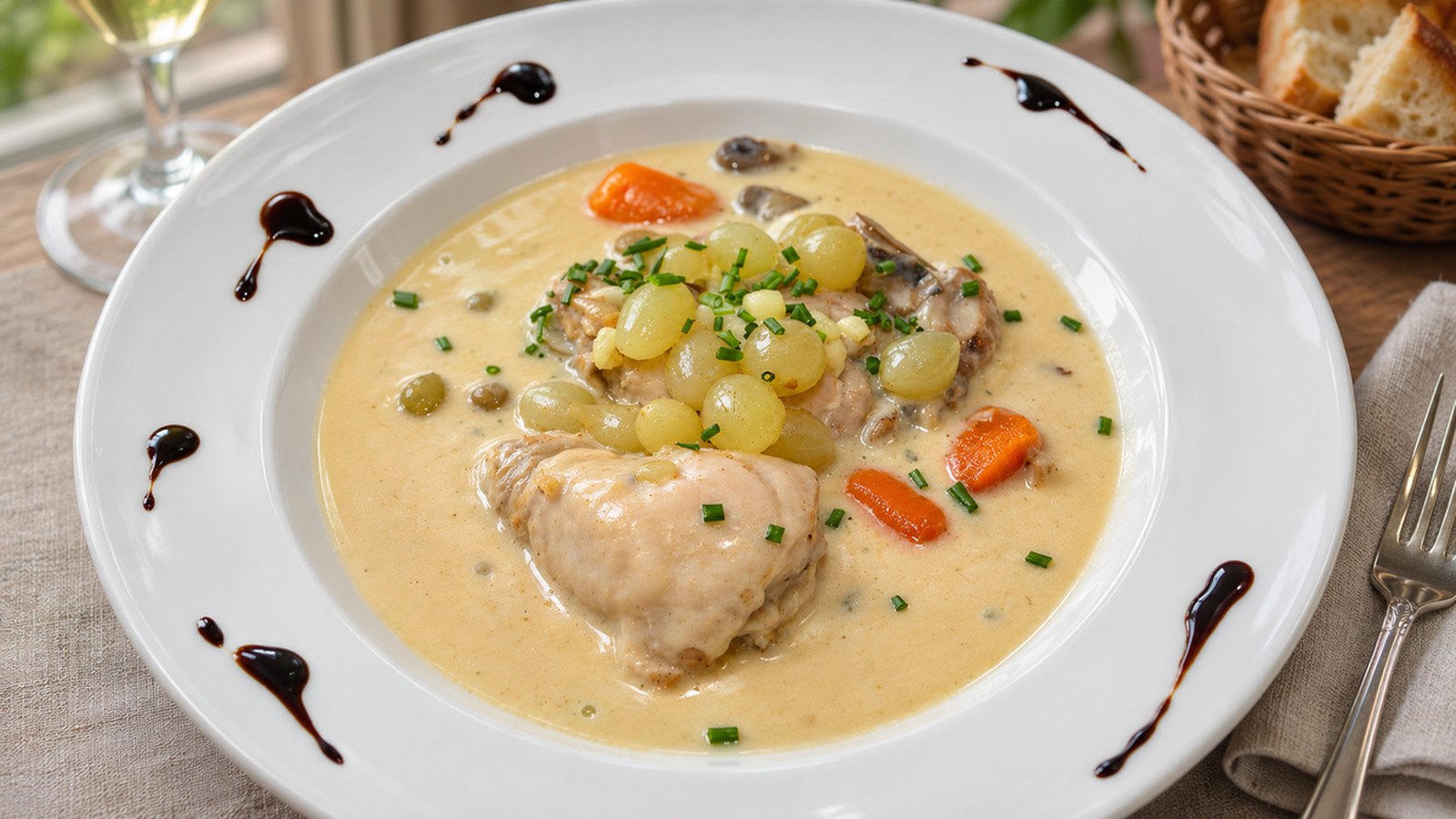
Coq au riesling, Hàhn im Riesling in Alsatian, is Alsace’s take on coq au vin: pieces of cockerel browned in butter, braised for about two hours in riesling with lardons, mushrooms and carrots, then coated in a reduced sauce finished with cream. It is served with spätzle, noodles or potatoes.
Preparation: 30 minutes
Cooking: about 2 hours 30 minutes
Serves 6
Ingredients
- 1 cockerel, jointed
- 1 bottle of riesling (half for cooking, the rest to serve with the meal)
- 2 onions
- 3 garlic cloves
- 150 g lardons
- 250 g button mushrooms
- 2 carrots
- 3 sprigs of thyme
- 2 bay leaves
- 500 ml chicken stock
- 300 ml thick crème fraîche
- 30 g butter
- Salt and pepper
Method
- If the bird is not already jointed, cut it into pieces. Slice the onions, cut the carrots into rounds, slice the mushrooms and chop the garlic.
- In a large casserole (Dutch oven), brown the lardons over a medium heat, then lift them out.
- Add a little butter and brown the pieces of cockerel on all sides, then lift them out.
- Soften the onions, carrots and mushrooms until tender, then add the garlic for a few minutes.
- Deglaze with half the bottle of riesling and let it reduce by half.
- Return the bird and the lardons to the pot and add the stock, thyme and bay leaves. Season with salt and pepper, cover and simmer gently for about 2 hours.
- Lift out the pieces of cockerel, keep them warm and reduce the sauce by half.
- Stir in the crème fraîche, adjust the seasoning and spoon the sauce over the bird.
My tip: choose a dry riesling for the pot. A wine that is too sweet makes the sauce heavy once it has reduced; the same wine, served at the table, ties the dish and the glass together.
Cockerel or chicken?
A true cockerel is an older bird with firm flesh that can take, and needs, long cooking: that is why the recipe allows two hours of braising. A large free-range chicken will do, but it cooks faster, so check how tender the meat is from the first hour.
The sauce should coat the back of a spoon. If it is still too thin after reducing, let it bubble for a few more minutes before adding the cream rather than thickening it with flour.
Variations
The most classic version marinates the bird for 24 hours in riesling with a bouquet garni, uses shallots instead of onions and flambés the meat before adding the mushrooms and marinade; some recipes add marc d’Alsace (Alsatian grape brandy). The version given here, with stock and carrots, is quicker to get going and gives a gentler sauce. The same approach works for river fish in pike in riesling, and beer replaces wine in coq à la bière (cockerel in beer).
Origins
Coq au riesling is the traditional Alsatian version of coq au vin: the red wine gives way to Alsace riesling. Its Alsatian name, Hàhn im Riesling, simply means “the cockerel in the riesling”. The dish is one of the recipes that the Alsace wine trade body promotes to accompany its wines.
In the Northern Vosges, riesling is close at hand: the Cleebourg vineyard, near Wissembourg at the northern end of the Alsace Wine Route, grows it.
What to serve it with
Spätzle are the most Alsatian side dish: these small fresh egg noodles soak up the sauce. Noodles, rice or steamed potatoes also work well.
The wine chooses itself: the riesling you cooked with, or another dry Alsace riesling. If you prefer red, an Alsace pinot noir also goes well with the dish. The Cleebourg vineyard produces both.
Where to try it
Coq au riesling appears on Alsatian restaurant menus all year round and is a family favourite when the weather turns cold. To pair it with a wine outing, the calendar of wine events lists what is on in the vineyards; in summer, Cleebourg holds a crémant festival, whose date should be checked with the village.
FAQ
How do you make coq au vin with white wine?
The Alsatian version of white-wine coq au vin is coq au riesling: brown the lardons and pieces of cockerel, soften onions, carrots and mushrooms, deglaze with half a bottle of riesling reduced by half, then braise for about 2 hours with stock, thyme and bay leaves before finishing the sauce with cream.
Which white wine should you use for coq au vin?
A dry white wine: in Alsace, a riesling, which is also served at the table. A wine that is too sweet makes the sauce heavy once it has reduced.
How long does coq au riesling take to cook?
Allow about 2½ hours’ cooking for coq au riesling, including 2 hours of gentle covered braising: a cockerel, an older bird with firm flesh, needs long cooking. A large free-range chicken cooks faster.
Can you make white-wine coq au vin with chicken?
Yes, a large free-range chicken can replace the cockerel, but it cooks faster: check how tender the meat is from the first hour of braising.
Should you marinate coq au riesling?
The most classic version marinates the bird for 24 hours in riesling with a bouquet garni, then flambés it; some recipes add marc d’Alsace. The recipe with stock and carrots needs no marinade and gives a gentler sauce.
What do you serve with coq au riesling?
Spätzle are the most Alsatian side dish for coq au riesling; noodles, rice or steamed potatoes also work. For wine, a dry Alsace riesling, or an Alsace pinot noir if you prefer red.
Good to know
Expected crowds this week: usual, busier at the weekend
In the Northern Vosges
- 25 December Christmas Day, public holiday in France (long weekend)
- 26 December St Stephen’s Day (Alsace-Moselle), public holiday in France
- 1 January New Year's Day, public holiday in France (long weekend)
- 20 December – 3 January French school holidays
Back home: the Netherlands
- 25 December Christmas Day
- 26 December St. Stephen's Day
- 19 December – 3 January Christmas Holidays
- 13 February – 21 March Spring Holidays (depending on region)
Getting here
- From Belgium and the Netherlands by car: via Luxembourg and Metz, or via Germany towards Karlsruhe and Wissembourg.
- By train: high-speed trains to Strasbourg (via Paris) or to Karlsruhe (via Germany), then regional trains.
- On site: a car is the easiest way to get around.
Holidays: Nager.Date and OpenHolidays.