Alsatian baeckeoffe: the traditional recipe
Alsatian baeckeoffe: three meats marinated overnight in white wine, layered with potatoes and vegetables, then baked for 3 hours in a sealed earthenware dish. The great winter stew.

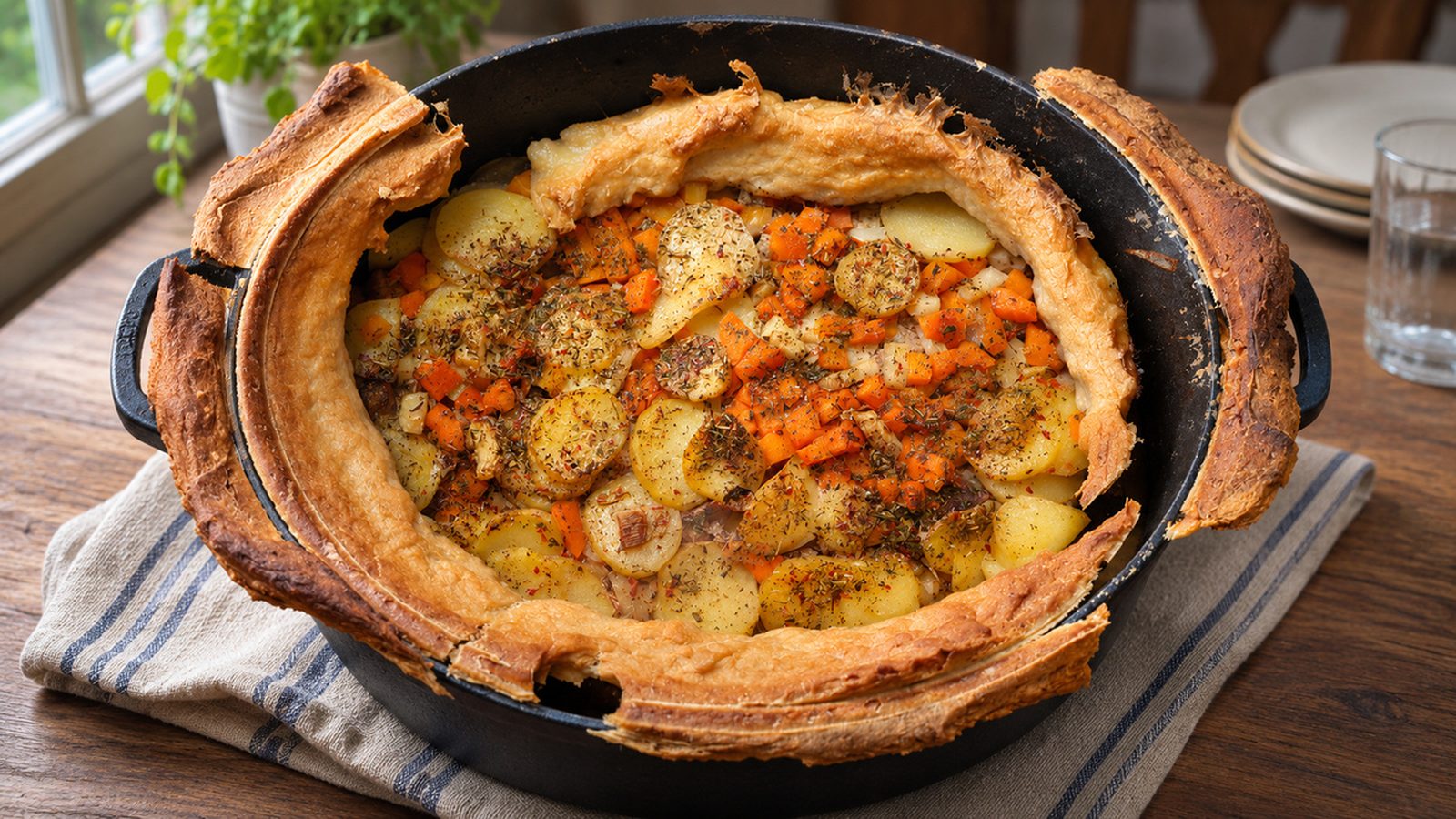
Baeckeoffe is an Alsatian dish of beef, pork and lamb marinated overnight in white wine, then layered with potatoes and vegetables in a lidded earthenware dish and baked in the oven for about 3 hours. You prepare it the day before and serve it in the dish it cooked in. It is the great slow-cooked winter dish of Alsace and German-speaking Moselle, and so of the Northern Vosges too.
Preparation: 30 minutes
Resting: 12 hours (marinade)
Cooking: 3 hours
Serves 4
Ingredients
- 300 g beef neck (chuck)
- 300 g boneless pork shoulder
- 300 g lamb (boneless shoulder or leg)
- 1 kg potatoes, cut into thick slices
- 2 onions, thinly sliced
- 2 carrots, sliced into rounds
- 1 leek, sliced into rounds
- 2 garlic cloves, chopped
- 3 bay leaves
- 2 sprigs of thyme
- 10 juniper berries
- 10 black peppercorns
- 500 ml dry white wine (Riesling or Pinot Blanc)
- Salt and pepper, to taste
Method
- Cut the meat into even 3–4 cm pieces and put them in a large bowl.
- Add the bay leaves, thyme, juniper berries and peppercorns, then pour in the white wine: the meat should be half covered.
- Cover with cling film and leave to marinate in the fridge for at least 12 hours.
- Arrange a layer of potatoes in the bottom of the earthenware dish. Season lightly with salt and pepper.
- Add a layer of marinated meat, then a layer of vegetables (onions, carrots, leek, garlic). Repeat the layers.
- Finish with a layer of potatoes, season with salt and pepper, then pour over the remaining marinade. Top up with a little water to come halfway up the dish if needed.
- Preheat the oven to 180 °C (350 °F, gas mark 4). Cover the dish and bake for about 3 hours, adding a little liquid if it starts to dry out.
- Leave to rest for a few minutes out of the oven and serve in the dish, with a green salad.
My tip: do as the bakers of old did and seal the lid with a rope of dough (flour and water). The dish stays airtight, no steam escapes and you hardly need to keep an eye on the liquid.
Which dish to use?
Baeckeoffe is cooked in an oval earthenware terrine with a close-fitting lid. The best known comes from Soufflenheim, near Haguenau, on the edge of the Park: the potters there shape and hand-paint glazed terrines, often decorated with flowers, hearts or storks. Soufflenheim pottery is protected by a geographical indication, as is that of Betschdorf.
Failing that, a cast-iron casserole with a lid will do the job. It heats up faster, so keep a closer eye on the liquid level.
Origins
The name comes from the Alsatian Beckeoffe, the “baker’s oven”. It is called baeckeoffe in the Bas-Rhin and in German-speaking Moselle, which includes the Pays de Bitche, and baeckaoffa in the Haut-Rhin.
Its history is all about the cooking. Families assembled the dish at home and took it to the baker, who slid it into his oven while it was still hot from the bread bake. The dish cooked slowly while the family was at Sunday service, at work or in the fields. An often-cited but disputed explanation links it to hamin, a Sabbath dish from Jewish cuisine that families also left in the baker’s oven.
The recipe varies from family to family: some add a pig’s trotter, for example, which gives the sauce a silky texture. The principle stays the same: three meats, potatoes, white wine and long, slow cooking in a sealed dish. For a quicker version, with a 2-hour marinade and melted cheese on top, see the baeckeoffe with Munster cheese.
What to serve it with
A green salad with a sharp vinaigrette is all you need: it balances the richness of the meat. Some country bread lets you mop up the juices.
As for wine, serve the same dry white you used for the marinade: an Alsace Riesling, Sylvaner or Pinot Blanc. The Guide Hachette des Vins also suggests an Alsace Pinot Gris, or a fruity red such as Pinot Noir. In the north of Alsace, the Cleebourg vineyards near Wissembourg produce Riesling, Sylvaner, Auxerrois and Pinot Gris. If you prefer beer, a lager with little bitterness goes well.
Where to try it
Baeckeoffe is a cold-weather dish: you will mostly find it from autumn to the end of winter on the menus of winstubs and village inns. As it has to be prepared the day before, many restaurants only serve it on certain days or by reservation, so check before you go.
To make it again at home, a Soufflenheim terrine is a useful souvenir. And for another Alsatian winter dish that feeds a whole table, try Alsatian choucroute. The other classics are gathered in the Recipes section.
Good to know
Expected crowds this week: usual, busier at the weekend
In the Northern Vosges
- 25 December Christmas Day, public holiday in France (long weekend)
- 26 December St Stephen’s Day (Alsace-Moselle), public holiday in France
- 1 January New Year's Day, public holiday in France (long weekend)
- 20 December – 3 January French school holidays
Back home: the Netherlands
- 25 December Christmas Day
- 26 December St. Stephen's Day
- 19 December – 3 January Christmas Holidays
- 13 February – 21 March Spring Holidays (depending on region)
Getting here
- From Belgium and the Netherlands by car: via Luxembourg and Metz, or via Germany towards Karlsruhe and Wissembourg.
- By train: high-speed trains to Strasbourg (via Paris) or to Karlsruhe (via Germany), then regional trains.
- On site: a car is the easiest way to get around.
Holidays: Nager.Date and OpenHolidays.