Alsatian salad with cabbage, knack sausage and lardons: recipe
A hearty Alsatian mixed salad: white cabbage, carrots, cucumber and radishes, ham, Strasbourg sausage and crispy lardons in a mustard vinaigrette. A fresh, complete meal.

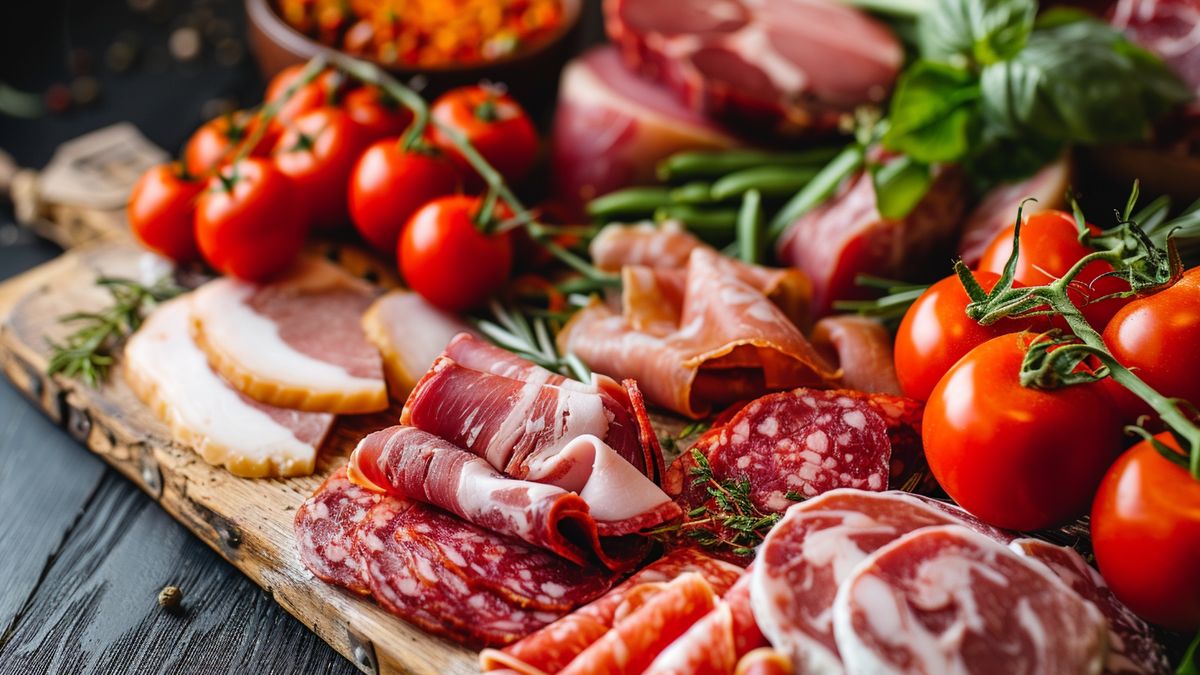
This Alsatian salad is a hearty mixed salad: finely sliced white cabbage, carrots, cucumber, radishes and red onion, with cooked ham, Strasbourg sausage and crispy fried lardons, all tossed in a mustard vinaigrette. It makes a complete meal, bringing together raw vegetables from the kitchen garden and Alsatian charcuterie. The name covers several recipes: on restaurant menus, “salade alsacienne” often means a cervelas sausage salad with Gruyère.
The recipe gives no fixed quantities: adjust the vegetables and meats to the number of guests and how hungry they are.
Ingredients
- Finely sliced white cabbage
- Grated carrots
- Cucumbers
- Red onions
- Radishes
- Cooked ham
- Strasbourg sausage
- Lardons (bacon pieces)
- Dijon mustard
- White wine vinegar
- Sunflower oil
- Salt and pepper
- Fresh chives, finely snipped
Method
- Finely slice the white cabbage and red onions, grate the carrots and thinly slice the cucumbers and radishes. Combine the vegetables in a large salad bowl.
- Cut the ham and Strasbourg sausage into thin strips. Fry the lardons in a pan until golden and crisp, then add all the meats to the vegetables.
- In a bowl, mix the mustard, white wine vinegar, salt and pepper, then gradually whisk in the sunflower oil to emulsify.
- Pour the vinaigrette over the salad, toss gently and scatter with snipped chives before serving.
My tip: drain the lardons on kitchen paper and add them last, while still warm. They stay crisp and don’t make the raw vegetables greasy.
What is an Alsatian salad?
The name does not refer to one set recipe. Lists of Alsatian specialities mention it without describing it, and every family and every menu has its own version. A common one is built around cervelas: a cervelas sausage salad in vinaigrette, often with Gruyère added; it is then called a “salade mixte” or “strasbourgeoise”.
The version on this page follows a different idea: plenty of raw vegetables and three kinds of meat. With its radishes and cucumber, it is a warm-weather salad; in winter, cabbage and carrots can carry the vegetable side on their own.
Strasbourg sausage, or knack
Strasbourg sausage, which Alsatians call knack, is made from pork, beef or veal with spices, then lightly hot-smoked over beech wood. Its name is said to come from the German knacken, “to crack”, after the snap of its skin when you bite into it. It is eaten hot or cold, not least in salads.
For the salad, don’t boil it: if you prefer to warm it, leave it for a few minutes in barely simmering water, never boiling, so that it doesn’t split, then slice it once it is lukewarm.
Origins
This mixed salad of raw vegetables and charcuterie has no birth certificate: it simply combines staples of Alsatian cooking. Smoked bacon (Speck) and knack are part of the regional charcuterie, and Alsace has its own mild mustard, which can replace Dijon mustard in the vinaigrette.
Variations
Swap the white cabbage for red cabbage, as in the red cabbage salad with caraway. A few thinly sliced gherkins add sharpness; sticks of Gruyère or Emmental bring it closer to the mixed cervelas salad. If you make the salad ahead, keep the vinaigrette separate until serving: the cabbage and cucumber release water.
What to serve it with
With country bread, an Alsatian salad is enough for lunch. In a smaller portion, it makes a starter.
For wine, a dry Alsace white suits the vinaigrette and the smoked meats: a Riesling, a Sylvaner or a Pinot Blanc. These grapes are grown in the far north of Alsace, in the Cleebourg vineyards near Wissembourg. A chilled lager works just as well.
Where to try it
This mixed salad is mostly made at home. For the charcuterie, vegetables and mustard, the stalls at the region’s markets and the village butchers’ shops have everything you need.
For more classics of Alsatian and Lorraine cooking, browse the Recipes section.
Good to know
Expected crowds this week: usual, busier at the weekend
In the Northern Vosges
- 25 December Christmas Day, public holiday in France (long weekend)
- 26 December St Stephen’s Day (Alsace-Moselle), public holiday in France
- 1 January New Year's Day, public holiday in France (long weekend)
- 20 December – 3 January French school holidays
Back home: the Netherlands
- 25 December Christmas Day
- 26 December St. Stephen's Day
- 19 December – 3 January Christmas Holidays
- 13 February – 21 March Spring Holidays (depending on region)
Getting here
- From Belgium and the Netherlands by car: via Luxembourg and Metz, or via Germany towards Karlsruhe and Wissembourg.
- By train: high-speed trains to Strasbourg (via Paris) or to Karlsruhe (via Germany), then regional trains.
- On site: a car is the easiest way to get around.
Holidays: Nager.Date and OpenHolidays.