Choucroute with smoked haddock: an Alsatian sauerkraut recipe
Choucroute with haddock: raw sauerkraut simmered in white wine, smoked haddock soaked and poached, potatoes cooked in its water. A lighter choucroute, ready in under two hours.

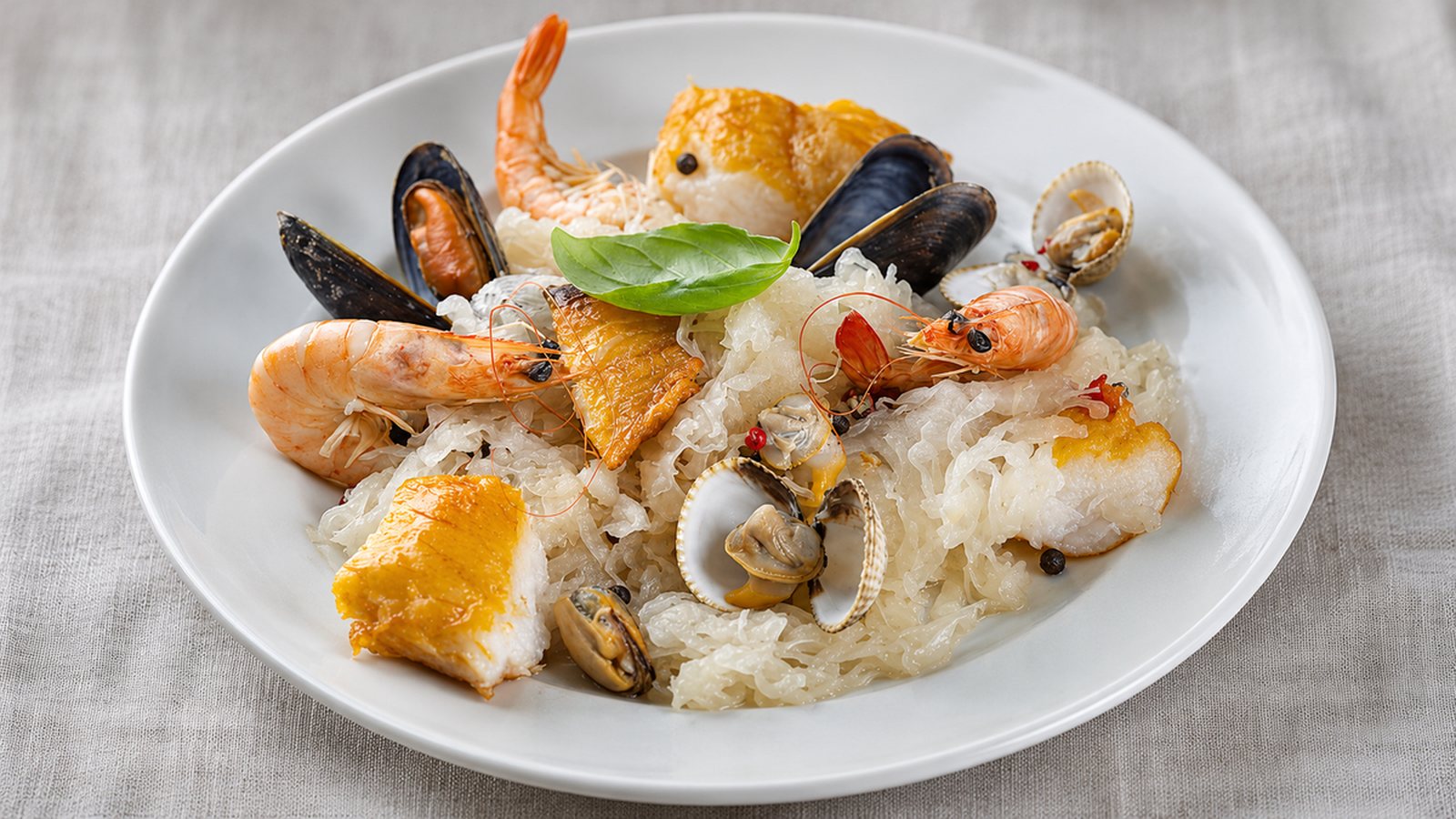
Choucroute with haddock is raw sauerkraut simmered for at least an hour in white wine with onion, carrots and aromatics, served with smoked haddock that has been soaked to remove excess salt, then poached, plus potatoes cooked in the poaching water. The smoked fish takes the place of the pork and sausages in choucroute garnie. The dish is lighter and ready in under two hours, soaking included.
Prep time: 20 minutes
Soaking time: 1 hour
Cooking time: about 1 hour 10 minutes
Serves 4
Ingredients
- 600 g raw sauerkraut
- 400 g smoked haddock
- 1 onion
- 2 carrots
- 4 potatoes
- 30 g butter
- 100 ml dry white wine
- 1 bouquet garni (thyme, bay leaf, parsley)
- 2 cloves
- Salt and pepper
Method
- Soak the haddock for an hour in plenty of cold water to draw out the salt, changing the water twice.
- Slice the onion, cut the carrots into rounds and sweat them for a few minutes in melted butter in a large saucepan.
- Add the raw sauerkraut, white wine, bouquet garni and cloves, season lightly with salt and add pepper, then cover and simmer over a low heat for at least 1 hour, adding a little water if needed.
- Put the haddock in a pan of cold water, bring to a gentle simmer and cook for about 10 minutes; drain, keeping the cooking water.
- Peel the potatoes and cook them in the haddock cooking water until tender.
- Pile the sauerkraut in the centre of a serving dish, arrange the haddock and potatoes around it, spoon over a little of the cooking juices and serve piping hot.
My tip: start soaking the haddock first, then cook the sauerkraut while the fish loses its salt. Poach the fish and cook the potatoes during the last half hour of simmering, and everything will be ready at the same time. Go very easy on the salt: the haddock brings its own.
What is smoked haddock?
In French, haddock means smoked haddock specifically: the fish keeps its English name once smoked. The fillets are traditionally coloured with annatto, which gives them their bright orange colour, but undyed fillets are also available. Its smoky, salty taste is reminiscent of bacon, which is why it works so well in this choucroute.
Don’t skip the soaking: without it, the dish quickly becomes too salty. Keep the poaching gentle, barely at a simmer, so that the flesh comes away in large flakes without falling apart. The fragrant cooking water gives the potatoes their flavour.
Variations
You can poach the haddock in a mixture of water and milk, which softens the saltiness. Some cooks add salmon or a white fish alongside the haddock, or finish the plate with a beurre blanc. For the cooking wine, an Alsace Riesling gives the cabbage a livelier note.
Origins
Fish with sauerkraut is no recent whim. Until the 19th century, fermented cabbage was commonly eaten in Alsace with freshwater fish, a habit associated with the Rhine boatmen; the version with pork and sausages, Alsatian choucroute garnie, only took over later. River fish has kept its place in Alsatian cooking, as in pike in Riesling.
The version with sea fish is more recent. It is credited to the Strasbourg chef Guy-Pierre Baumann, who created it around 1970 to offer a lighter choucroute for the warmer months; in his recipe, haddock sits alongside salmon and halibut and takes the place of the smoked pork. It has since spread throughout France. The recipe above, with haddock alone, is a home-style version.
The cabbage itself is that of choucroute d’Alsace, protected by a PGI since 2018. The Northern Vosges, straddling the Bas-Rhin and Moselle, share this tradition of fermented cabbage.
What to serve with it
Serve the haddock choucroute piping hot. A wholegrain mustard or a drizzle of melted butter is all it needs.
For wine, a dry Alsace white suits smoked fish: a Riesling for its liveliness, or a rounder Pinot Blanc. These grapes are grown in the far north of Alsace, in the Cleebourg vineyards near Wissembourg. Serve it well chilled. A light blonde beer is another option.
Where to try it
Less common than choucroute garnie, fish choucroute sometimes appears on the menus of restaurants serving Alsatian cuisine. Elsewhere in Alsace, it was in Strasbourg that the sea-fish version was born, before other restaurants took it up.
The easiest option is still to make it at home, with raw sauerkraut bought from a charcuterie or a delicatessen. For more regional dishes, browse the Recipes section.
Good to know
Expected crowds this week: usual, busier at the weekend
In the Northern Vosges
- 25 December Christmas Day, public holiday in France (long weekend)
- 26 December St Stephen’s Day (Alsace-Moselle), public holiday in France
- 1 January New Year's Day, public holiday in France (long weekend)
- 20 December – 3 January French school holidays
Back home: the Netherlands
- 25 December Christmas Day
- 26 December St. Stephen's Day
- 19 December – 3 January Christmas Holidays
- 13 February – 21 March Spring Holidays (depending on region)
Getting here
- From Belgium and the Netherlands by car: via Luxembourg and Metz, or via Germany towards Karlsruhe and Wissembourg.
- By train: high-speed trains to Strasbourg (via Paris) or to Karlsruhe (via Germany), then regional trains.
- On site: a car is the easiest way to get around.
Holidays: Nager.Date and OpenHolidays.